Plant Overview
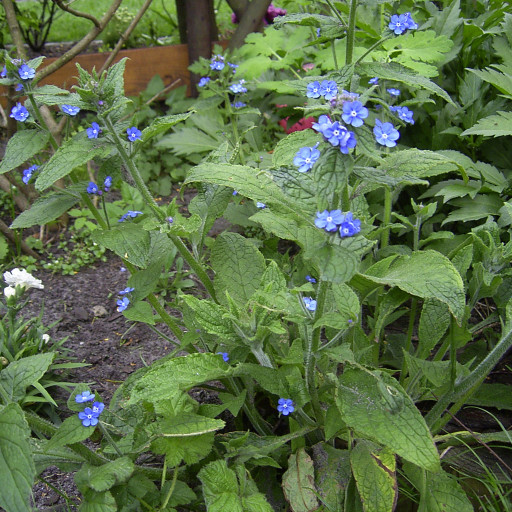
Often mistaken for a "Forget-me-not on steroids," Green Alkanet is a hardy perennial famous for its piercing, electric-blue flowers. Its name, Pentaglottis, translates to "five tongues," referring to the shape of its petals, while sempervirens hints at its "evergreen" nature in milder climates. It is a master of the shady corner, turning neglected garden spots into a sea of sapphire.
🔍 How to Identify
- 🌸 Sapphire Blooms: The flowers are small but strikingly intense blue with a bright white center, appearing in clusters from spring through mid-summer.
- 🌿 Bristly Leaves: The foliage is large, oval, and pointed, covered in stiff, coarse hairs that feel like rough sandpaper to the touch.
- 📏 Growth Habit: It forms large, bushy clumps that can reach up to 3 feet in height, far more robust than its smaller borage-family cousins.
🏡 In Your Garden
- 🌱 The Taproot Anchor: This plant grows a deep, thick taproot that acts like an anchor. Because of this, it is incredibly drought-tolerant once established but very difficult to "un-invite" from your garden once it takes hold.
- 🐝 Pollinator Buffet: It is one of the best plants for early-season bees. Its nectar is easily accessible, making it a bustling airport for bumblebees and the iconic Hairy-footed Flower Bee.
- 🌑 Shade Specialist: While many flowers struggle without sun, Green Alkanet thrives in damp, dark areas under trees or beside walls where other plants might wither.
⚠️ Safety & Toxicity
- 🧤 Skin Irritation: The stiff, bristly hairs on the stems can cause mild skin irritation or "contact dermatitis" for some people. It is highly recommended to wear gardening gloves when handling or pulling it.
- 🐾 Pet Safety: It is generally considered non-toxic to dogs and cats, though the rough texture usually discourages pets from trying to eat it.
✨ Fun Fact
The roots of the Alkanet family contain a red pigment that was historically used as a dye for fabrics and even as a primitive form of lipstick and cheek stain! Although Pentaglottis is less potent than its cousin, the "Dyer’s Alkanet," its roots still carry a hint of that ancient crimson secret.

Detailed Care Instructions
To grow Pentaglottis sempervirens, also known as green alkanet or alkanet, follow the steps below:
- Seed Selection: Purchase high-quality seeds from a reputable nursery or seed supplier.
- Growing Conditions: Choose a location with full to partial sun exposure and well-drained soil. Pentaglottis sempervirens prefers moist soil but can tolerate a range of soil types.
- Sowing Seeds: Sow the seeds directly into the ground in late spring or early summer after the frost threat has passed. Alternatively, you can start seeds indoors 6-8 weeks before the last frost and transplant the seedlings outdoors when they reach a suitable size.
- Soil Preparation: Prior to sowing or transplanting, prepare the soil by removing any weeds or debris and amending it with organic matter, such as compost or aged manure, to improve fertility and drainage.
- Planting: Plant the seeds or seedlings at a depth of ¼ inch (0.6 cm) and space them about 12-18 inches (30-45 cm) apart. Gently press the soil around the seed or seedling to ensure good soil-to-root contact.
- Watering: Keep the soil consistently moist but not waterlogged. Water the plants regularly, especially during dry periods, to promote healthy growth.
- Mulching: Apply a layer of organic mulch around the plants to help retain moisture, suppress weed growth, and regulate soil temperature.
- Maintenance: Remove any weeds that may compete with the plants for nutrients and water. Monitor for pests and diseases, such as slugs, snails, or powdery mildew, and take appropriate action if necessary.
- Pruning: Trim back the plants after flowering to prevent self-seeding and to promote bushier growth. This can help maintain a neater appearance in the garden.
- Propagation: Pentaglottis sempervirens can also be propagated by dividing established plants or by taking stem cuttings in late spring or early summer.
It's important to note that Pentaglottis sempervirens can be invasive in certain regions, so keep an eye on its growth and prevent it from spreading where unwanted.

Place in a window with dappled sun or a spot in the middle of a room. Or directly in a window facing west or east.

To water this plant, it is recommended to first check the soil moisture by inserting your finger into the soil up to the second knuckle. If the soil feels dry, it is time to water the plant. When watering, it is important to avoid getting water on the leaves as this can lead to fungal diseases. It is best to water at the base of the plant, ensuring that the water reaches the roots. Watering should be done deeply and infrequently to promote healthy root growth. Overwatering can lead to root rot, so it is important to allow the top inch of soil to dry out before watering again. During periods of drought or high temperatures, the plant may require more frequent watering.
To fertilize this plant, use a balanced fertilizer with equal levels of nitrogen, phosphorus, and potassium, such as a 10-10-10 fertilizer. Apply the fertilizer in the spring before new growth appears and again in mid-summer. Follow the package instructions for application rates and methods. Avoid over-fertilizing, as this can lead to excessive foliage growth at the expense of flowers. Water the plant well after fertilizing to help distribute the nutrients evenly throughout the soil.
When planting Pentaglottis Sempervirens, it is recommended to use a nutrient-rich soil that is well-draining with a pH level between 6.5 and 7.5. The soil should also be slightly sandy and contain organic matter to encourage healthy growth. Additionally, it is important to ensure that the soil is not compacted, as this can impede root growth and affect the overall health of the plant. Regularly amending the soil with compost or other organic matter can also help to improve soil quality over time.
To propagate this plant, select a healthy stem and cut it just below a node. Remove the lower leaves and dip the cut end of the stem in rooting hormone. Plant the stem in a well-draining soil mix and lightly water it. Place a clear plastic bag over the pot to create a humid environment and place it in a warm, bright location, but out of direct sunlight. Check the soil regularly and water as needed to keep it moist. After a few weeks, new growth should appear, indicating that the cutting has rooted. Once the roots are well-established, transplant the plant into a larger container or permanent location.








