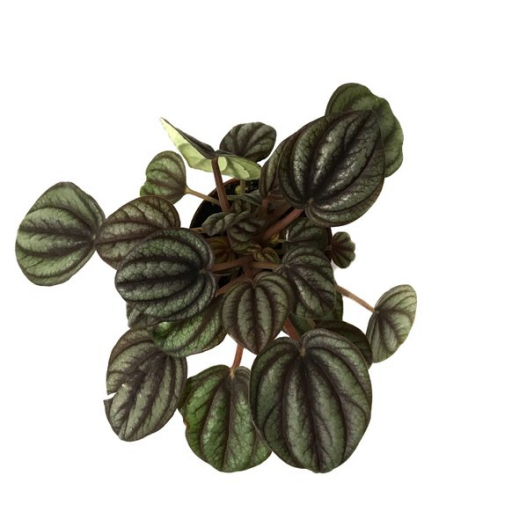
Plant Overview
The Peperomia albovittata, often affectionately called the 'Piccolo Banda', is a pint-sized powerhouse of patterns. Originating from the lush undergrowth of Ecuador, this ornamental jewel is a favorite for desk-dwellers and terrarium enthusiasts who appreciate high-impact aesthetics in a small package. Its name literally translates to "white-striped," a nod to the shimmering, metallic highlights that make its leaves look as though they’ve been hand-painted.
🔍 How to Identify
- 🍃 Striking Pinstripes: The leaves feature deep purple or reddish-brown veins that sit in recessed grooves, contrasted by raised, silvery-green ridges.
- 📏 Compact Rosette: It maintains a tidy, mounded shape, rarely exceeding 8 inches in height, making it perfect for crowded shelves.
- 🔴 Reddish Stems: Look closely at the petioles (leaf stalks); they are a vibrant, earthy red color, providing a warm contrast to the cool-toned foliage.
🏡 In Your Garden
- 💧 Semi-Succulent Nature: Because its leaves are thick and fleshy, it stores water internally. It is much more likely to suffer from "over-parenting" (too much water) than from a missed watering session. Always wait for the soil to feel dry halfway down the pot.
- ☀️ Light & Color: This plant is a "Goldilocks" regarding light. If the sun is too intense, the silver stripes will bleach and turn dull; if it’s too dark, the deep purple veining will lose its intensity. Bright, filtered light keeps the colors popping.
- 🌱 Fragile Roots: It has a very small, delicate root system. It prefers to be slightly root-bound in a smaller pot, as a pot that is too large will hold excess moisture and lead to root rot.
⚠️ Safety & Toxicity
- 🐾 Pet Friendly: Unlike many common houseplants, the 'Piccolo Banda' is entirely non-toxic to cats and dogs. It’s a worry-free choice for animal lovers.
- 👶 Child Safe: It is safe for humans as well, though the leaves are quite brittle and can snap easily if handled roughly by curious little hands.
✨ Fun Fact
Your 'Piccolo Banda' is a distant cousin of the plant that produces the black pepper in your kitchen! While it won't produce spices for your dinner, it belongs to the Piperaceae family, which is why its flowers look like strange, greenish "rat-tails" rather than traditional colorful blooms.

Detailed Care Instructions
| Humidity | Normal |
| Lighting | Part Sun |
| Difficulty | Medium |
| Hibernation | Cold Period |
| Temperature | 18°C - 25°C |
| Hardiness Zones | 10A - 11B |
To grow Peperomia Albovittata, also known as the "Watermelon Peperomia," you can follow these steps:
- Choose an appropriate location: Peperomia Albovittata prefers bright, indirect light. Avoid direct sunlight, as it can scorch the leaves. Place it near a window with filtered light or a few feet away from a window that receives direct sunlight.
- Temperature: This plant prefers temperatures between 65°F to 75°F (18°C to 24°C). Avoid exposing it to temperatures below 50°F (10°C) or drafts, as it is sensitive to chilly conditions.
- Watering: Water the plant when the top inch (2.5 cm) of the soil feels dry. Peperomia Albovittata prefers moderately moist soil but can be susceptible to root rot if overwatered. Ensure good drainage to prevent waterlogging.
- Humidity: Peperomia Albovittata enjoys moderate to high humidity levels. You can increase humidity by placing a tray of water near the plant or using a humidifier. Misting the leaves occasionally can also provide some humidity.
- Soil: Use well-draining soil that retains some moisture but does not become waterlogged. A mixture of regular potting soil, peat moss, and perlite or sand can work well.
- Fertilization: Feed the plant once every 2-3 months during the growing season (spring and summer) with a balanced, water-soluble fertilizer at half the recommended strength. Avoid fertilizing during the dormant season (fall and winter).
- Repotting: Peperomia Albovittata has a slow growth rate and prefers to be slightly root-bound. Repot it only when the roots have filled the current pot, usually every 2-3 years. Use a slightly larger pot with fresh potting soil.
- Pruning: Trim any leggy or discolored stems to promote bushier growth. You can also pinch off the tips of the stems to encourage branching.
- Propagation: Peperomia Albovittata can be propagated through stem cuttings. Take a cutting of a healthy stem just below a leaf node, remove the lower leaves, and place it in moist soil or water until it develops roots.
By following these care guidelines, you can successfully grow and maintain your Peperomia Albovittata plant.

Place in a window with dappled sun or a spot in the middle of a room. Or directly in a window facing west or east.

To water this plant, you should first mix one part of a high-quality potting soil with one part perlite to create a well-draining soil mixture. Then, wait until the top inch of the soil feels dry to the touch and use room temperature water to thoroughly moisten the soil. Avoid over-watering by ensuring that the soil has proper drainage and that excess water can escape through drainage holes in the bottom of the pot. Additionally, avoid getting water on the leaves as this can promote fungal growth and cause damage to the plant.
To fertilize this plant, use a balanced liquid fertilizer, mixing it with water according to the manufacturer's instructions. Apply the fertilizer once a month during the growing season (spring and summer), but make sure not to over-fertilize as this can cause damage to the roots. Dilute the fertilizer further if the plant shows signs of stress or discoloration.
Peperomia Albovittata plant prefers a well-draining, nutrient-rich soil. The ideal soil mix for this plant should consist of a mix of peat moss, vermiculite, perlite, and sand. This mix will provide good drainage for the plant, while also retaining enough moisture to keep the soil moist but not waterlogged. It is also recommended to mix some organic matter, like compost or manure, into the soil mix to provide the plant with nutrients. This plant does not like heavy soils, so avoid using clay soils or soils that contain a lot of clay. It is important to ensure that the soil pH is slightly acidic, with a pH range between 6.0 and 6.5.
To propagate this plant, you will need a clean pair of scissors or sharp knife, a small container filled with clean and damp potting soil, and rooting hormone (optional).
First, choose a healthy stem or leaf cutting from the mother plant. Make sure it is at least 3-4 inches long and has a few healthy leaves. Using your scissors or knife, cut the stem or leaf cleanly at a node, which is where the petiole or stem meets the main stem.
If you are using rooting hormone, apply a small amount to the cut end of the stem or leaf. This will help encourage the growth of roots.
Next, plant your cutting in the small container of damp potting soil. Make a small hole in the soil with your finger or a pencil and gently insert the cutting into the hole. Firmly press the soil around the cutting to secure it in place.
Water the cutting thoroughly until water drains out of the bottom of the container. Place the container in a warm and well-lit area, but out of direct sunlight.
Monitor the cutting over the next few weeks for signs of new growth. Once it has started to grow new leaves or roots, you can transplant it into a larger container or return it to the mother plant's pot.
Common pests of the peperomia frost include Mealybugs, fungus gnats. Make a habit of checking your peperomia frost frequently for pests so that any infestations can be caught and managed early.








