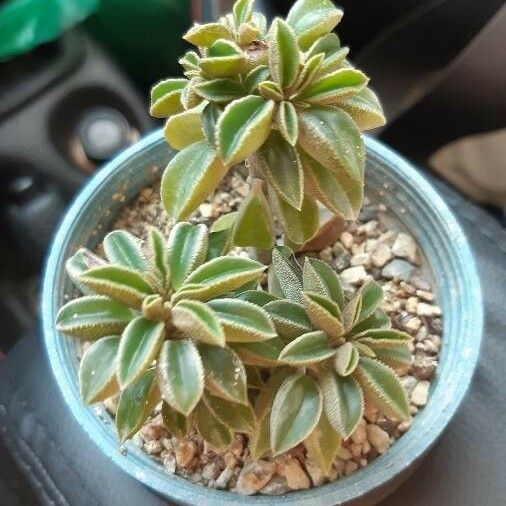
Plant Overview
Known affectionately as the "Taco Plant" due to its uniquely folded, succulent leaves, Peperomia asperula is a charming oddity from the Peruvian Andes. Unlike its leafy cousins, this species has evolved to survive in drier conditions, mimicking the look and feel of a desert succulent. It is a slow-growing conversation piece that brings a geometric, architectural flair to any windowsill or shelf.
🔍 How to Identify
- 🌮 The Leaf Shape: The most striking feature is the thick, U-shaped leaves that are folded upward, making each leaf look exactly like a tiny green taco shell.
- 🪟 Translucent Windows: Along the top "seam" of the folded leaf, there is a narrow, translucent strip called a fenestration. This "window" allows sunlight to reach the interior of the leaf for photosynthesis.
- 🌿 Texture and Color: The exterior of the leaf has a slightly rough, matte finish in a soft lime-to-forest green, while the inner part of the "taco" is a brighter, smoother green.
🏡 In Your Garden
- 💧 The "Succulent" Secret: Because of its thick leaves, this Peperomia stores a significant amount of water. It is highly prone to root rot if over-pampered; it prefers to dry out completely between drinks, making it the perfect plant for those who occasionally forget to water.
- ☀️ Light Sensitivity: While it loves bright, indirect light to keep its compact shape, harsh afternoon sun can "scorch" the translucent windows. In low light, the plant will stretch out (become leggy), losing its iconic tight "taco" formation.
⚠️ Safety & Toxicity
- 🐾 Pet Friendly: Like most members of the Peperomia family, the Asperula is considered non-toxic to cats and dogs, making it a safe choice for pet owners.
- 👶 Human Safety: It is non-hazardous to humans. However, because it is a succulent-type plant, its leaves are brittle and can snap off easily if handled roughly by curious children.
✨ Fun Fact
The "windows" on the top of the leaves aren't just for show—they are an evolutionary survival tactic! In its native habitat, the plant often grows partially buried or in high-glare environments. These windows filter and direct light deep into the plant’s tissues, allowing it to produce energy even when light conditions are extreme.

Detailed Care Instructions
To grow Peperomia Asperula plant, follow these steps:
- Choose the right location: Peperomia Asperula prefers bright, indirect light. Place the plant in a spot where it can receive bright but filtered sunlight, such as near a north or east-facing window.
- Optimal temperature: The plant thrives in average room temperatures of around 65-75°F (18-24°C). Avoid exposing it to drastic temperature changes or cold drafts.
- Watering: Allow the top inch of soil to dry out between waterings. Overwatering can cause root rot, so it's important to avoid keeping the soil excessively wet. Check the moisture level by sticking your finger into the soil; if it feels dry, it's time to water.
- Humidity: Peperomia Asperula prefers moderate to high humidity levels. You can increase humidity by placing a small tray filled with water near the plant or using a humidifier. Mist the leaves occasionally to provide additional moisture.
- Potting soil: Use a well-draining potting mix to ensure proper drainage. A mixture of peat moss, perlite, and vermiculite can be suitable.
- Pot selection: Choose a pot with drainage holes to allow excess water to flow out. Make sure the pot is only slightly larger than the root ball of the plant to avoid excessive soil moisture.
- Fertilization: Feed the plant with a balanced, water-soluble houseplant fertilizer every 4-6 weeks during the growing season (spring and summer). Follow the instructions provided on the fertilizer packaging for the appropriate dosage.
- Pruning: Trim back any leggy or overgrown growth to maintain a compact and bushy appearance. Pruning also helps to promote healthy growth.
- Propagation: Peperomia Asperula can be propagated through stem cuttings. Take a 2-3 inch cutting from a healthy plant, remove the lower leaves, and place the cutting in a container with water or a moist potting mix. New roots should start to develop in a few weeks.
- Pest control: Monitor the plant for common houseplant pests like aphids, mealybugs, or spider mites. If you notice any infestation, treat it with an appropriate insecticidal soap or seek guidance from a local nursery.
Remember to regularly assess the condition of your plant and adjust care as needed. With proper attention to lighting, watering, and temperature, your Peperomia Asperula should thrive and grow well.

Place in a bright room that is sun drenched almost all day. Or directly in a south-facing window.

Peperomia Asperula plants thrive in moist soil, but they do not like excessive watering. It is best to wait until the top inch of soil has dried out before watering the plant. When you do water, water thoroughly and let any excess water drain out of the bottom of the pot. It is important not to let the plant sit in water, as this can lead to root rot. Additionally, try to water the plant from the bottom by placing the pot in a dish of water and letting it soak up the water through the drainage holes. This will help prevent wetting the leaves, which can cause damage or disease. If you live in a particularly dry environment, you may need to mist the plant occasionally to increase humidity.
To fertilize this plant, use a balanced water-soluble fertilizer with an N-P-K ratio of 10-10-10 or lower. Dilute the fertilizer according to the manufacturer's instructions and apply it to the soil once a month during the growing season (spring and summer). Avoid fertilizing during the fall and winter when the plant is dormant. Water the plant thoroughly before and after fertilizing to prevent root burn.
The ideal soil mixture for Peperomia Asperula plant should be well-draining with plenty of organic matter. A mix of peat moss, coarse sand, perlite and vermiculite can create an excellent growing medium. The pH level of the soil should be slightly acidic, between 5.5 and 6.5. It's essential to ensure the soil is adequately aerated to prevent waterlogging, as too much moisture can cause root rot. It's also recommended to add slow-release fertilizer to the soil mixture to provide the necessary nutrients for healthy plant growth. Avoid using heavy, compact soils that may retain too much water, as well as those containing too much fertilizer, which can damage the plant.
Peperomia Asperula plant can be propagated through stem cuttings. Follow these steps to propagate the plant:
- Choose a healthy stem with several leaves. The stem should not be too long or too short, ideally 2-3 inches long.
- Using a sharp, clean knife or scissors, cut the stem below a leaf node. A leaf node is where the leaf meets the stem.
- Remove the leaves from the bottom one-third of the stem. This is where the roots will form.
- Dip the cut end of the stem in a rooting hormone powder. This will help the stem develop roots faster.
- Plant the stem in a small pot filled with moist, well-draining soil. Make a small hole in the soil with your finger and gently insert the stem.
- Water the soil thoroughly and cover the pot with a plastic bag to create a humid environment. This will help the stem retain moisture and develop roots.
- Place the pot in a bright, but indirect light. Direct sunlight can burn the plant and hinder its growth.
- Check the soil regularly and water when it feels dry. Do not overwater as this can cause the stem to rot.
- After a few weeks, gently tug on the stem to check if it has developed roots. If it resists, that means it has rooted successfully.
- Remove the plastic bag and continue to care for the new plant as you would for a mature Peperomia Asperula plant.
Common pests of the peperomia asperula include Mealybugs, fungus gnats. Make a habit of checking your peperomia asperula frequently for pests so that any infestations can be caught and managed early.








