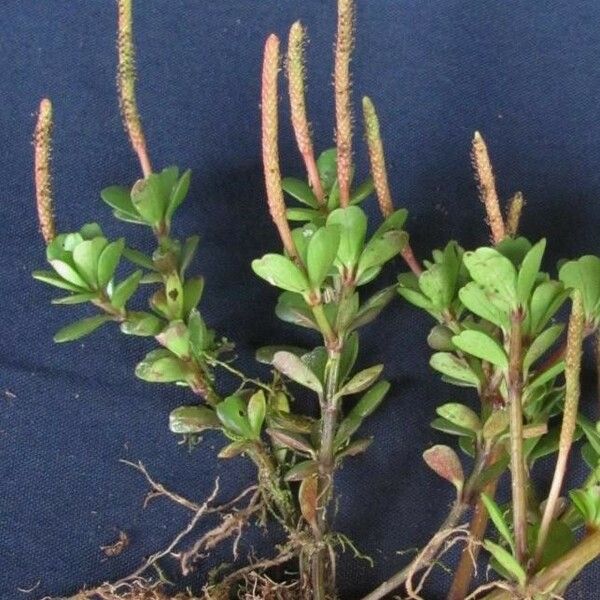
Plant Overview
Often called the Acorn Peperomia or Deppe’s Radiator Plant, this Central American native is a miniature masterpiece. It is a trailing species that looks like a cascade of tiny, succulent jewels spilling out of a pot. While many plants demand constant attention, Peperomia deppeana is a relaxed companion, perfect for those who want a lush look without the high-maintenance "diva" behavior.
🔍 How to Identify
- 🍃 Leaf Shape: It features very small, oval-to-round leaves that are thick and fleshy, resembling tiny green coins or acorns.
- 🎨 Color & Texture: The foliage is a rich, waxy emerald green. The leaves often have a subtle translucency, allowing them to capture light even in dimmer corners.
- 🌱 Growth Habit: It has a creeping or trailing habit. Its stems are thin and often have a reddish or brownish tint, branching out to form a dense mat of greenery.
🏡 In Your Garden & Home
- ☁️ The Epiphytic Nature: In the wild, this plant often grows on mossy tree trunks rather than in deep soil. This means it hates "wet feet"—always use a well-draining potting mix (like a succulent or orchid blend) to mimic its natural airy home.
- 💧 Succulent Strategy: Because its leaves are thick and store water, it is surprisingly drought-tolerant. It’s better to underwater this plant than to overwater it, as its stems are prone to melting if the soil stays soggy for too long.
- 🖼️ Small Space Hero: Due to its slow growth and compact size, it is a premier choice for closed terrariums or "fairy gardens" where it can act as a lush ground cover.
⚠️ Safety & Toxicity
- ✅ Non-Toxic: Good news for pet parents! Peperomia deppeana is considered non-toxic to cats, dogs, and horses.
- 👶 Kid-Safe: It is generally safe for households with children, though the small leaves can be a choking hazard if pulled off, so it’s best kept on a high shelf or in a hanging basket.
✨ Fun Fact
Peperomias are nicknamed "Radiator Plants" because they were historically known to thrive in the warm, dry air found on windowsills near radiators—a testament to their hardy and adaptable nature!

Detailed Care Instructions
To grow a Peperomia Deppeana plant, you can follow these steps:
- Choose the right spot: Peperomia Deppeana thrives in bright, indirect sunlight. Find a location for the plant where it can receive bright, filtered light throughout the day. Avoid placing it in direct sunlight as it can scorch the leaves.
- Use well-draining soil: Peperomia Deppeana prefers well-draining soil that retains some moisture but doesn't become waterlogged. You can use a mix of potting soil, perlite, and peat moss to create a well-draining mixture.
- Watering: Water the plant thoroughly when the top inch of soil feels dry to the touch. Avoid overwatering as Peperomia Deppeana can be prone to root rot. Allow the soil to dry out slightly between waterings.
- Humidity: Peperomia Deppeana appreciates higher humidity levels. You can increase humidity by placing a tray filled with water near the plant or by using a humidifier. Mist the leaves occasionally with water to provide additional moisture.
- Temperature and humidity: Peperomia Deppeana prefers temperatures between 60°F to 75°F (15°C to 24°C). Avoid exposing the plant to extreme temperature fluctuations or drafts.
- Fertilization: Feed the plant with a balanced liquid fertilizer diluted to half strength once a month during the growing season (spring and summer). Reduce or stop fertilizing during the colder months.
- Pruning: Trim any leggy or yellowing stems to maintain a compact plant shape. You can also pinch off the tips to encourage bushier growth.
- Repotting: Peperomia Deppeana generally doesn't require frequent repotting. However, if the roots become too crowded, you can repot the plant into a slightly larger container using fresh potting soil.
- Propagation: Peperomia Deppeana can be propagated through stem cuttings. Take a stem cutting with a few leaves and place it in a small pot with moist soil. Keep the cutting in a warm spot with indirect light until roots develop.
By following these steps, you can successfully grow a Peperomia Deppeana plant. Remember to observe the plant closely for any signs of pests, disease, or stress, and address them promptly to ensure a healthy plant.

Place in a window with dappled sun or a spot in the middle of a room. Or directly in a window facing west or east.

To water this plant, ensure that the soil feels dry to the touch before watering it, as overwatering may lead to root rot. Use a watering can to water around the base of the plant, avoiding the leaves, for about a minute or until water starts coming out of the drainage holes. Allow the excess water to drain out completely before replacing the plant in its decorative pot and place in bright, indirect sunlight. Wait until the soil starts to dry out before watering again.
To fertilize this plant, you should mix a water-soluble fertilizer with water according to the manufacturer's instructions and feed the plant once every two weeks during the growing season (spring and summer). During the dormant season (fall and winter), fertilize the plant once a month. Be sure not to over-fertilize, as this can lead to a buildup of salt in the soil, which can harm the plant. Always water the plant thoroughly after fertilizing to avoid burning the roots.
Peperomia Deppeana plant requires well-draining soil that is rich in nutrients. The soil should have a pH level of 6.0 to 7.0. A mixture of perlite, peat moss, and coarse sand is recommended for this plant. It is important to ensure that the soil is moist, but not waterlogged, as the plant is susceptible to root rot. A good way to check the moisture level is by using a moisture meter or by sticking your finger in the soil. The plant prefers slightly acidic soil and will thrive in a warm, humid environment. Organic compost can also be added to the soil to provide additional nutrients.
Peperomia Deppeana is a popular houseplant that can be propagated easily through several methods. One way to propagate it is through stem cuttings. To do this, find a healthy stem on the plant that is at least four inches long and has several leaves attached to it. Using a clean, sharp pair of scissors or pruning shears, carefully cut the stem just below a node (where a leaf is attached). Remove any leaves from the lower part of the stem, leaving two or three at the top. Dip the cut end of the stem in rooting hormone powder and plant it in a pot with well-draining soil. Keep the soil moist but not soggy and place the pot in bright, indirect light. In a few weeks, new roots should begin to grow from the cut end of the stem.
Another method of propagation is by division. This works best when the Peperomia Deppeana has grown too large for its pot or if it has multiple stems. Carefully remove the plant from its pot and gently separate the stems and their roots. Replant each stem in its own pot with fresh soil and water thoroughly.
A third method of propagation is by leaf cuttings. Choose a healthy leaf and cut it off of the plant using a clean, sharp pair of scissors or pruning shears. Cut the leaf into several sections, making sure each section has a vein running through it. Dip each cutting in rooting hormone powder and plant it in a pot with well-draining soil. Keep the soil moist but not soggy and place the pot in bright, indirect light. In a few weeks, new roots and leaves should begin to grow from the cut end of each section.
No matter which method of propagation you choose, it is important to keep the new plant in a warm and humid environment while it establishes itself. Also, be patient; it may take several weeks or even months for the new plant to grow and thrive.
Common pests of the fourleaf peperomia include Mealybugs, fungus gnats. Make a habit of checking your fourleaf peperomia frequently for pests so that any infestations can be caught and managed early.








