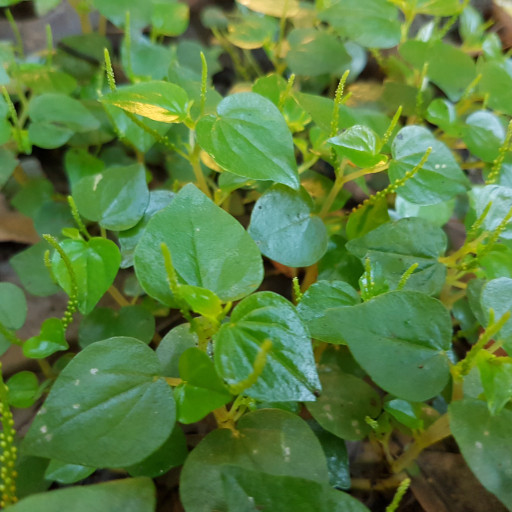
Plant Overview
Known as the "Shiny Bush," "Pepper Elder," or simply "Clearweed," Peperomia pellucida is a delicate, moisture-loving succulent that often surprises gardeners by popping up in shady, damp corners. Originally from the tropical Americas, it has traveled the world, earning a reputation as both a medicinal herb and a refreshing salad green. Its jelly-like, translucent appearance makes it look almost like a glass sculpture come to life in the garden.
🔍 How to Identify
- 🍃 Heart-Shaped Leaves: The foliage is bright green, smooth, and waxy, with a distinct heart shape that narrows to a point.
- 💧 Translucent Stems: The stems are fleshy, pale green, and so clear that they appear almost see-through, especially when back-lit by the sun.
- 🌾 Flower Spikes: It doesn’t produce traditional petals; instead, it grows thin, wire-like green spikes that hold tiny, microscopic seeds.
🏡 In Your Garden
- ☁️ Shade Champion: This plant is a specialist in low-light environments. It thrives in the damp, dark spots under benches or near leaky faucets where other plants might rot or fail.
- 🌱 Ephemeral Nature: It is a short-lived annual. Because it has a shallow root system, it is very easy to pull up if it spreads too far, but it will almost always return via its prolific self-seeding habit.
⚠️ Safety & Toxicity
- 🥗 Status: Generally considered non-toxic and is widely consumed by humans in tropical regions. It is often eaten raw in salads or cooked as a potherb.
- 🐾 Pet Safety: While not known to be poisonous to cats or dogs, any plant material can cause mild digestive upset if a pet decides to make a full meal out of it.
- 🧪 Sensitivity: Some individuals might experience mild skin irritation if they have sensitive skin and handle the crushed leaves frequently.
✨ Fun Fact
In many parts of the world, this plant is nicknamed the "Gout Plant" because of its long history in traditional medicine as a natural treatment for lowering uric acid levels!

Detailed Care Instructions
| Humidity | High |
| Lighting | Part Sun |
| Difficulty | Hard |
| Hibernation | Cold Period |
| Temperature | 18°C - 24°C |
| Hardiness Zones | Min 10A |
To grow Peperomia Pellucida plant, follow these steps:
- Obtain seeds or cuttings: You can obtain Peperomia Pellucida seeds from a local plant nursery or online. Alternatively, you can use stem cuttings from a mature plant.
- Pot selection: Choose a small container with good drainage holes. A 4-6 inch pot should be sufficient for one plant.
- Soil preparation: Prepare well-draining soil by mixing equal parts of potting soil, perlite, and organic matter like compost or coco coir.
- Planting: If using seeds, sow them on the soil surface and lightly cover with a thin layer of soil. Water gently to settle the soil. For stem cuttings, remove a section of a stem just below a node and plant it in the prepared soil, pressing it down gently.
- Light requirements: Peperomia Pellucida prefers bright, indirect light. Place it near a window that receives bright, diffused light, but avoid direct sunlight which can burn the leaves.
- Watering: Keep the soil consistently moist, but not waterlogged. Water the plant when the top inch of soil feels dry. Ensure good drainage to prevent root rot.
- Fertilization: Feed the plant with a balanced liquid fertilizer diluted to half strength every two weeks during the growing season (spring to summer). Reduce or stop fertilization during the winter months.
- Pruning: Trim any yellowing or dead leaves regularly to maintain the plant's health and appearance.
- Temperature and humidity: Peperomia Pellucida prefers temperatures between 65-75°F (18-24°C). It thrives in average indoor humidity, but appreciates slightly higher humidity levels. You can mist the leaves occasionally or place a tray of water near the plant to increase humidity.
- Propagation: Peperomia Pellucida can be propagated from stem cuttings. Simply take a 2-3 inch cutting, remove the leaves from the lower half, and place it in water or directly in soil to root.
Remember to monitor the plant for any signs of pests or diseases and address them promptly. Enjoy watching your Peperomia Pellucida plant grow and thrive!

Place in a window with dappled sun or a spot in the middle of a room. Or directly in a window facing west or east.

To water this plant, it is recommended to gently pour room temperature water directly into the soil until it is moist. It is important not to overwater, as the roots may rot. Allow the soil to dry out slightly before watering again. Avoid getting water on the leaves, as this may cause damage.
To fertilize this plant, first dilute a balanced liquid fertilizer with water as per the instructions on the bottle. Then, apply the fertilizer to the soil around the base of the plant, taking care not to get any on the leaves. Repeat this process once a month during the growing season, which is typically from spring to fall. Avoid fertilizing during the plant's winter dormancy period.
The Peperomia Pellucida plant prefers a loose, well-draining soil mix that retains moisture without becoming waterlogged. A mixture of potting soil and Perlite, Vermiculite or coarse sand is ideal. The addition of organic matter, such as compost or peat moss, can also provide nutrients to the plant as it grows. It is also important to ensure that the soil is slightly acidic with a pH range of 6.0-6.5. Avoid using heavy clay or compacted soils which can impede drainage and cause the roots to rot. Regularly check the moisture level of the soil and water accordingly, making sure not to overwater which can also lead to root rot.
To propagate this plant, you will need to first select a healthy and mature plant that is free from any pests or diseases. Take a cutting from the main stem that is approximately 2-3 inches long and has at least 2-3 leaves attached to it.
Next, remove the bottom leaves from the cutting, leaving only the top leaves intact. Dip the cut end of the stem into a rooting hormone powder to encourage the growth of roots.
Place the cutting in a small pot filled with well-draining soil and water it thoroughly. Cover the pot with a plastic bag or a clear plastic lid to create a humid environment that will encourage the growth of the new plant.
Place the pot in a bright but indirect light location and keep the soil moist but not soaking wet. After a few weeks, you should start to see new growth and roots forming on the cutting.
Keep the new plant in the pot until it has developed a strong root system and is able to tolerate being transplanted to a larger pot or outside in the garden.
Common pests of the shiny bush include Mealybugs, fungus gnats. Make a habit of checking your shiny bush frequently for pests so that any infestations can be caught and managed early.








