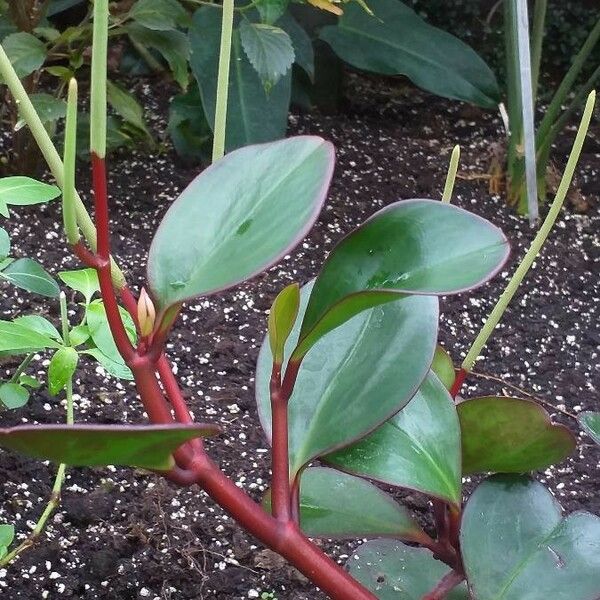
Plant Overview
Often called the Willow-leaved Peperomia, Peperomia saligna is a hidden gem from the tropical forests of South America. Unlike its round-leaved cousins, this species boasts a refined, linear silhouette that mimics a miniature willow tree. It’s a favorite for those who want a lush, jungle aesthetic without the high-maintenance demands of more temperamental tropicals.
🔍 How to Identify
- 🍃 Willow-like Foliage: Features narrow, elongated, and pointed leaves that grow in a graceful, cascading manner along semi-succulent stems.
- 🪵 Fleshy Texture: The leaves have a thick, waxy feel to the touch, a characteristic that helps the plant survive in the wild by storing moisture.
- 🕯️ Mouse-tail Flowers: It produces unique, slender green spikes (inflorescences) that look like tiny, upright tails. While not "flowery" in the traditional sense, they add a quirky architectural interest.
🏡 In Your Garden
- 🧺 The Hanging Specialist: In its natural habitat, this plant is an epiphyte (growing on trees). In your home, it thrives best in hanging baskets or tall pots where its stems can spill elegantly over the edges.
- 💧 Breathable Roots: It requires a very chunky, well-draining potting mix (think orchid bark or perlite). It hates "wet feet," so letting the soil dry out significantly between waterings is the secret to its longevity.
- 🌤️ Indirect Light Lover: It prefers the dappled light of a forest canopy. Placing it in direct afternoon sun can scorch the slender leaves, turning them a pale, sickly yellow.
⚠️ Safety & Toxicity
- ✅ Pet Friendly: Peperomia saligna is non-toxic to cats and dogs, making it an excellent choice for a "pet-safe" indoor jungle.
- 👶 Safe for Kids: This plant is generally harmless to humans, though it is always best to keep any houseplant out of reach of curious toddlers to avoid a choking hazard or a messy floor.
✨ Fun Fact
The species name saligna is derived from the Latin word for "willow" (Salix). If you look at the plant from a distance, it looks remarkably like a miniature, indoor version of a weeping willow tree!

Detailed Care Instructions
To grow Peperomia Saligna, also known as Radiator Plant or Jelly Peperomia, follow these steps:
- Lighting: Place your peperomia in bright, indirect light. It can tolerate some shade, but avoid direct sunlight as it can scorch the leaves.
- Temperature: Maintain an average room temperature between 65-75°F (18-24°C). Avoid exposing the plant to extreme temperatures or drafts.
- Watering: Water your peperomia when the top inch of soil feels dry to the touch. These plants prefer slightly moist soil, so avoid overwatering. Allow the water to drain out of the pot completely, as excess water will cause root rot.
- Humidity: Peperomia Saligna prefers higher humidity levels, but it can adapt well to normal household humidity. Mist the leaves occasionally to increase humidity or place a tray of water near the plant.
- Soil: Use a well-draining potting mix that holds moisture but allows excess water to drain away. A mixture of peat moss, perlite, and a small amount of potting soil would work well.
- Fertilizer: Feed your peperomia with a balanced, water-soluble fertilizer diluted to half strength every month during the growing season (spring and summer). Reduce fertilization during the colder months.
- Pruning: Remove any dead or yellowing leaves to keep the plant healthy and encourage new growth. You can also pinch back the stems to promote bushier growth.
- Propagation: Propagate your peperomia by taking stem cuttings in spring or summer. Allow the cuttings to callus for a day or two before placing them in moist potting soil. Keep them warm and moist until new growth appears.
- Repotting: Peperomia Saligna does not require frequent repotting. Repot the plant when it becomes root-bound, typically every 2-3 years. Use a slightly larger pot and fresh potting soil.
By providing the right conditions and care, your Peperomia Saligna plant should grow and thrive.

Place in a window with dappled sun or a spot in the middle of a room. Or directly in a window facing west or east.

To water this plant, carefully pour water onto the soil surface until water starts to drain out the bottom of the pot. Allow the soil to slightly dry out between waterings, as overwatering can lead to root rot. Additionally, avoid getting water on the leaves as they are susceptible to damage from excess moisture.
- Begin by selecting a suitable fertilizer. Choose a balanced, water-soluble houseplant fertilizer that contains equal amounts of nitrogen, phosphorus, and potassium. Look for a formulation with a ratio like 10-10-10 or similar.
- Dilute the fertilizer according to the instructions on the package. Use half or one-quarter of the recommended strength to avoid over-fertilizing and causing harm to the plant.
- Water the Peperomia Saligna plant thoroughly before applying fertilizer. This will help prevent any potential burning of the roots.
- Pour the diluted fertilizer solution onto the soil around the plants. Avoid getting the fertilizer on the leaves as it may cause damage.
- Repeat fertilization every 4-6 weeks during the growing season, which typically spans from spring to fall. Reduce the frequency during winter when the plant's growth slows down.
- Monitor the plant's response to the fertilizer. If the leaves start turning pale or yellow, it may indicate that you are over-fertilizing. In such cases, reduce the amount of fertilizer or dilute it further.
- Regularly flush the soil with water to remove any remaining fertilizer salts and prevent salt build-up, which can harm the roots and lead to nutrient deficiencies.
- Apply fertilizer to moist soil rather than dry soil to minimize the risk of root burn. Water the plant lightly a day or two before fertilizing if the soil feels dry.
- Consider incorporating organic fertilizers like compost or worm castings into the soil during repotting to provide slow-release nutrients to the Peperomia Saligna plant.
- Lastly, follow any specific instructions given on the fertilizer package, as different brands may have slightly different application guidelines for their products.
Peperomia Saligna plant grows best in a well-draining soil mix that is rich in organic matter. The soil should have a pH range of 5.5 to 7.0, which is slightly acidic to neutral. It is recommended to use a soil mix that is a blend of perlite, peat moss, and sand. The perlite helps with drainage, the peat moss retains moisture while providing nutrients, and the sand adds structure to the soil. Additionally, the soil should have good aeration to allow oxygen to reach the plant's roots. Avoid using heavy, compacted, or waterlogged soil as it can lead to root rot.
Peperomia Saligna, scientifically known as Peperomia obtusifolia var. saligna, is a beautiful plant that can be propagated through various methods. Here are the details on how to propagate this plant:
- Stem Cutting: Select a healthy stem with at least two sets of leaves. Make a clean cut just below a node, which is where the leaf meets the stem. Remove the lower leaves, leaving only one or two sets at the tip. This will allow the plant to focus its energy on root development.
- Potting Mix: Prepare a well-draining potting mix using a combination of perlite, vermiculite, and peat moss. The mix should be light and airy to promote root growth.
- Rooting Hormone (optional): If desired, dip the cut end of the stem into a rooting hormone powder or gel. This can help stimulate root growth and increase success rates. However, it is not necessary for Peperomia Saligna propagation.
- Planting: Make a small hole in the potting mix and gently insert the stem cutting into it. Firmly press the soil around the base of the stem to secure it in place. Ensure that the lower nodes are in contact with the soil, as this is where the roots will emerge from.
- Moisture and Light: Place the pot in a warm, bright area with indirect sunlight. Water the cutting lightly, ensuring the soil remains evenly moist but not waterlogged. Consistent moisture is crucial for root development.
- Humidity: Create a humid environment around the cutting by covering it with a plastic bag or using a propagator. This will help retain moisture and encourage root growth.
- Care: Keep an eye on the cutting for the next few weeks, ensuring it remains moist. Avoid direct sunlight, as it may scorch the delicate cutting. Within a few weeks to a couple of months, you should start to see new growth and root development.
- Transplanting: Once the roots have developed, usually after a few months, you can carefully transplant the rooted cutting into a separate pot with regular potting soil. Handle the plant gently to avoid damaging the delicate new roots.
Remember to be patient during the propagation process, as it can take time for the plant to develop roots and new growth. With proper care and attention, you can successfully propagate Peperomia Saligna and enjoy having multiple plants to adorn your indoor or outdoor spaces.
Common pests of the peperomia saligna include Mealybugs, fungus gnats. Make a habit of checking your peperomia saligna frequently for pests so that any infestations can be caught and managed early.








