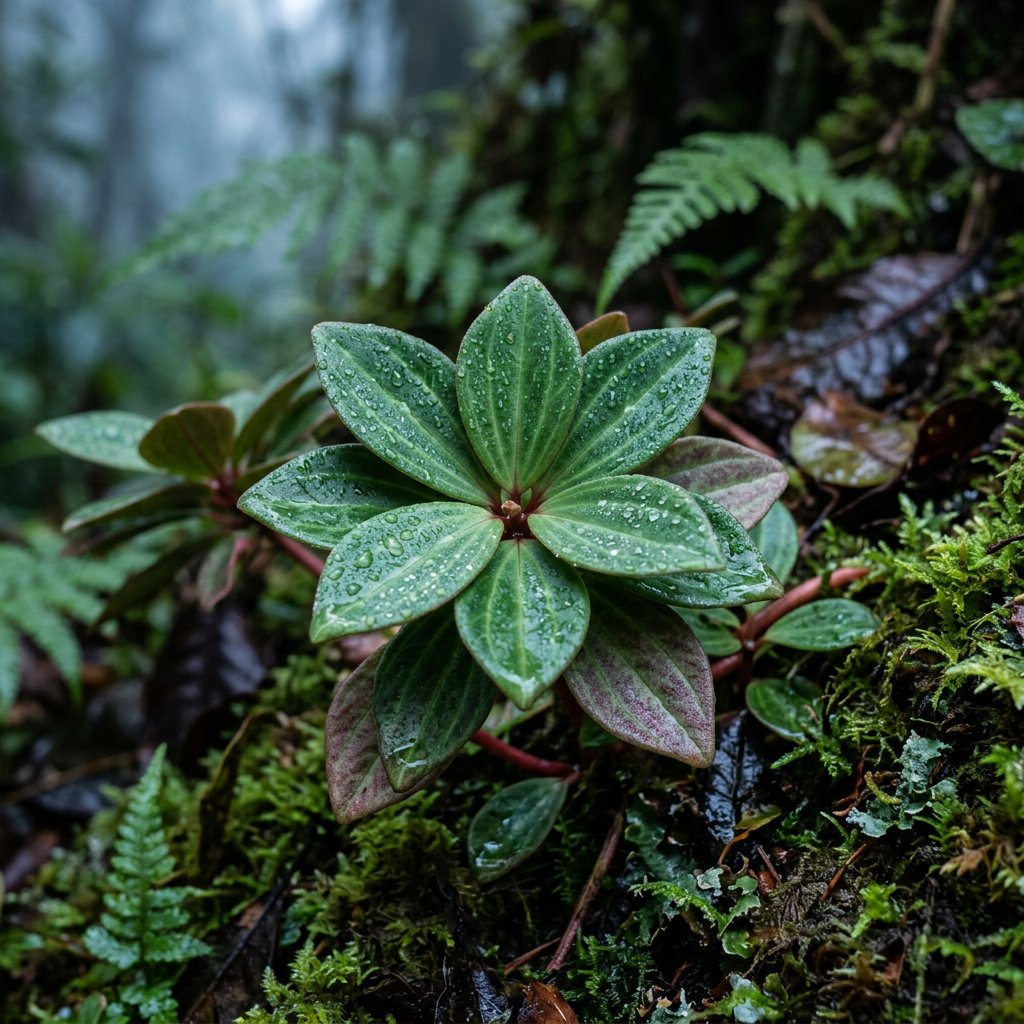
Plant Overview
Known affectionately as the "Belly Button Peperomia" or "Red Log," this charming succulent-like plant hails from the tropical forests of Bolivia. It is beloved by collectors for its architectural growth and its striking two-tone foliage that creates a miniature forest of upright pillars. Its name, verticillata, refers to the unique way its leaves circle the stem like a carousel, creating a geometric pattern that is rare in the plant world.
🔍 How to Identify
- 🌀 Whorled Leaves: The small, teardrop-shaped leaves grow in "whorls" of four to six, encircling the stem at a single point rather than growing in alternating pairs.
- 🎨 Two-Tone Color: Each leaf features a velvety, deep forest-green top surface and a surprising, vibrant burgundy-red underside.
- 🪵 The "Red Log" Stems: It boasts thick, sturdy, reddish-brown stems that grow vertically up to 12 inches before they begin to elegantly trail over the side of a pot.
🏡 In Your Garden
- ☀️ Light & Vibrancy: To keep those "red logs" looking deep crimson, provide bright, indirect light. If the plant is kept in a dark corner, it will become "leggy" (stretched out) and lose its compact, geometric beauty.
- 💧 The Succulent Rule: This Peperomia stores water in its thick leaves. It hates "wet feet," so it is best to let the soil dry out almost completely before watering again. It is the perfect companion for someone who occasionally forgets their watering schedule.
⚠️ Safety & Toxicity
- 🐾 Pet-Friendly: Good news for pet parents! Peperomia verticillata is non-toxic to cats and dogs, making it a safe addition to a low-shelf display.
- 🌱 Fragility Note: While it isn't poisonous, the stems are quite brittle. They can snap off easily if handled roughly or placed in a high-traffic area where people or pets might brush against them.
✨ Fun Fact
In its native Bolivian habitat, this plant is often found in high-altitude cloud forests. Because of this, it appreciates a bit more humidity than your average desert succulent, even though it shares the same water-storing leaf structure!

Detailed Care Instructions
To grow a Peperomia Verticillata plant, you can follow these steps:
- Choose the right container: Select a small to medium-sized pot with drainage holes at the bottom to prevent waterlogging.
- Soil: Use well-draining soil that retains some moisture. A mix of peat moss, perlite, and regular potting soil works well.
- Light: Peperomia Verticillata prefers bright indirect light. Place it near a window where it receives filtered sunlight or grow it under fluorescent lights.
- Watering: Allow the top inch of soil to dry out before watering. Overwatering can lead to root rot, so water only when needed and avoid letting the plant sit in excess water.
- Humidity: Peperomia Verticillata prefers high humidity levels. You can increase humidity by placing the plant on a tray filled with water and pebbles or by using a humidifier.
- Temperature: Maintain a temperature range of 65-80°F (18-27°C). Avoid exposing the plant to cold drafts or extreme temperatures.
- Fertilizing: Feed the plant with a balanced liquid fertilizer every two to four weeks during the growing season (spring and summer). Reduce or stop fertilizing in the winter when growth slows down.
- Pruning: Prune any leggy or damaged stems to encourage bushier growth. Pinch off the tips every few months to maintain compactness.
- Propagation: Peperomia Verticillata can be propagated through stem cuttings. Take a cutting with at least two leaves and place it in a moist potting mix until roots develop.
- Pests and diseases: Keep an eye out for common pests like mealybugs and spider mites. If detected, treat the plant with neem oil or insecticidal soap.
Remember that each plant has its own unique needs, so observe your Peperomia Verticillata and adjust care accordingly.

Place in a window with dappled sun or a spot in the middle of a room. Or directly in a window facing west or east.

To properly water the plant known as Peperomia Verticillata, first check the soil moisture level by sticking your finger into the soil up to your second knuckle. If the soil feels dry, it's time to water. Fill a watering can or pitcher with room temperature water and slowly pour it onto the soil until water begins to drain out of the bottom of the pot. Make sure not to let the plant sit in standing water, as this can lead to root rot. Allow the soil to dry slightly before watering again, which is typically about once a week. Avoid overwatering or allowing the soil to become completely dry, as this can be harmful to the plant.
To fertilize this plant, use a balanced fertilizer with equal amounts of nitrogen, phosphorus, and potassium. Apply the fertilizer once a month during the growing season, spring and summer, and reduce frequency during the fall and winter. Dilute the fertilizer to half strength to avoid burning the plant's roots. Water the plant thoroughly before fertilization and avoid fertilizing a dry plant.
The ideal soil for Peperomia Verticillata plant should be well-draining and rich in nutrients. It should contain a mix of organic matter such as peat moss, compost, or coconut coir, and a mineral component such as perlite, vermiculite, or sand to improve drainage. The soil pH should be slightly acidic, between 5.5 and 6.5. It is essential to choose a soil that doesn't hold too much water, as this type of plant is susceptible to root rot. Additionally, the soil should be loose and fluffy to allow air circulation and promote proper water absorption.
Peperomia Verticillata plant can be propagated through stem cuttings. Take a healthy stem cutting from the parent plant, ensuring that it has at least 2-3 leaves. Remove the bottom leaves of the stem cutting and make a clean cut at the bottom with a sterilized scissors or knife. Place the cutting in a pot filled with moist potting soil. Water the soil lightly and cover the pot with a plastic bag or a glass jar to create a humid environment. Place the pot in a warm, bright spot but avoid direct sunlight. Mist the plant regularly to maintain humidity and prevent the soil from drying out. After 2-3 weeks, the cutting will start to root and new growth will appear. Once the roots are well-established, the new plant can be transferred to a larger pot with well-draining soil.
Common pests of the red log include Mealybugs, fungus gnats. Make a habit of checking your red log frequently for pests so that any infestations can be caught and managed early.








