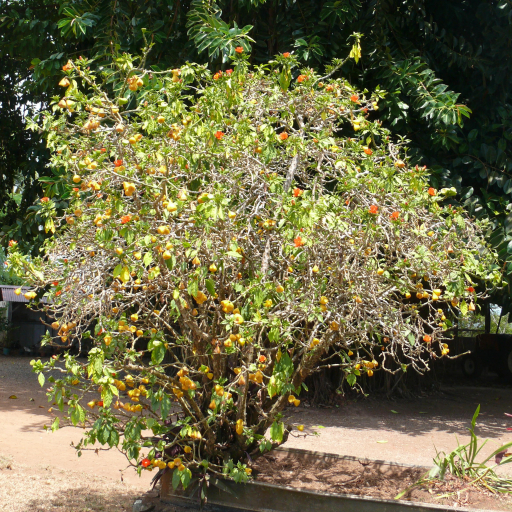
Plant Overview
Often called the Rose Cactus or Wax Rose, Pereskia bleo is a fascinating botanical "missing link." While it is a true member of the cactus family, it defies expectations by sporting lush, broad green leaves rather than fleshy pads. Native to the shaded tropical forests of Central and South America, this plant offers a glimpse into what the ancestors of all cacti might have looked like millions of years ago.
🔍 How to Identify
- 🍃 Lush Foliage: Unlike typical cacti, it features large, thin, and glossy green leaves that look more like those of a citrus tree than a desert succulent.
- 🌸 Waxy Blooms: It produces stunning, cup-shaped flowers in shades of vibrant orange or brick red, centered with a burst of yellow stamens that look remarkably like wild roses.
- 🌵 Spiny Stems: Despite the soft leaves, the woody stems are heavily armed with clusters of long, needle-sharp black spines that grow more formidable as the plant ages.
🏡 In Your Garden
- 💧 Tropical Needs: Because it has large leaves that lose moisture quickly, this "thirsty cactus" requires much more frequent watering and higher humidity than its desert-dwelling cousins.
- ☀️ Light & Growth: It thrives in bright, indirect light or dappled sun; too much harsh, direct afternoon sun can scorch the delicate leaves, yet too little light will prevent its iconic flowering.
- 🪴 Soil Preference: It dislikes the sandy, nutrient-poor soil usually sold for cacti. Instead, it prefers a rich, well-draining organic mix that mimics a forest floor.
⚠️ Safety & Toxicity
- ⚔️ Physical Hazard: The spines are the primary concern. They are incredibly sharp and can easily penetrate standard gardening gloves. It should be planted away from high-traffic paths.
- 🐾 Pets & Children: While not listed as highly toxic if ingested, the mechanical damage from the spines poses a severe risk to curious pets or toddlers.
- 🧤 Handling: Always use heavy-duty leather gloves or "cactus tongs" when pruning or repotting to avoid painful punctures.
✨ Fun Fact
In Malaysia and Singapore, Pereskia bleo is known as "Jarum Tujuh Bilah" (Seven-Star Needle). It is a popular "living pharmacy" plant in local folklore, where the leaves are sometimes eaten raw or brewed into tea by practitioners who believe it helps combat inflammation and high blood pressure.

Detailed Care Instructions
| Humidity | Normal |
| Lighting | Full Sun |
| Difficulty | Medium |
| Hibernation | Cold Period |
| Hardiness Zones | 9 - 11 |
To grow Pereskia bleo, also known as rose cactus or leaf cactus, follow these steps:
- Choose a suitable location: Pereskia bleo prefers bright indirect sunlight, so place it in a spot with partial shade or filtered sunlight. Avoid direct sunlight as it can burn the leaves.
- Plant selection: Select a healthy and well-rooted cutting or young plant from a reputable nursery or garden center.
- Potting: Use a well-draining potting mix, preferably one specifically formulated for cacti or succulents. Choose a pot with drainage holes to allow excess water to escape.
- Watering: Water the plant thoroughly and then allow the soil to dry out slightly between watering sessions. Avoid overwatering, as Pereskia bleo is susceptible to root rot. Adjust the watering frequency based on the humidity of your environment.
- Fertilization: Feed the plant with a balanced, water-soluble fertilizer once a month during the growing season (spring and summer). Follow the package instructions for proper dosage.
- Pruning: Use clean, sharp pruning shears to remove any dead or damaged branches. You can also prune to shape the plant or control its size, although it is important to note that Pereskia bleo can grow quite large if given the optimal conditions.
- Humidity: Maintain moderate humidity around the plant. You can increase humidity by misting the leaves regularly or placing the pot on a tray filled with pebbles and water. Just make sure the bottom of the pot does not touch the water to prevent overwatering.
- Temperature: Pereskia bleo thrives in warm temperatures between 65-85°F (18-29°C). Protect it from cold drafts and temperatures below 50°F (10°C).
- Propagation: If desired, you can propagate Pereskia bleo through stem cuttings. Take a cutting and allow it to callous for a day or two before planting it in a well-draining potting mix. Keep the soil slightly moist until the cutting develops roots.
By following these steps, you should be able to successfully grow Pereskia bleo and enjoy its unique beauty.

Place in a bright room that is sun drenched almost all day. Or directly in a south-facing window.

To water this particular plant, it is important to first assess the soil moisture level by feeling the top layer of soil with your fingers. If the soil feels dry to the touch, it is time to water the plant. When watering, it is important to make sure the water reaches the root zone rather than just wetting the surface. This can be achieved by watering slowly and deeply, allowing the water to soak into the soil. It is also important to avoid getting water on the leaves as this can lead to fungal growth. The frequency of watering will depend on a variety of factors such as the temperature, humidity, and the size of the pot. It is best to water this plant when the top layer of soil feels dry to the touch.
To fertilize this plant, use a balanced fertilizer during the growing season (spring and summer). Dilute the fertilizer to half the recommended strength and apply it every two weeks. Avoid fertilizing during the dormant season (fall and winter). Additionally, ensure that the soil is well-draining and rich in organic matter. Water the plant deeply but infrequently, allowing the soil to dry out slightly between watering sessions.
Pereskia Bleo plant prefers a well-draining soil that is rich in organic matter. The soil should be slightly acidic, with a pH range of 5.5-6.5. A good soil mix for this plant can include peat moss, perlite, vermiculite, and sand. It is important to ensure that the soil provides good aeration for the roots and does not retain too much moisture. Overwatering can lead to root rot and other problems. Regular fertilization with a balanced fertilizer can also help promote healthy growth and flowering in the Pereskia Bleo plant.
To propagate this plant, the first step is to select a healthy stem cutting that is at least 4-6 inches long and has several leaves. It is important to use a clean, sharp tool to make a clean cut at a 45-degree angle.
Next, remove the leaves from the lower half of the stem cutting, leaving only a few leaves at the top. This will ensure that the cutting focuses its energy on growing roots rather than supporting leaves.
Once the stem cutting has been prepared, dip the cut end into rooting hormone powder and plant it in a well-draining soil mixture. Make sure to cover the cut end with soil and water it thoroughly.
To encourage root growth, it is recommended to keep the soil slightly moist and to place the cutting in a warm and bright location, but out of direct sunlight. It may take several weeks for the cutting to grow roots and establish itself in the soil.
Once the cutting has rooted, it can be gradually acclimated to brighter light and a more regular watering schedule. Eventually, it will grow into a mature plant.








