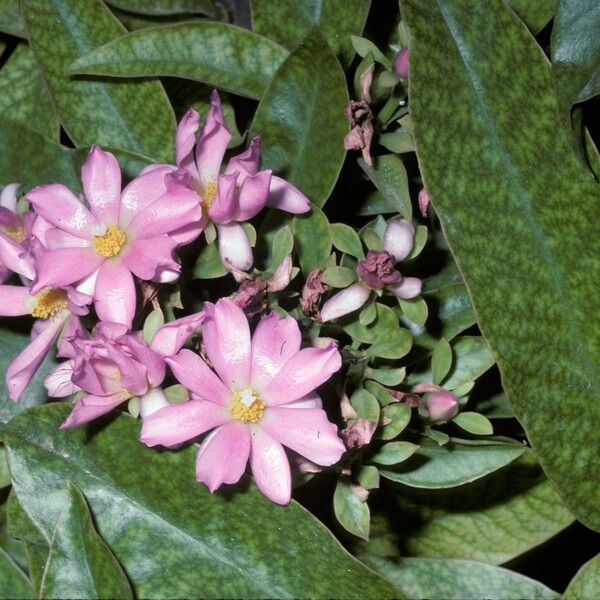
Plant Overview
Often called the "Rose Cactus" or "Wax Rose," Pereskia grandiflora is a botanical rebel that challenges everything you think you know about cacti. While most cacti traded their leaves for spines millions of years ago, this Brazilian native kept its lush foliage, looking more like a tropical shrub than a desert dweller. It serves as a "living fossil," offering a rare glimpse into the evolutionary history of the cactus family.
🔍 How to Identify
- 🍃 Lush Foliage: Unlike typical cacti, it boasts large, fleshy, bright green leaves that are elliptical in shape and look remarkably like those of a citrus tree.
- 🌸 Rose-like Blooms: It produces stunning clusters of showy, pink to purplish flowers with a golden-yellow center of stamens, mimicking the appearance of a wild rose.
- 🌵 Hidden Armor: Don't let the leaves fool you; the woody, brownish stems are heavily armed with clusters of sharp, dark spines (areoles) that become more prominent as the plant matures.
🏡 In Your Garden
- 💧 A Thirsty Cactus: Because it maintains a high volume of leaves, this species requires significantly more water than its desert cousins. It prefers a tropical rhythm—thriving with regular moisture during the summer but needing a drier rest period in winter.
- ☀️ Sun and Space: It loves bright, direct sunlight to fuel its heavy blooming cycle. Because it grows as a woody shrub or small tree, it needs plenty of vertical space and can even be trained into a formidable (and beautiful) defensive hedge.
- 🪴 Soil Preference: While it is more tolerant of rich soil than other cacti, drainage is still paramount. Use a mix that includes perlite or coarse sand to ensure the roots never sit in stagnant water.
⚠️ Safety & Toxicity
- ⚔️ Physical Danger: The primary risk is mechanical. The spines are long, stiff, and very sharp. They can easily penetrate gardening gloves and skin, leading to painful punctures or infections.
- 🐾 Pet & Child Safety: While the plant is generally not considered chemically toxic to cats, dogs, or humans, the thorns make it a significant hazard. It should be planted away from walkways or areas where children and pets play.
✨ Fun Fact
- 🧬 Evolutionary Link: Pereskia is one of the few cactus genera that still performs photosynthesis primarily through its leaves rather than its stems. This makes it a crucial subject for scientists studying how plants transitioned from leafy forests to arid deserts!

Detailed Care Instructions
Pereskia Grandiflora plant requires regular watering to ensure its healthy growth. The frequency of watering largely depends on the climate and season. In general, this plant needs to be watered thoroughly every 7-10 days during the growing season. It is important to ensure that the soil is moist but not waterlogged as this can cause root rot.
To water the plant, pour water slowly and evenly around the base of the plant until the soil is adequately moistened. Avoid watering directly onto the leaves or flowers, as this can cause damage to the plant and increase the risk of fungal disease.
It is essential to monitor the soil moisture level regularly. The best way to check the soil moisture is by inserting your finger about an inch into the soil. If it feels dry, it is time to water the plant. If the soil feels moist, delay watering for a few more days.
During the winter months when the plant is dormant, reduce watering frequency. Allow the soil to dry out slightly before watering again. This will prevent overwatering and ensure the health of the plant.
The type of soil suitable for the Pereskia Grandiflora plant is well-draining soil that is rich in nutrients. The ideal soil pH for this plant is slightly acidic, ranging from 6 to 6.5. A good soil mix for this plant can be a combination of organic matter (such as compost) and coarse sand or perlite to improve drainage. It is important to keep the soil moist but not waterlogged, as excessive moisture may lead to root rot. Additionally, a layer of mulch can be added to help retain moisture in the soil and suppress weed growth. Amending the soil with fertilizer during the growing season can also promote healthy growth and flowering.








