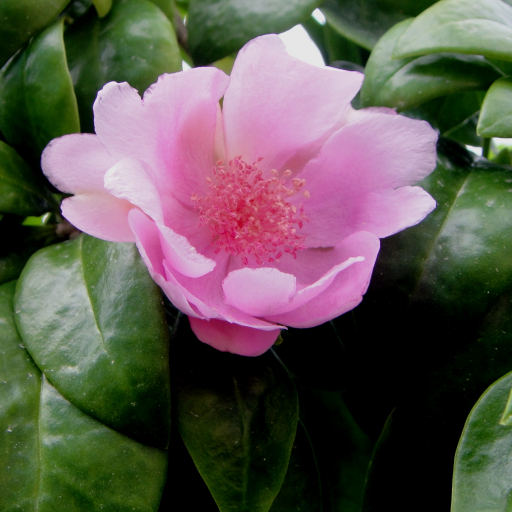
Plant Overview
Known as the "Bayahibe Rose," the Pereskia quisqueyana is a botanical marvel that challenges everything you thought you knew about cacti. Native exclusively to a small coastal strip in the Dominican Republic, this "living fossil" is one of the few cacti that still bears true, lush green leaves. It serves as a beautiful link between prehistoric plants and the desert-dwellers we recognize today.
🔍 How to Identify
- 🌸 The "Rose" Bloom: It produces delicate, butter-pink flowers that look remarkably like wild roses, appearing at the tips of the branches.
- 🍃 Waxy Foliage: Unlike most cacti, it features bright green, elliptical leaves that are succulent and glossy, allowing it to store water while looking like a standard shrub.
- 🌵 Spiny Stem: Do not let the soft leaves fool you; the woody, brownish-gray trunk is covered in clusters of sharp, needle-like spines that emerge from fuzzy cushions called areoles.
🏡 In Your Garden
- 🏝️ Coastal Roots: In its natural habitat, it thrives in rocky, limestone soil near the sea. If you are lucky enough to grow one, it requires extremely well-draining soil and a "wet-dry" cycle to mimic tropical coastal weather.
- ☀️ Sun Seeker: This plant craves bright, direct sunlight to produce its signature pink blooms. Without enough light, it will drop its leaves and become "leggy" as it stretches for the sun.
⚠️ Safety & Toxicity
- 🌵 Physical Hazard: While not known to be chemically toxic to humans or pets, the spines are incredibly sharp and can easily puncture skin.
- 🛡️ Placement: It should be planted away from walkways or areas where children and pets play. Always wear thick leather gloves when pruning or moving this plant.
✨ Fun Fact
The Bayahibe Rose is so rare and culturally significant that it was declared the National Flower of the Dominican Republic in 2011 to protect it from extinction; it is currently listed as Critically Endangered in the wild.

Detailed Care Instructions
To grow Pereskia quisqueyana, follow these steps:
- Select a location: Pereskia quisqueyana prefers bright, indirect sunlight. Choose a location that receives several hours of indirect sunlight a day, such as a bright window or a spot in the garden with partial shade.
- Prepare the soil: Pereskia quisqueyana grows well in well-draining soil. You can use a cactus or succulent soil mix, or mix regular potting soil with perlite or coarse sand to improve drainage.
- Planting: If you are starting with seeds, sow them in the prepared soil by lightly pressing them into the soil surface. If you are planting a cutting, allow it to callous for a day or two before planting. Make a small hole in the soil, insert the cutting, and gently press the soil around it.
- Watering: Water the plant thoroughly after planting to settle the soil and encourage root establishment. Afterward, water the plant deeply but infrequently, allowing the top inch of soil to dry out between waterings. Avoid overwatering, as this can lead to root rot.
- Fertilization: Use a balanced, water-soluble fertilizer formulated for cacti and succulents. Fertilize the plant once every 4-6 weeks during the growing season (spring and summer) following the manufacturer's instructions.
- Pruning: Prune Pereskia quisqueyana to control its size and shape. You can trim back long, leggy growth and remove any dead or damaged branches. Pruning also helps encourage bushier growth.
- Propagation: Pereskia quisqueyana can be propagated through stem cuttings. Take a cutting from a healthy plant, allow it to callous for a few days, and then plant it in well-draining soil. Keep the soil slightly moist until new roots develop.
- Pest control: Monitor the plant for common pests like mealybugs or scale insects. If you notice any infestation, use an insecticidal soap or a horticultural oil to control the pests.
Remember to research the specific care requirements for Pereskia quisqueyana as it may have additional needs that are unique to its species.
To properly water the Pereskia Quisqueyana plant, it is important to consider the type of soil it is planted in. The soil should be well-draining and have good air circulation. Water the plant only when the soil is dry to the touch about 1-2 inches below the surface. When watering, pour water around the base of the plant, taking care not to wet the leaves or stem. Use room temperature water and avoid using hard water or water that contains high levels of dissolved solids. The plant requires moderate watering during the growing season, and less frequent watering during the winter months when it's dormant. Overwatering can cause root rot, so be sure to allow the soil to dry out between each watering session.
To fertilize this plant, use a balanced fertilizer with equal amounts of nitrogen, phosphorus, and potassium. Dilute the fertilizer to half-strength and apply it every two weeks during the growing season. Be careful not to over-fertilize the plant, as this can lead to nutrient burn and other problems. Additionally, ensure the soil is moist before applying fertilizers.
The ideal soil for the Pereskia Quisqueyana plant is one that is well-draining, nutrient-rich, and slightly acidic with a pH between 5.5 and 6.5. It should be a mix of organic matter, such as peat moss or compost, and inorganic matter, such as perlite or sand, to provide the perfect balance of aeration and moisture retention. Additionally, adding slow-release fertilizer, such as a 10-10-10 or 14-14-14 NPK blend, to the soil during planting will help provide the necessary nutrients for optimum growth and development. It is also recommended to use a potting mix specifically designed for cacti and succulent plants to ensure the best results.
To propagate the plant, you will need to take stem cuttings from the mother plant. Choose a healthy stem with several nodes and cut it at an angle just below the lowest node. Remove the bottom leaves from the cutting, leaving only a few leaves at the top. Dip the cut end in rooting hormone and plant it in a pot with well-draining soil. Keep the soil moist and place the pot in a warm, bright location, but out of direct sunlight. After a few weeks, the cutting should begin to grow roots. Once the roots have established, you can transplant the new plant into a larger pot or into the ground.








