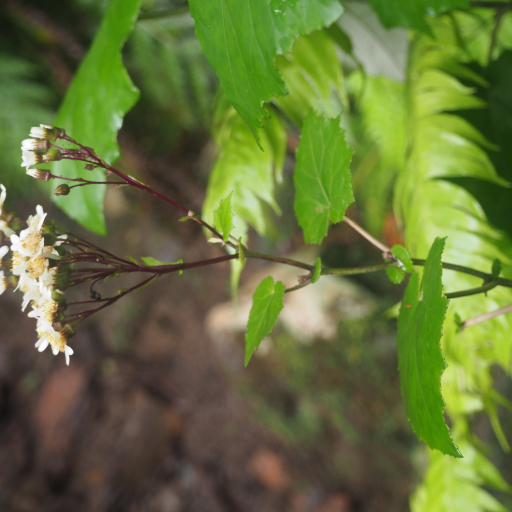
Plant Overview
Known as the "Tenteniguada" in its native home, Pericallis appendiculata is a floral treasure endemic to the misty laurel forests of the Canary Islands. Often referred to as a wild ancestor to the common garden Cineraria, this plant carries an air of prehistoric elegance with its large, soft leaves and cloud-like clusters of blooms. It thrives in the cool, humid "sea of clouds" that hugs volcanic slopes, making it a true specialist of the Atlantic islands.
🔍 How to Identify
- 🌸 The Blooms: Features clusters of daisy-like flowers with white or pale lavender ray petals surrounding a deep purple or magenta central disc.
- 🍃 The "Appendages": Its namesake feature is the pair of small, ear-like leaf lobes (appendicles) found at the base of the leaf stalks, which look like tiny green wings.
- ☁️ Foliage Texture: The broad, heart-shaped leaves have a distinctive "felted" underside, covered in fine white hairs that help the plant trap moisture from the mountain mist.
🏡 In Your Garden
- 💧 The Mist Lover: Unlike many succulents from the same region, this plant craves humidity. It is best suited for "woodland" garden styles where it can stay cool and protected from the scorching afternoon sun.
- 🌱 Sensitive Roots: It prefers loose, volcanic, or organic-rich soil that drains rapidly. It is particularly sensitive to being moved; once it finds a spot it likes in a damp, shady corner, it is best to leave it undisturbed.
⚠️ Safety & Toxicity
- 🚫 Ingestion Warning: Like many members of the Pericallis genus, this plant contains pyrrolizidine alkaloids. These are natural defense chemicals that can be toxic if eaten.
- 🐾 Pet Safety: Keep this plant away from curious cats, dogs, or livestock. Ingestion can lead to liver irritation or more serious systemic issues over time.
✨ Fun Fact
The name appendiculata literally means "having small appendages." In the wild, these "ears" at the base of the leaves help the plant funnel every drop of condensation from the morning fog directly down toward its root system!

Detailed Care Instructions
| Humidity | Normal |
| Lighting | Part Sun |
| Toxicity | Poisonous |
| Difficulty | Easy |
| Temperature | 18°C - 30°C |
| Hardiness Zones | 11 - 12 |
To grow Pericallis Appendiculata, commonly known as the Canary Island Ivy or Canary Island Bellflower, follow these steps:
- Choose a suitable location: Pericallis Appendiculata prefers full sun to partial shade. Select a location with well-draining soil.
- Prepare the soil: Ensure that the soil is loamy and well-draining. Remove any weeds or rocks from the planting area and amend the soil with organic matter, such as compost or aged manure, to improve fertility and drainage.
- Planting: Dig a hole that is slightly larger than the plant's root ball. Gently place the plant in the hole, ensuring that the top of the root ball is level with or just above the soil surface. Fill the hole with soil and press it firmly around the plant to eliminate any air pockets.
- Watering: Water the plant thoroughly after planting and provide regular watering, especially during dry spells. However, be cautious not to overwater, as excessive moisture can lead to root rot.
- Mulching: Apply a layer of organic mulch, such as wood chips or straw, around the base of the plant. Mulching helps to retain moisture in the soil, suppresses weed growth, and regulates soil temperature.
- Fertilizing: Apply a balanced, slow-release fertilizer in spring to promote healthy growth and blooming. Follow the product instructions for proper dosage.
- Pruning: Prune Pericallis Appendiculata after flowering to maintain its shape and remove any dead or damaged branches. This will also help promote bushier growth.
- Pests and diseases: Monitor the plant for common pests like aphids, snails, or slugs. If necessary, treat them with appropriate pest control methods. Ensure good air circulation around the plant to prevent fungal diseases.
- Propagation: Pericallis Appendiculata can be propagated through stem cuttings or by dividing mature plants. Take stem cuttings from healthy plants and root them in a well-draining soil mix. Divide mature plants in early spring.
- Winter care: In colder regions, Pericallis Appendiculata may not be fully frost hardy. Protect the plant from freezing temperatures by mulching around the base and covering it with a frost cloth or moving it indoors if necessary.
Remember to check your particular region's climate and adapt the care accordingly to ensure the best conditions for growing Pericallis Appendiculata.
Pericallis appendiculata, also known as a perennial herbaceous plant, requires consistent and adequate watering to thrive. When watering, it is important to avoid overwatering as well as letting the soil become too dry. This can be achieved by placing a finger in the soil about an inch deep to gauge the moisture level. If the soil feels dry, it is time to water.
A recommended watering method is to thoroughly soak the soil until water begins to drain from the bottom of the pot or container. It is important to allow the soil to dry out slightly before watering again, as too much water can lead to root rot and other issues. In addition, it is best to water in the morning to allow the plant to absorb the water and prevent excess moisture from sitting on the leaves and leading to disease or pests.
Overall, providing consistent and appropriate watering practices can help ensure the health and longevity of the Pericallis appendiculata plant.
To fertilize this plant, apply a balanced fertilizer with an N-P-K ratio of 10-10-10 every two weeks during the growing season. Dilute the fertilizer to half strength, as too much can burn the roots. Water the plant well before and after applying the fertilizer. Avoid fertilizing during periods of drought or stress.
Pericallis appendiculata prefers moist, well-draining soil that is high in organic matter. A soil mix with a pH range between 5.5 and 6.5 is ideal for this plant. It is recommended to use a potting soil mix that is formulated for African violets or other indoor flowering plants. The soil should be loose and aerated to allow for good water drainage and air circulation around the roots. Regular fertilization with a balanced liquid fertilizer can also benefit this plant. It is important to avoid over-watering or allowing the soil to become waterlogged, as this can lead to root rot and other plant problems.
To propagate this plant, first locate a healthy mature specimen with strong stems and leaves. Select a stem that is at least 4 inches long and has several leaves. Using a sharp knife or scissors, make a clean cut just below a node on the stem.
Remove the leaves from the lower half of the stem, leaving a few at the top. Dip the cut end into rooting hormone powder and tap off any excess.
Fill a pot with a well-draining potting mix and moisten it thoroughly. Make a small hole in the soil and insert the stem cutting, making sure that the soil contacts the hormone-treated end.
Cover the pot with a plastic bag to create a humid environment and place it in a bright, indirect light location. Keep the soil moist but not waterlogged, and remove the plastic bag once roots begin to form.
Once the new plant has established roots and started to grow, it can be transplanted to a larger container or into the garden.








