Plant Overview
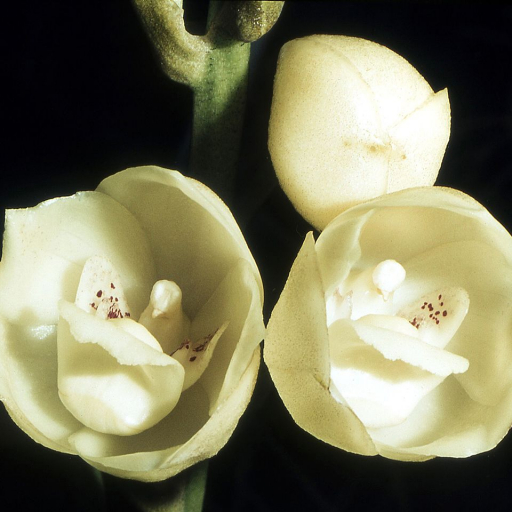
Known as the "Holy Ghost Orchid" or "Dove Orchid," this majestic species is the national flower of Panama. It is world-famous for the hidden, marble-white "dove" resting at the heart of its bloom, looking as if it is poised to take flight. In its native Central American haunts, it is a symbol of peace and purity, though its rarity has made it a legendary and highly sought-after find for orchid enthusiasts.
🔍 How to Identify
- 🕊️ The Flower: The blooms are waxy, cup-shaped, and creamy white. If you peer into the center, the column and lip form the unmistakable shape of a tiny dove with purple-speckled "wings."
- 🍃 The Foliage: It produces large, pleated, lance-shaped leaves that look more like a young palm tree than a typical orchid. These leaves can reach an impressive height of up to three feet.
- 🧅 The Pseudobulbs: At the base, you’ll find massive, egg-shaped green bulbs. These act as water reservoirs, allowing the plant to survive during the tropical dry season.
🏡 In Your Garden
- 💧 The Resting Period: This orchid follows a strict seasonal clock. After it finishes growing, it enters a dormancy phase where it may lose its leaves. You must significantly reduce watering during this time; providing too much moisture when the plant is "sleeping" is the most common cause of root rot.
- 🌬️ Air and Humidity: Coming from cloud forests and tropical lowlands, it craves high humidity (60-80%) but absolutely requires moving air. Stagnant, damp air will quickly lead to unsightly black spots on its beautiful pleated leaves.
⚠️ Safety & Toxicity
- 🛡️ Status: Generally non-toxic.
- 🐾 Details: This orchid is not known to be poisonous to cats, dogs, or humans. However, because the leaves are very fibrous and the flowers are waxy, ingesting them can cause mild digestive upset in curious pets. It is best displayed out of reach to protect both the pet and the rare bloom.
✨ Fun Fact
🇵🇦 A National Icon: Peristeria elata is so revered in Panama that it is protected by international law. It is listed under CITES Appendix I, the highest level of protection, meaning it is illegal to trade wild-collected plants. Every orchid you see in a collection must be lab-grown from seed or tissue culture!

Detailed Care Instructions
| Humidity | High |
| Lighting | Full Sun |
| Difficulty | Medium |
| Temperature | 18°C - 24°C |
To grow Peristeria elata, also known as the Holy Ghost orchid or dove orchid, follow these steps:
- Climate: Ensure that you live in a suitable climate for growing this species. Peristeria elata is native to Central and South America and requires a warm and humid environment.
- Lighting: Provide bright, indirect light for the orchid. Avoid direct sunlight, as it can scorch the leaves. Place the plant near an east or west-facing window.
- Temperature: Maintain a temperature range of 65-85°F (18-29°C) throughout the day. The orchid prefers slightly cooler temperatures at night.
- Humidity: Peristeria elata requires high humidity. Increase humidity by placing the orchid on a tray filled with pebbles and water, ensuring the pot does not sit in water. Alternatively, use a humidifier or mist the orchid regularly.
- Potting medium: The orchid prefers a well-draining and organic potting medium. A mix of coarse bark, sphagnum moss, and perlite or vermiculite works well. Avoid using soil or potting mix meant for terrestrial plants.
- Watering: Water the orchid thoroughly when the top inch of the potting medium feels dry. Ensure good drainage to prevent waterlogged roots. During the growing season, water more frequently, and reduce watering slightly during winter.
- Fertilizer: Use a balanced orchid fertilizer diluted to half the recommended strength. Apply fertilizer monthly during the growing season, spring to early fall.
- Pot selection: Choose a pot with sufficient drainage holes, and ensure that the pot is not too big for the plant. Orchids prefer crowded conditions for optimal growth.
- Support: Holy Ghost orchids often require support due to their large, showy flowers. Use a sturdy stake or bamboo stick to support the flower spikes.
- Repotting: Repot the orchid every 2-3 years or when the potting medium starts decomposing. Perform this task during the dormant period after flowering.
- Dormancy: Holy Ghost orchids have a natural dormant period. During this time, reduce watering and allow the plant to rest. Continue providing adequate humidity and maintaining temperatures as mentioned above.
- Patience: Growing Peristeria elata can require patience, as it may take several years to bloom. Be consistent in providing the optimal growing conditions, and your orchid will eventually reward you with beautiful flowers.
Remember to research specific care requirements for Peristeria elata, as different cultivation techniques may vary depending on your region and available resources.

Place in a bright room that is sun drenched almost all day. Or directly in a south-facing window.

To water this plant, you should first consider the natural environment it comes from, including the climate, humidity, and altitude. This will help you determine the appropriate amount of water this plant needs.
When watering, be sure to use room temperature or lukewarm water, as cold water can shock the plant. You can water the plant either from below by placing it in a dish of water, or from above using a watering can. Make sure the water reaches all parts of the soil, but be careful not to overwater or let the plant sit in standing water, as this can lead to root rot.
As a general rule, this plant should be watered when the top inch of soil feels dry to the touch. This may mean watering once or twice a week, or more or less frequently depending on the plant's specific needs. Additionally, if the plant is in a dry or low-humidity environment, it may require more frequent watering to prevent dehydration.
To fertilize the plant, use a balanced fertilizer with equal amounts of nitrogen, phosphorous, and potassium. Apply the fertilizer during the growing season, which is usually in the spring and summer months. Dilute the fertilizer according to the instructions on the package, and apply it about once a month. Avoid over-fertilizing as it can harm the plant, and always water the plant before and after fertilizing to help distribute the nutrients.
To cultivate Peristeria Elata plants, the soil should be a well-draining mixture of organic and inorganic components. It should be acidic in nature, with a pH range of 5.5 to 6.5. A good soil mix would contain a blend of sphagnum moss, shredded tree fern, perlite, and charcoal. The moss helps to retain moisture, while the tree fern provides organic matter and allows for good air circulation in the soil. Perlite and charcoal add drainage to the mix, helping to prevent water-logging which may lead to root rot. It's important to note that the soil should be kept moist but not soggy, as overwatering can also lead to plant stress and damage.
Peristeria Elata can be propagated through division of its root system. The mother plant should be carefully uprooted and the roots should be washed clean of soil. The root system should be divided into smaller sections, ensuring that each section has at least one healthy shoot and root system. These smaller sections should then be planted in separate pots filled with a well-draining potting mix and kept in a warm and humid location. Regular watering and fertilization should be provided to encourage healthy growth. Once the new plants have established roots and started to grow, they can be transplanted into larger pots or directly into the ground.








