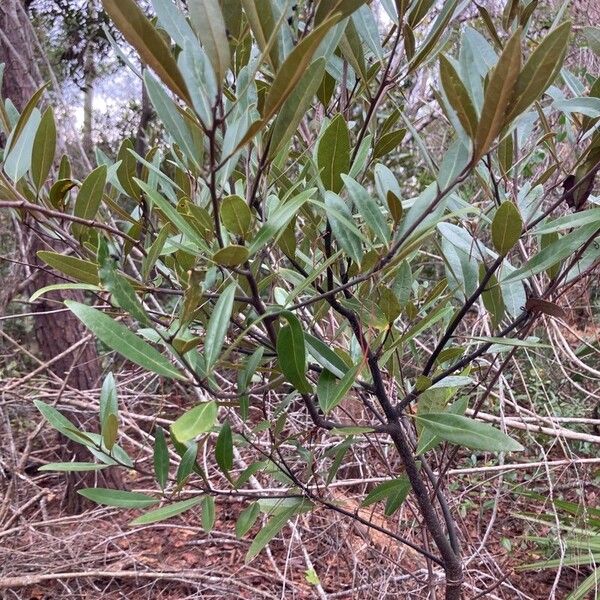
Plant Overview
Known affectionately as the Silkbay or Scrub Bay, Persea humilis is a resilient evergreen gem native strictly to the ancient sandy ridges of Florida. While it belongs to the same family as the delicious Avocado, this plant is more of a hardy survivor of the sun-drenched scrublands than a producer of giant fruit. Its leaves hold a secret perfume, releasing a spicy, bay-leaf aroma whenever they are crushed.
🔍 How to Identify
- 🍃 Silky Undersides: The most iconic feature is the underside of the leaves, which are covered in fine, rusty-gold or copper-colored hairs that feel like soft silk to the touch.
- 🍂 Leaf Texture: The top of the leaf is a smooth, leathery, deep green, creating a striking metallic contrast with the coppery shimmer underneath.
- 🪵 Growth Habit: Unlike its towering cousins, the Silkbay usually remains a large shrub or a small, gnarled tree, often sporting a twisty trunk shaped by the coastal winds.
🏡 In Your Garden
- 🏝️ Sandy Specialists: If you are lucky enough to grow one, remember they demand "dry feet." They evolved in the Florida scrub, meaning they thrive in nutrient-poor, sandy soil and are incredibly drought-tolerant once established.
- 🦋 A Butterfly Nursery: This plant is a vital host for the Palamedes Swallowtail butterfly. By planting a Silkbay, you are providing a direct food source for their caterpillars, which eventually transform into massive, velvety black-and-yellow butterflies.
⚠️ Safety & Toxicity
- 🐾 Pet Warning: Like many members of the Persea genus (including Avocado), the leaves and fruit contain a compound called Persin. While generally harmless to humans, it can be toxic to dogs, cats, and especially birds or horses.
- 🧤 Sensory Note: While the leaves smell wonderful, the oils can occasionally cause mild skin irritation in very sensitive individuals. It is best to wash your hands after pruning or crushing the leaves.
✨ Fun Fact
The Silkbay is a "fire-adapted" species. In the wild, it actually relies on occasional lightning-sparked wildfires to clear out larger competing trees; it has a massive underground root system that allows it to sprout back to life almost immediately after the flames have passed!

Detailed Care Instructions

Place in a bright room that is sun drenched almost all day. Or directly in a south-facing window.

Some plants require more regular watering than others, which should be done every few days. It's critical to maintain the soil moist all of the time. The water requirements of the same plant placed in pots with varying sizes will differ. Because the water in the smaller pot evaporates faster than the water in the larger pot, it will require more watering. Regardless of pot size, the surface should constantly be maintained moist.







