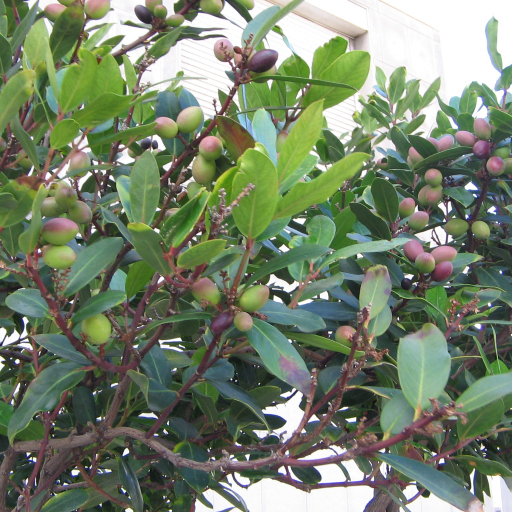
Plant Overview
Known as the Indian Bay or Viñátigo, Persea indica is a majestic evergreen tree that serves as a living link to the prehistoric laurel forests of the Macaronesian islands. Despite its name, it isn’t from India—it is a proud native of the Azores, Madeira, and the Canary Islands. Often called "Madeira Mahogany" for its rich, high-quality wood, this tree brings an ancient, tropical elegance to any landscape.
🔍 How to Identify
- 🍃 Lush Foliage: The leaves are large, elliptical, and a deep, glossy green. A unique giveaway is that older leaves often turn a vibrant, fiery red before falling, creating a beautiful contrast against the green canopy.
- 🌸 Discreet Blooms: It produces small, star-shaped flowers that are pale green or yellowish. They aren't flashy, but they emit a subtle, pleasant fragrance during the spring.
- 🍇 Dark Fruit: In late summer, the tree produces small, oblong fruits (drupes) that resemble miniature avocados. They transition from green to a dark, blue-black hue when ripe.
🏡 In Your Garden
- ☁️ Cloud Forest Vibes: This plant thrives in high-humidity environments. If you live in a dry area, it will appreciate being sheltered from harsh, drying winds which can scorch its large leaves.
- 🌱 Root Stability: Like many members of the Laurel family, it develops a significant root system and dislikes being transplanted. Choose its "forever home" carefully, ensuring the soil is rich, acidic, and well-draining.
- 💧 Watering Nuance: While it loves moisture, it cannot stand "wet feet." It prefers the consistent dampness of a forest floor rather than a swampy bog.
⚠️ Safety & Toxicity
- 🐾 Toxic to Animals: Like its cousin the Avocado, Persea indica contains persin, a fungicidal toxin. It is particularly dangerous to birds, horses, goats, and rabbits, potentially causing heart distress.
- 👶 Keep Away from Kids: The fruits are not edible for humans and can cause digestive upset if ingested. It is best treated as a purely ornamental specimen.
✨ Fun Fact
Persea indica is considered a "living fossil." It is a primary component of the Laurisilva forests, a type of vegetation that covered much of the Mediterranean basin millions of years ago before the Ice Ages pushed them back to the isolated sanctuary of the Atlantic islands.

Detailed Care Instructions
To grow a Persea Indica or avocado plant, you can follow these steps:
- Choose the right type of avocado plant: There are many varieties of avocado plants available, so it is important to select one that is suitable for your climate and growing conditions. Some popular varieties include Hass, Fuerte, and Reed.
- Purchase a suitable avocado plant: You can buy an avocado plant from a local nursery or garden center. Alternatively, you can start from seed by saving the seed from a ripe avocado fruit.
- Prepare a container: Avocado plants can be grown in containers indoors or outdoors, depending on your climate. Select a pot that is at least 18 inches (45 cm) in diameter and has drainage holes at the bottom.
- Planting: Fill the container with well-draining potting soil, leaving about an inch of space from the rim. Gently place the avocado plant in the center and cover the roots with soil, ensuring that the top of the root ball is level with the soil surface.
- Watering: Avocado plants need consistent moisture, so water the plant thoroughly after planting and continue to water regularly. Avoid overwatering as it can lead to root rot. Allow the soil to dry out slightly between waterings.
- Sunlight: Avocado plants require bright, indirect sunlight for healthy growth. Place the plant in a location where it will receive at least 6-8 hours of sunlight per day. If growing indoors, place it near a bright window.
- Fertilization: Avocado plants benefit from regular fertilization. Use a balanced, slow-release fertilizer designed for houseplants or a specially formulated avocado fertilizer, following the manufacturer's instructions.
- Pruning: As the avocado plant grows, you may need to prune it to maintain its shape and promote bushier growth. Prune back any leggy or damaged branches using clean, sharp pruning shears.
- Pollination: Most avocado plants are self-pollinating, but some varieties benefit from cross-pollination for better fruit production. If growing indoors, you may need to aid pollination by gently shaking the plant or using a small, soft brush to transfer pollen between flowers.
- Harvesting: Avocado fruits can take several months or even years to mature, depending on the variety and growing conditions. Once the fruit reaches its mature size and the skin changes from green to dark green or black, it is ready to be harvested.
Remember that growing an avocado plant may require patience as they can take time to bear fruit. Additionally, the natural climate and conditions of your location can greatly affect the growth and fruit production of avocado plants.
To water this plant, you should first determine its moisture needs by checking the soil with your fingers or a moisture meter. The ideal soil moisture level should be evenly moist, but not waterlogged or bone-dry. Then, water the plant at its base rather than from the top, using a watering can or hose with a gentle stream. Allow the water to soak into the soil slowly to avoid waterlogging or runoff. It is recommended to water this plant on a regular schedule, depending on the environmental factors, such as temperature, humidity, and sunlight. Additionally, ensure to provide adequate drainage and avoid overwatering, as this plant is susceptible to root rot and fungal diseases. Finally, check the plant regularly for signs of dehydration, such as wilting or yellowing leaves, and adjust your watering regimen accordingly.
- Begin fertilizing the plant in the springtime when the weather starts to warm up.
- Use a balanced fertilizer with an NPK ratio of 10-10-10 or 20-20-20.
- Apply the fertilizer to the soil around the base of the plant, avoiding the leaves and stems.
- Water the plant immediately after fertilizing to help distribute the nutrients evenly.
- Repeat the fertilizing process every 4-6 weeks throughout the growing season.
- Stop fertilizing in the fall, as the plant will enter a dormant period and won't require any additional nutrients.
- Always read and follow the instructions on the fertilizer package carefully to avoid over-fertilization, which can harm the plant.
When selecting soil for Persea Indica, it is important to consider its desired characteristics. The soil should be well-draining and have a pH range of 6-7. A sandy loam or loamy soil with good nutrient content is ideal. The soil should also be able to retain moisture without becoming waterlogged, as overwatering can lead to root rot. It is recommended to mix in organic matter, such as leaf mold or compost, to improve the soil structure and add nutrients. Overall, a nutrient-rich, well-draining soil with a pH range of 6-7 is best suited for cultivating Persea Indica.
To propagate the Persea Indica plant, you can take stem cuttings from a healthy mother plant during the growing season. Select a stem that is mature but not too woody and has at least 2-3 nodes (where leaves emerge). Cut the stem at a 45-degree angle just below a node with a sharp, sterile pruning shears.
Remove the leaves from the bottom 1/3 of the stem and dip the cut end in rooting hormone powder. Plant the cutting in a well-draining potting mix, making sure the bottom node is buried in the soil. Water the cutting thoroughly and cover it with a plastic bag to create a humid environment.
Place the pot in bright, indirect light and keep the soil moist but not waterlogged. After a few weeks, check for rooting by gently pulling on the stem. If there is resistance, roots have formed.
Once the cutting has rooted, remove the plastic bag and gradually expose it to more light. Continue to care for it as a mature Persea Indica plant, watering when the top inch of soil feels dry and fertilizing monthly during the growing season.








