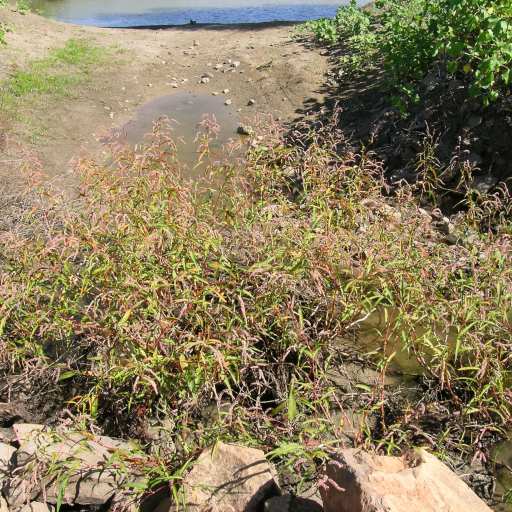
Plant Overview
Known as the Slender Knotweed, this graceful moisture-lover is often found hugging the edges of billabongs, creek beds, and damp garden corners. It acts like a living tapestry, weaving through wet soil with delicate, arching stems and nodding flower heads. While it may look fragile, it is a resilient survivor that thrives in conditions where other plants might drown.
🔍 How to Identify
- 🍃 The Blotched Leaf: Its narrow, lance-shaped leaves often feature a faint, dark "V" or smudge in the center, looking much like a lingering thumbprint.
- 🌸 Beaded Blooms: The flowers are tiny, usually a soft pink or white, and are arranged in very long, thin spikes that droop elegantly toward the ground.
- 🎋 Knotted Stems: True to the "Knotweed" name, the reddish stems have distinct, swollen joints (ocreae) that look like tiny bamboo knuckles.
🏡 In Your Garden
- 💧 Wetland Specialist: This plant is an "obligate wetland" species, meaning it is happiest with "wet feet." It is the perfect candidate for a rain garden, the edge of a backyard pond, or that one boggy patch in your yard where the grass refuses to grow.
- 🦋 Pollinator Buffet: Though the flowers are small, they are rich in nectar and serve as a vital pit stop for native bees, hoverflies, and small butterflies throughout the warmer months.
⚠️ Safety & Toxicity
- 🐾 Mild Risk: Persicaria decipiens is generally considered non-toxic, but like many of its relatives, it contains oxalic acid (the same compound found in spinach).
- 🐈 Details: While not deadly, if a curious pet grazes on it heavily, the oxalates can cause minor mouth irritation or an upset stomach. It is best kept as an ornamental rather than a snack.
✨ Fun Fact
The species name decipiens literally translates to "deceiving." It was given this name by botanists because it looks so remarkably similar to its cousins in the Persicaria genus that it frequently "deceived" experts into misidentifying it!

Detailed Care Instructions
To grow Persicaria Decipiens plant, also known as Dwarfbamboo or deceptively smartweed, in your garden, follow these steps:
- Climate and soil requirements: Persicaria Decipiens is a perennial plant native to East Asia. It prefers a well-draining soil that is consistently moist but not waterlogged. The plant can tolerate both full sun and partial shade. Ensure that your climate is suitable for this plant's growth.
- Propagation: You can propagate Persicaria Decipiens through seeds or division. If starting from seeds, sow them in spring or early summer, lightly covering them with soil. Keep the soil consistently moist until the seedlings emerge. Alternatively, you can divide an established plant in early spring or early fall.
- Planting: Prepare the planting area by loosening the soil and removing any weeds or rocks. Dig a hole slightly larger than the root ball of the seedling or division. Place the plant in the hole, ensuring that the top of the root ball is level with the soil surface. Fill in the hole with soil, gently firming it around the plant. Water thoroughly to settle the soil around the roots.
- Watering: Persicaria Decipiens requires consistently moist soil to thrive. Water the plant regularly, aiming to keep the soil evenly moist but not waterlogged. Adjust the watering frequency based on the weather conditions and the moisture level of the soil.
- Mulching: Apply a layer of organic mulch, such as wood chips or compost, around the base of the plant. This will help retain moisture, suppress weed growth, and improve the soil's quality as it breaks down.
- Maintenance: Persicaria Decipiens is generally a low-maintenance plant. However, it can spread vigorously, so you may need to trim back any unwanted growth to prevent it from overtaking other nearby plants. Deadhead spent flowers to encourage more blooms and prevent self-seeding if desired.
- Pests and diseases: Persicaria Decipiens is relatively resistant to common pests and diseases. However, keep an eye out for potential issues like aphids, slugs, or fungal diseases. Promptly address any problems by using organic pest control methods or consulting with a local gardening expert.
- Winter care: In colder regions, Persicaria Decipiens may die back in winter. Mulch around the base of the plant to protect the roots from frost, and cut back any dead foliage in early spring to allow for new growth.
By following these tips, you should be able to successfully grow Persicaria Decipiens in your garden.

Place in a bright room that is sun drenched almost all day. Or directly in a south-facing window.

To water this plant, first, assess the soil moisture by sticking your finger into the soil. If the soil feels dry to the touch, it is time to water. Slowly pour water at the base of the plant until it starts to come out of the drainage holes. Do not water the leaves and avoid getting water on the foliage as this can invite disease and rot. Water the plant deeply, but do not overwater, as this can lead to root rot. It is best to water this plant in the morning to allow time for any excess water to evaporate before temperatures cool down at night.
To fertilize the Persicaria Decipiens plant, apply a balanced fertilizer in the early spring before new growth begins. During the growing season, use a water-soluble fertilizer every 4-6 weeks. Avoid over-fertilization, as this can lead to excessive growth and weakened stems. Additionally, make sure to water the plant thoroughly after fertilizing to prevent root burn.
Persicaria decipiens is a plant that requires well-draining soil with high organic content. The ideal soil should be loamy and acidic, with a pH range between 5.5 and 7.5. A soil mix that includes materials such as compost, peat moss, and perlite can provide the necessary nutrients and aeration required for the plant to thrive. Excessive clay in the soil can lead to waterlogging and poor drainage, while sandy soil can cause the soil to dry out too quickly. It is also important to ensure that the soil is moist enough, but not waterlogged, to maintain healthy growth and prevent root rot. A well-draining soil allows for a healthy distribution of nutrients and oxygen, promoting vigorous growth and blooming. Regular fertilization and maintenance practices can help to enhance soil quality and optimize plant health.
Propagation of this plant can be achieved through various methods including seed propagation and vegetative propagation. To propagate the plant vegetatively, take cuttings from the mature plant during the growing seasons and carefully remove the lower leaves leaving several leaves on the top. Dip the cut ends of the cutting into hormone rooting powder and plant them in a pot filled with well-draining soil. Water the cutting and place it in a bright area but avoiding direct sunlight. Maintain the soil's moisture content by watering periodically until the plant has produced roots.
Alternatively, the plant can be propagated through division. To do this, carefully dig out the mature plant and separate the roots and stem segments. Transplant the divided stem segments into pots filled with well-drained soil and keep them moist by watering periodically. The plant may take some time to establish after division, but they will continue to grow and eventually produce desirable plants.








