Plant Overview
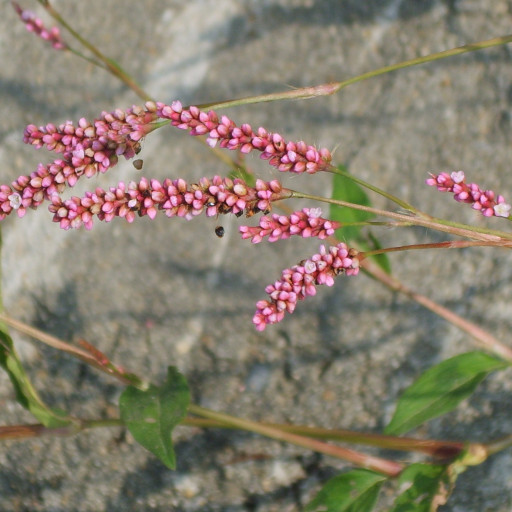
Known as the Oriental Lady's Thumb or Bristly Lady's Thumb, this dainty traveler originally hailed from East Asia but has since made itself at home across much of the globe. Often appearing in gardens as a self-invited guest, it is famous for the dark, thumbprint-like smudge on its leaves, which folklore says was left behind by someone pressing their thumb against the plant. While some consider it a weed, its cluster of tiny, jewel-like pink flowers adds a delicate charm to damp, shaded corners of the yard.
🔍 How to Identify
- 🍃 The "Thumbprint": The narrow, lance-shaped leaves often feature a dark purple or brownish "V" or smudge in the center, looking exactly like a faint ink stain.
- 🌸 Beaded Flowers: The flowers are tiny, dark pink to reddish-purple beads tightly packed into upright spikes (racemes) that look like miniature wands.
- 🖋️ Bristly Sheaths: Look closely at where the leaf meets the stem; you’ll find a papery sheath (called an ocrea) fringed with distinct, long bristles that give the plant its "longiseta" (long-bristle) name.
🏡 In Your Garden
- 🌱 The Great Opportunist: This plant thrives in disturbed soil, garden beds, and damp cracks in the pavement. It loves moisture but is surprisingly resilient to dry spells once it has established its roots.
- 🏃 Spread & Survival: It spreads primarily by seed, and a single plant can produce thousands. In a garden setting, it can quickly form a dense groundcover, which is great for suppressing other weeds but can become a nuisance if you prefer a tidy, minimalist look.
⚠️ Safety & Toxicity
- 🟢 General Safety: Persicaria longiseta is generally considered non-toxic to humans and common household pets like dogs and cats.
- 👅 Mild Irritation: Like many members of the buckwheat family, it contains small amounts of oxalic acid. While not dangerous, it may cause mild stomach upset if a curious pet decides to graze on a large quantity of it.
✨ Fun Fact
In various European folklore traditions, the dark spot on the leaves of "Lady's Thumb" plants was said to be the thumbprint of the Virgin Mary, who supposedly used the leaves as a poultice to heal a wound!

Detailed Care Instructions
| Lighting | Full Sun |
To grow Persicaria Longiseta plants, also known as Oriental Lady's Thumb, follow these steps:
- Propagation: Start by collecting mature seeds from the plant or purchase them from a nursery. You can also propagate the plant through division. In early spring or fall, carefully divide the clumps of the parent plant, ensuring that each division has enough roots and growth.
- Site selection: Choose a site that receives full sun to partial shade. Persicaria Longiseta can tolerate a wide range of soil types but prefers moist, well-draining soil.
- Soil preparation: Prepare the soil by removing any weeds or debris. Dig a hole slightly larger than the root ball of the young plant or the divided clump. Amend the soil with organic matter like compost or well-rotted manure to improve drainage and fertility.
- Planting: Place the Persicaria Longiseta plant in the hole, ensuring that the top of the root ball is level with the soil surface. Backfill the hole with soil, gently pressing it around the roots to eliminate air pockets.
- Watering: Water the plant thoroughly immediately after planting and continue to water regularly to keep the soil evenly moist. Avoid overwatering, as the plant can rot if the soil becomes waterlogged.
- Mulching: Apply a layer of organic mulch, such as wood chips or straw, around the base of the plant to help retain moisture and suppress weed growth.
- Maintenance: Persicaria Longiseta plants are generally low maintenance but can benefit from occasional fertilization. Apply a slow-release balanced fertilizer in early spring, following the manufacturer's instructions. Trim off any dead or damaged foliage and flowers to encourage healthy growth and blooms.
- Propagation from seed: If starting from seeds, sow them directly in the garden in early spring or fall. Prepare a seedbed by loosening the soil and removing any weeds. Scatter the seeds over the soil surface and lightly press them into the soil. Water gently to settle the seeds. Keep the soil consistently moist until the seedlings emerge.
- Pests and diseases: Persicaria Longiseta is generally resistant to most pests and diseases. However, keeping the plants well-spaced and providing good air circulation can help prevent any fungal diseases.
- Division: After a few years, Persicaria Longiseta plants may become congested. To maintain vigorous growth, divide the plant every 2-3 years. Dig up the clump, divide it into smaller sections using a sharp knife or shovel, and replant the divisions following the steps mentioned above.
With proper care and suitable growing conditions, your Persicaria Longiseta plant should thrive and provide beautiful foliage and flowers in your garden.

Place in a window with dappled sun or a spot in the middle of a room. Or directly in a window facing west or east.

To properly water this plant, you should first check the soil around the base of the plant to ensure that it is dry to the touch before watering. Once you have confirmed that the soil is dry, you can water the plant deeply, making sure to saturate the entire root zone. However, it is important to not overwater the plant, as this can lead to root rot and other issues. You can also consider using a moisture meter or checking the weight of the pot to determine when it needs to be watered. Additionally, it is recommended to water the plant in the morning or evening when temperatures are cooler to prevent evaporation and help the plant retain moisture.
To fertilize this plant, use a balanced fertilizer with an NPK ratio of 10-10-10 or 20-20-20. Apply the fertilizer in early spring just before new growth begins and then again in mid-summer. Use a small amount of fertilizer, about 1/4 to 1/2 cup per plant, and don't apply it too close to the base of the plant to avoid burning the roots. Water the plant thoroughly after fertilizing. Avoid fertilizing in late fall or winter, as this can encourage new growth that may not have time to harden off before cold weather arrives.
Persicaria Longiseta grows well in soil that is well-drained, fertile, and moist. The soil should have a pH level of around 5.5 to 6.5 and should be enriched with organic matter such as compost or manure. This will provide the plant with the nutrients it needs to grow strong and healthy. It is important to avoid using heavy clay soils as these can retain too much water, which can lead to root rot and other problems. Additionally, the soil should be prepared properly before planting, by removing any weeds or large debris and loosening the top layer with a garden fork. This will help the plant establish its roots and grow well. Overall, choosing the right soil is key to the success of this plant.
To propagate this plant, you will need to take stem cuttings from a mature parent plant during the active growing season. Select healthy and vigorous stems that are at least 6 inches long. Using a sharp and sterilized pruning shear, cut a stem just below where a leaf is attached. Strip off any leaves or side branches from the lower 2 inches of the stem to expose the node. Dip the base of the cutting into rooting hormone powder or gel to improve its chances of rooting.
Next, prepare a pot or container filled with well-draining and nutrient-rich potting soil. Make a hole in the soil and insert the cutting into the hole up to the node or where the leaves used to be. Firmly press the soil around the cutting to eliminate any air pockets. Water the soil thoroughly to settle it around the cutting and to initiate the rooting process.
To increase the humidity around the cutting, cover it with a clear plastic bag or container. Place the pot in a warm and well-lit area, but avoid direct sunlight which can scorch the cutting. After a few weeks, check for signs of new growth such as the emergence of new leaves or roots. Carefully remove the cover and continue to keep the soil moist but not soggy.
Once the plant has developed a strong root system and several new leaves, you can transplant it into a larger container or outdoors in a sunny and well-drained spot. If you are growing it indoors, make sure to provide proper lighting and humidity levels.
Common pests of the bristly lady's-thumb include Spider mites, larvae. Make a habit of checking your bristly lady's-thumb frequently for pests so that any infestations can be caught and managed early.








