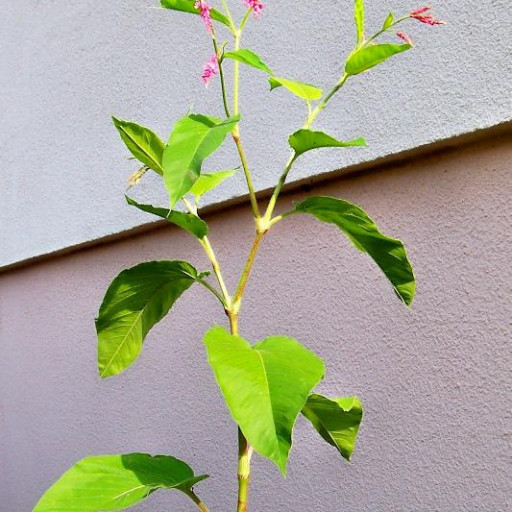
Plant Overview
Known famously as "Kiss-me-over-the-garden-gate," this Victorian-era favorite is the definition of a cottage garden classic. Its whimsical, nodding pink tassels once swayed over the picket fences of 19th-century homes, earning it its romantic nickname due to its height and pendulous flowers. Though it can grow taller than a human in a single season, it maintains an airy, graceful presence that adds vertical drama to any landscape.
🔍 How to Identify
- 🌸 The Blooms: Long, drooping spikes of tiny, bead-like flowers in shades of deep rose, carmine, or bright pink. They look like elegant floral chains.
- 🍃 The Foliage: Large, lush, heart-shaped leaves with a soft, slightly hairy texture. They are a vibrant green and provide a dense backdrop for the flowers.
- 🎋 The Stature: Thick, jointed stems that resemble bamboo or giant grass, often reaching heights of 5 to 8 feet in a single summer.
🏡 In Your Garden
- 🌱 The Need for Speed: This plant is an annual that grows with incredible velocity. Because it develops such a large canopy and thick "trunk" in just one season, it requires plenty of water and rich soil to fuel its rapid expansion.
- 🌬️ Self-Seeding Spirit: It is a prolific "volunteer." While the mother plant dies with the first frost, it drops hundreds of seeds that will pop up next year. To keep it from taking over, many gardeners "deadhead" the faded flower spikes before they drop their seeds.
- ☀️ Staking & Support: Despite its height, the stems can be brittle. Planting it near a fence (as the name suggests) or a sturdy trellis helps protect it from being toppled by heavy summer winds.
⚠️ Safety & Toxicity
- 🟢 Status: Generally low toxicity, but proceed with caution.
- 🐾 Details: While not considered a "poisonous" plant by most standards, it contains small amounts of oxalates. If ingested in large quantities, it may cause mild stomach upset in curious pets or toddlers. Some people with sensitive skin may experience slight irritation from the tiny hairs on the stems.
✨ Fun Fact
This plant was a personal favorite of Thomas Jefferson, who grew it at Monticello. It fell out of fashion for decades but has recently seen a huge revival among modern gardeners looking for "architectural" plants that provide instant height.

Detailed Care Instructions
To grow Persicaria orientalis, also known as Kiss-me-over-the-garden-gate or Prince's feather, you can follow these steps:
- Location: Choose a location that receives full sun to partial shade. The plant will tolerate a range of soil types but prefers moist, fertile soil.
- Planting: Sow the seeds directly in the garden soil or start them indoors six to eight weeks before the last expected frost. If starting indoors, plant the seeds ¼ inch deep in seed starting mix, keep them moist, and provide warmth.
- Transplanting: When the seedlings have two sets of true leaves, they can be transplanted outdoors. Space the plants about 18 inches apart to allow room for growth.
- Watering: Keep the soil evenly moist. Persicaria orientalis appreciates regular watering, especially during dry periods. However, avoid overwatering, as it can lead to root rot.
- Fertilizing: Amend the soil with compost or well-rotted manure before planting to provide nutrients. You can also use a balanced slow-release fertilizer during the growing season to promote healthy growth.
- Mulching: Apply a layer of organic mulch (such as wood chips or straw) around the plants to help retain moisture, suppress weeds, and maintain soil temperature.
- Care: Although Persicaria orientalis is generally low-maintenance, you may need to provide support for the tall stems to prevent them from flopping over. You can use stakes or plant it near a fence or trellis.
- Pruning: If the plant starts to look leggy or unkempt, you can trim it back in early summer or after it finishes flowering to encourage compact growth.
- Propagation: Persicaria orientalis can self-sow prolifically, but you can collect seeds from mature plants and start new plants as well.
- Pests and Diseases: The plant is relatively resistant to pests and diseases. However, keep an eye out for common garden pests like aphids, caterpillars, or powdery mildew, and take appropriate measures if necessary.
Remember to check your local regulations, as Persicaria orientalis is considered invasive in some regions.

Place in a window with dappled sun or a spot in the middle of a room. Or directly in a window facing west or east.

To properly water the plant, you should check the moisture level in the soil before watering. This can be done by sticking your finger into the soil about an inch deep. If the soil feels dry, it is time to water.
It is important to water the plant deeply, making sure the water reaches the roots. Avoid getting water on the leaves as this can cause damage.
You should also make sure that the soil is well-draining and that excess water can escape easily. If the soil is waterlogged, it can lead to root rot and other issues.
Depending on the climate and environment, the plant may need to be watered anywhere from once a week to every few days. Pay attention to the plant's moisture needs and adjust accordingly.
To fertilize this plant, choose a well-balanced fertilizer with an N-P-K ratio of 10-10-10. Apply the fertilizer evenly around the plant, being careful not to let it touch the leaves or stem. Water thoroughly after fertilizing to ensure that the nutrients reach the roots. Fertilize once a month during the growing season (spring and summer) for best results. Be careful not to over-fertilize, as this can lead to leaf burn or stunted growth.
Persicaria Orientalis is a plant that grows well in nutrient-rich soil that is well-drained. The soil should be slightly acidic, with a pH range between 5.5 and 6.5. It prefers soil that is loose and loamy, with good air circulation and water retention. The plant does not tolerate heavy clay soils, as they tend to become compacted and do not drain well. Adding compost or organic matter to the soil can improve its texture and fertility. It is also important to ensure that the soil is moist but not waterlogged, as the plant does not tolerate overly wet conditions.
To propagate this plant, you will need to take stem cuttings. Select a healthy stem from the parent plant and remove it using clean, sharp scissors or pruners. Cuttings should be about 4-6 inches long with several leaves attached. Remove the leaves from the bottom third of the stem.
Prepare a pot with well-draining soil, such as a mixture of perlite and peat moss. Moisten the soil lightly.
Dip the cut end of the stem into rooting hormone (optional) and insert it into the soil, burying the bottom third of the stem. Gently firm the soil around the cutting.
Cover the pot with a plastic bag or clear plastic wrap to create a mini greenhouse. This will help to maintain moisture and humidity around the cutting.
Place the pot in a warm, bright location, but out of direct sunlight. Avoid placing it in a drafty location.
Check the cutting regularly for moisture and mist lightly as needed to maintain humidity. After a few weeks, the cutting should begin to develop roots.
Once the cutting has developed a strong root system, it can be transplanted into a larger pot or into the ground in a suitable location.
Common pests of the kiss-me-over-the-garden-gate include Spider mites, larvae. Make a habit of checking your kiss-me-over-the-garden-gate frequently for pests so that any infestations can be caught and managed early.








