Plant Overview
Often referred to as the Spotted Knotweed or Prickly Smartweed, Persicaria strigosa is a wiry, resilient traveler of the wetlands. Native to parts of Asia and Australia, this plant is a master of the muddy bank, often seen scrambling over rocks and other vegetation near streams. While it may look like a delicate wildflower from a distance, it is a hardy survivor that uses its unique anatomy to claim territory in damp environments.
🔍 How to Identify
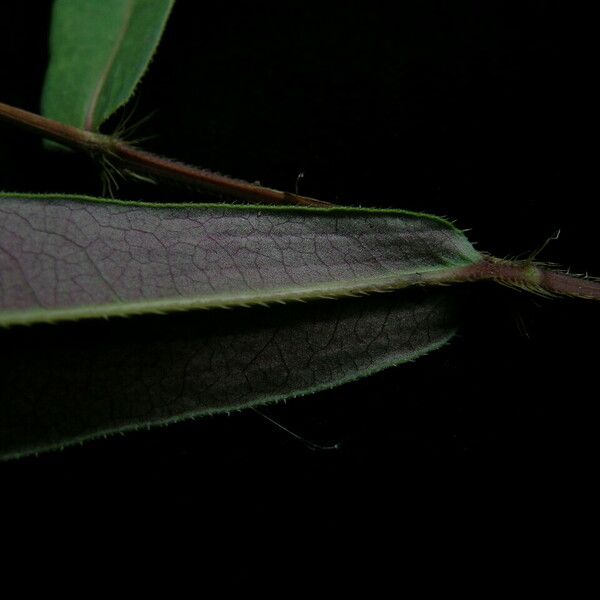
- 🌿 The Leaves: Long, narrow, and lance-shaped, these leaves often feature a distinct dark "V" or thumbprint marking in the center, which gives the plant its "spotted" nickname.
- 🪝 The Stems: The most defining feature is the stem, which is covered in tiny, downward-pointing prickles. These act like natural Velcro, helping the plant "climb" by hooking onto neighboring stems.
- 🌸 The Blooms: Small, dainty clusters of white to pale pink flowers appear at the ends of the branches, looking like tiny beads strung together.
🏡 In Your Garden
- 💧 Water-Loving Nature: This isn't a plant for a dry rockery; it craves "wet feet." It is best suited for bog gardens, the edges of ponds, or areas of the yard that stay perpetually damp.
- 🧱 Sprawling Habit: Because it is a scrambler, it doesn't grow upright on its own. It will spread across the ground or use nearby sturdier plants for support, making it a great naturalistic groundcover for wilder, marshy areas.
⚠️ Safety & Toxicity
- ✋ Skin Irritant: The name "Smartweed" comes from the acrid juice found in the leaves and stems. If crushed or rubbed against the skin, it can cause a "smarting" or burning sensation.
- 🐾 Pet Safety: While not considered highly toxic to cats or dogs, the tiny prickles on the stems can cause mechanical irritation to paws, mouths, or digestive tracts if chewed.
- 🧤 Handling Tip: It is always a good idea to wear gloves when pruning or clearing this plant to avoid both the prickles and the irritating sap.
✨ Fun Fact
The term "Smartweed" has nothing to do with intelligence! In old English, "to smart" meant to feel a sharp, stinging pain. The plant earned this name because its juices were once used as a topical stimulant, but if it got into an open cut, it would certainly make the user "smart" with pain!

Detailed Care Instructions
To grow Persicaria strigosa, also known as Redshank or Polygonum orientale, follow these steps:
- Choose a suitable location: Select an area in your garden that receives full sun or partial shade for at least 4-6 hours a day. The soil should be moist and well-draining.
- Prepare the soil: Before planting, loosen the soil using a garden fork or tiller. Remove any weeds, rocks, or debris from the area. Add organic matter, such as compost, to improve the soil fertility and drainage.
- Planting: Persicaria strigosa is usually propagated through seeds or dividing existing plants. You can sow the seeds directly into the soil in early spring or fall, following the packet instructions for spacing and depth. If using existing plants, dig up the clumps and separate them into smaller sections with roots intact. Plant each division at least 12-18 inches apart.
- Watering: Keep the soil consistently moist, especially during the hot summer months. Water the plant deeply, ensuring the water reaches the roots. Avoid overwatering, as it can lead to root rot.
- Mulching: Apply a layer of organic mulch, such as straw or wood chips, around the plants. Mulch helps retain moisture, suppress weed growth, and regulate soil temperature.
- Fertilizing: Persicaria strigosa is generally low-maintenance and doesn't require much fertilization. However, you can apply a balanced slow-release fertilizer in spring to promote healthy growth. Follow the instructions on the fertilizer package for proper application.
- Pruning: Persicaria strigosa doesn't require extensive pruning. Deadheading spent flowers can encourage continuous blooming. If the plant becomes too crowded or sprawling, you can trim back the stems in early spring to promote a more compact growth habit.
- Pests and diseases: Redshank is generally resistant to most pests and diseases. However, occasionally, aphids or powdery mildew may affect the plant. Use organic insecticidal soap or neem oil to control aphid infestations. Treat powdery mildew with a fungicide specifically formulated for ornamental plants, following the instructions carefully.
- Winter care: In areas with cold winters, Persicaria strigosa may die back to the ground. However, it usually resprouts in the spring. Apply a layer of mulch around the plants in late fall to help insulate the roots and protect them from extreme cold.
By following these steps, you should be able to successfully grow and maintain Persicaria strigosa in your garden.

Place in a bright room that is sun drenched almost all day. Or directly in a south-facing window.

To successfully water this plant, you should ensure that the soil remains evenly moist at all times but not waterlogged. Overwatering should be avoided as it can lead to root rot and other fungal diseases. It is recommended to let the soil dry out partially before watering again. This plant thrives well in a well-draining soil mix that is enriched with organic matter. Watering should be done at the base of the plant to avoid wetting the foliage which can encourage the growth of fungal diseases. The frequency of watering will depend on the environmental conditions, such as temperature, humidity, and sunlight. It is advisable to water more frequently during the growing season and reduce the frequency during the dormant phase.
To fertilize the Persicaria Strigosa plant, apply a balanced NPK fertilizer in early spring before new growth begins. The fertilizer should be applied according to the manufacturer's instructions and spread evenly around the base of the plant. Be sure to water the plant well after fertilizing. Additional applications of fertilizer can be done every 4-6 weeks during the growing season. Avoid over-fertilizing as this can lead to excessive growth and weak stems.
The recommended soil for Persicaria Strigosa plant is a well-draining, sandy or loamy soil with a slightly acidic to neutral pH level. The soil should be rich in organic matter and nutrients, but not excessively fertile. It should also be kept consistently moist, but not waterlogged, as the plant prefers moist soil. In addition, the soil should be free of any weeds or debris that could compete with the plant for nutrients and water. Soil that is too heavy or compacted should be amended with organic matter such as compost or leaf mold to improve drainage and texture. Overall, the soil should support healthy root growth and provide ample nutrients for the plant to thrive.
Persicaria Strigosa is a species of plant that belongs to the Polygonaceae family. It is a perennial herb that is native to the Asian continent.
To propagate Persicaria Strigosa, one can follow these steps:
- Collect mature seeds from the plant during the late summer season.
- Soak the seeds in warm water for 24 hours to soften their hard outer shells.
- Sow the seeds in a mixture of well-draining soil and sand.
- Cover the seeds lightly with soil and water them gently.
- Place the plant in partial sunlight and maintain a temperature of around 20-25°C.
- The seeds should begin to germinate within 2-3 weeks.
- Once the seedlings have developed at least two sets of true leaves, they can be transplanted into individual pots or containers.
- Water the transplanted seedlings regularly and provide them with adequate amounts of sunlight.
- As the plant grows, it should be repotted every 1-2 years, using a slightly larger container each time.
- Persicaria Strigosa can also be propagated by taking stem cuttings during the early summer season. Cuttings should be about 5-10cm long and should contain at least two leaf nodes.
- Dip the cuttings in rooting hormone and insert them into a well-draining soil mix. Keep the soil moist but not too wet.
- In around 3-4 weeks, the stem cuttings should begin to root and new growth will start to emerge.








