Plant Overview
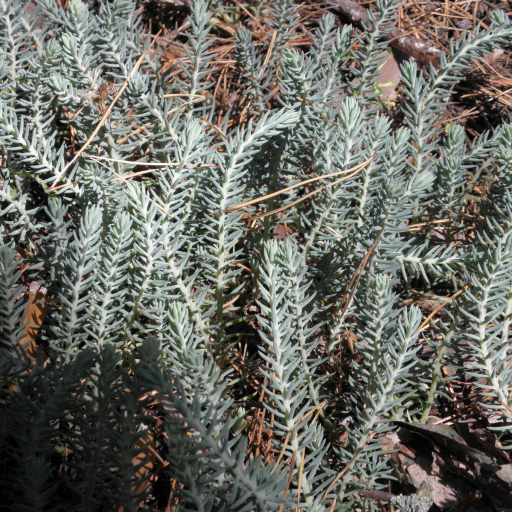
Often called "Reflexed Stonecrop" or "Blue Stonecrop," this European native looks like a collection of tiny, blue-green spruce trees crawling across the ground. It is a rugged survivor, famous for its ability to thrive in the cracks of stone walls and sun-scorched rocky outcrops where little else can grow.
🔍 How to Identify
- 🌿 Spiky Foliage: The leaves are fleshy, needle-like, and pointed, spiraling densely around the stems like miniature coniferous branches.
- 🎨 Glaucous Color: It typically sports a cool, silvery-blue or "sea-green" hue, though the tips may turn reddish or orange during cold winters or periods of high sun stress.
- ⭐ Starry Blooms: In mid-summer, it sends up tall stalks topped with vibrant, canary-yellow flowers that are shaped like five-pointed stars.
🏡 In Your Garden
- 🪨 The Rock Specialist: True to its name (Rupestre means "living among rocks"), it demands excellent drainage. It is the perfect candidate for "crevice gardening" or filling the gaps in a dry-stack stone wall where soil is sparse.
- 🧱 Low Maintenance Hero: This plant hates to be coddled. Over-watering or using rich, heavy potting soil will cause it to go "floppy" and lose its tight, architectural shape. It is a "set it and forget it" plant that thrives on neglect and high heat.
⚠️ Safety & Toxicity
- 🐾 Pet Safety: Petrosedum rupestre is generally considered non-toxic to cats, dogs, and horses according to major veterinary databases.
- 👅 Mild Irritation: While not poisonous, the leaves contain mild alkaloids that can cause a stomach ache if large amounts are ingested. It is best kept as an ornamental rather than a snack for curious toddlers or pets.
✨ Fun Fact
- 🥗 Ancient Salad: In some parts of Europe, particularly in the past, the young, tart-tasting leaves were used as a peppery addition to salads and soups. However, because some similar-looking stonecrops are toxic, it’s much safer to keep this one in the garden than on the dinner plate!

Detailed Care Instructions
To grow Petrosedum Rupestre (also known as Sedum Rupestre or Angelina Stonecrop) successfully, follow these steps:
- Choose the right location: Petrosedum Rupestre prefers full sun to partial shade. Select a spot with well-draining soil as this plant does not tolerate waterlogged conditions.
- Prepare the soil: Before planting, amend the soil with organic matter such as compost or well-rotted manure to improve drainage and provide nutrients.
- Planting: Dig a small hole, slightly larger than the root ball of the plant. Place the Petrosedum Rupestre in the hole, ensuring the top of the root ball is level with the soil surface. Fill the hole with soil, gently firming it around the roots.
- Watering: Water the plant thoroughly after planting to settle the soil. Petrosedum Rupestre is drought-tolerant, but regular watering is necessary during the first few weeks until it becomes established. Afterward, only water as needed, allowing the soil to dry slightly between watering sessions.
- Mulching: Apply a layer of mulch around the plant but do not cover the crown. Mulching helps retain moisture, prevent weed growth, and maintain a more even soil temperature.
- Pruning: Petrosedum Rupestre requires minimal pruning, mostly for cosmetic purposes or to remove dead or damaged foliage. Pinch or trim back leggy growth or overgrown sections to maintain a compact shape.
- Fertilizing: Petrosedum Rupestre typically does not need much fertilization. However, a balanced, slow-release fertilizer can be applied in early spring to provide nutrients throughout the growing season.
- Propagation: Petrosedum Rupestre can be propagated through stem cuttings or by division. Stem cuttings should be taken in early summer, allowed to callus for a few days, and then planted in well-draining soil. Division can be done in early spring by separating the plant and its root ball into smaller clumps.
- Winter care: Petrosedum Rupestre is hardy in USDA zones 3-9. It is generally low-maintenance and can survive winter temperatures. However, in colder regions, consider mulching or protecting the plant with a row cover during harsh winters.
By following these guidelines, you should be able to grow and enjoy a healthy Petrosedum Rupestre plant.

Place in a bright room that is sun drenched almost all day. Or directly in a south-facing window.

To water this type of plant, it is recommended to wait until the top two inches of soil in the pot or ground are completely dry before watering again. When watering, give enough water to moisten the soil thoroughly, but be sure not to over-water as this can lead to root rot. It is also important to allow excess water to drain away from the plant, so make sure the plant pot or ground has proper drainage holes. In the winter months, reduce watering frequency as the plant enters dormancy and requires less water.
To fertilize this plant, use a balanced fertilizer with equal levels of nitrogen, phosphorus, and potassium. Apply the fertilizer once a month during the growing season, which typically occurs in the spring and summer. Dilute the fertilizer in water according to the manufacturer's instructions and apply it at the base of the plant, taking care not to get any on the leaves. Avoid fertilizing during the dormant season, which is typically in the fall and winter months.
The Petrosedum Rupestre plant prefers well-draining soil that is not too rich in nutrients. A mix of sandy soil and gritty materials such as perlite or pumice is recommended to ensure good drainage. Adding organic matter such as compost or peat moss should be avoided as it can retain too much moisture and lead to root rot. Additionally, the soil should be slightly alkaline with a pH range between 6.5 and 7.0. It is important to allow the soil to dry out between watering, as overwatering can also harm the plant.
To propagate this plant, you can take stem cuttings during the growing season. Select a healthy stem that is at least several inches long and has several leaves attached. Cut the stem about 2-3 inches below the bottom leaf node. Remove any leaves from the bottom inch of the stem. Dip the cut end of the stem into rooting hormone powder. Insert the stem into a pot filled with well-draining soil. Water the soil lightly and cover the pot with a clear plastic bag. Place the pot in an area with bright, indirect light and keep the soil consistently moist. In several weeks, the stem should have developed roots and can be transplanted into its permanent container.
Common pests of the reflexed stonecrop include Mealybugs, aphids. Make a habit of checking your reflexed stonecrop frequently for pests so that any infestations can be caught and managed early.








