Plant Overview
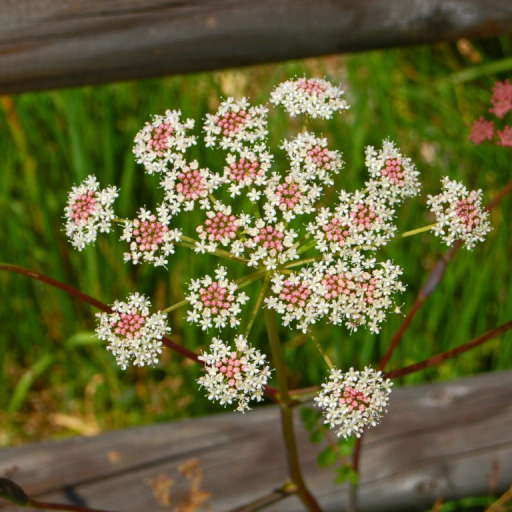
Known as the Broad-leaved Spignel or "Hart’s-wort," this elegant perennial looks like a piece of Victorian lace standing tall in the wild meadow. Its species name, Cervaria, whispers of ancient European forests where stags (Cervus) were once believed to seek it out for its medicinal properties. While it belongs to the same family as carrots and parsley, it possesses a structural, architectural beauty that makes it a standout for "wild-style" landscape designs.
🔍 How to Identify
- 🌿 The "Bending" Foliage: The dark green leaves are double-pinnate and have a curious habit of bending sharply at the joints, giving the plant a geometric, zig-zag appearance.
- ☁️ Lacy Umbels: In mid-to-late summer, it produces large, flat-topped clusters of tiny white or slightly pinkish flowers that look like delicate clouds floating on stems.
- 📏 Sturdy Stature: It is a tall, statuesque plant that can reach up to 4 or 5 feet. Its stems are solid and slightly ridged, often showing a hint of purple or red at the base.
🏡 In Your Garden
- ⛰️ The Limestone Lover: This plant is a specialist for alkaline environments. It thrives in chalky or limestone-rich soils where other plants might struggle with nutrient uptake.
- 🦋 Pollinator Airport: It acts as a busy landing strip for beneficial insects. Because the nectar is easily accessible on the flat umbels, you will see a high diversity of hoverflies, solitary bees, and rare beetles.
- ⌛ Patience Required: It is a slow-growing perennial that focuses on building a deep taproot first. It may take a season or two to reach its full flowering glory, but once established, it is incredibly drought-tolerant.
⚠️ Safety & Toxicity
- 🧴 Skin Sensitivity: Like many members of the Apiaceae (Carrot) family, the sap can contain furanocoumarins. This may cause mild skin irritation or sun sensitivity (phytophotodermatitis) in some people.
- 🐾 Pet Warning: While not classified as highly toxic, it is best to prevent pets from munching on it, as the fibrous stems and essential oils can cause digestive upset.
- 🚫 Wild Confusion: Always be 100% certain of identification. Many white-flowered umbellifers look similar to the deadly Poison Hemlock. Peucedanum cervaria is distinguished by its solid (not hollow) stems and specific leaf shape.
✨ Fun Fact
Ancient herbalists named it "Hart’s-wort" because they observed deer (Harts) eating the plant. Folklore suggested that deer consumed the herb to gain strength before a hunt or to help heal wounds sustained in the forest.

Detailed Care Instructions








