Plant Overview
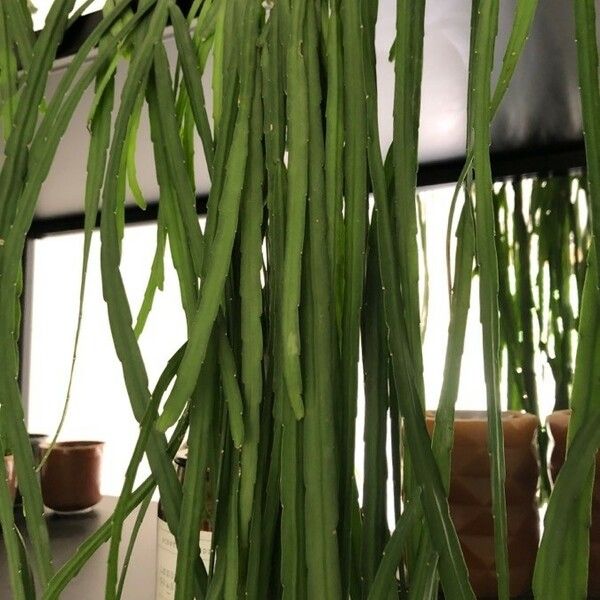
Known as the Bolivian Forest Cactus, Pfeiffera boliviana is an elegant, trailing epiphyte that drapes like living ribbons from hanging baskets. Native to the humid mountain forests of the Bolivian Andes, it exchanges the harsh prickles of its desert cousins for smooth, cascading stems of vibrant green. It is a sophisticated choice for indoor gardeners who love the "jungle cactus" aesthetic but want something more unique than the common Christmas Cactus.
🔍 How to Identify
- 🌿 Stem Structure: The stems are long, flat, and thin, featuring scalloped or notched edges. Unlike many cacti, they are almost entirely smooth and lack traditional sharp spines.
- 💧 Growth Habit: This is a strictly pendulous plant; it does not grow upward but spills over the edges of its container, often reaching several feet in length over time.
- 🌸 Bloom Appearance: In late spring or early summer, tiny bell-shaped flowers in shades of creamy white or pale pink emerge along the notched margins of the stems.
🏡 In Your Garden
- ☁️ Aeration is Key: Because this plant grows on trees in the wild (an epiphyte), its roots crave oxygen. It hates "wet feet," so use a chunky orchid bark or a perlite-heavy mix rather than standard potting soil to ensure the roots can breathe.
- ⛅ Soft Light Specialist: Direct afternoon sun will scorch these delicate stems, turning them yellow or brown. They thrive in bright, filtered light—mimicking the dappled sun that filters through a forest canopy.
- 💦 Humidity Lover: While it can survive in average home humidity, it will grow much faster and look more lush if kept in a bathroom or near a humidifier, as it absorbs some moisture through its stems.
⚠️ Safety & Toxicity
- 🐾 Pet Friendly: Pfeiffera boliviana is generally considered non-toxic to cats, dogs, and humans, making it a "worry-free" addition to a household with curious pets.
- 🛡️ No "Ouch" Factor: Since it lacks the sharp, irritating spines (glochids) of many other cacti, it is much safer to handle during repotting and won't snag on clothing or skin.
✨ Fun Fact
Although it is a true cactus, its ancestors migrated from the desert into the rainforest millions of years ago. To survive, it evolved to "climb" trees to reach the light, which is why it behaves more like a tropical fern than a prickly desert inhabitant!

Detailed Care Instructions
To grow Pfeiffera Boliviana plant successfully, follow these steps:
- Selecting a suitable pot: Choose a pot that is at least 6-8 inches deep and has drainage holes to prevent waterlogging. Make sure the pot is large enough to accommodate the plant's growth.
- Soil mixture: Prepare a well-draining and slightly acidic soil mixture. A blend of cactus potting mix, perlite, and sand in a 2:1:1 ratio works well. This type of soil ensures sufficient drainage for the plant.
- Planting: Fill the pot with the soil mixture, leaving enough space for the plant's roots. Carefully place the Pfeiffera Boliviana plant in the pot, ensuring the roots are covered with soil but not excessively buried. Gently pat down the soil around the plant to secure it.
- Light requirements: Pfeiffera Boliviana enjoys bright, indirect sunlight. Place the plant near a window where it can receive several hours of filtered sunlight throughout the day. Avoid exposing it to direct sunlight, especially during the hottest hours of the day.
- Watering: Water the plant thoroughly but allow the soil to dry out between waterings. Overwatering can lead to root rot, so it's important to strike a balance. Check the top inch of the soil for dryness before watering, and adjust the frequency based on your specific environment.
- Humidity: Pfeiffera Boliviana appreciates moderate humidity levels. To increase humidity, place a tray of water near the plant or mist it regularly. However, ensure the leaves do not become excessively wet, as it can lead to diseases.
- Temperature: Pfeiffera Boliviana prefers moderate temperatures between 60-75°F (15-24°C). Protect it from drafts and keep it away from cold windows during winter.
- Fertilizing: Feed the plant with a balanced, diluted houseplant fertilizer every 2-4 weeks during the growing season (spring and summer). Follow the instructions on the fertilizer packaging for the correct dilution ratio.
- Pruning: Prune the plant to maintain its shape and remove any dead or damaged parts. Pfeiffera Boliviana can develop long, sprawling stems that can be pruned and propagated to encourage fuller growth.
- Propagation: Pfeiffera Boliviana can be propagated from stem cuttings. Take a stem cutting from a healthy plant and allow it to callus over for a couple of days. Then, place the cutting in a well-draining soil mix and mist it occasionally to maintain humidity. After a few weeks, the cutting should root and start growing.
Remember to monitor the plant regularly and adjust care accordingly to ensure it stays healthy and thrives.

Place in a window with dappled sun or a spot in the middle of a room. Or directly in a window facing west or east.

1. Pfeiffera Boliviana plant belongs to the family Cactaceae and is native to Bolivia and Argentina.
2. To water this plant, it is important to consider its natural habitat and mimic the conditions as closely as possible.
3. It prefers well-draining soil and cannot tolerate waterlogged conditions. Therefore, it is crucial to use a fast-draining soil mix specifically formulated for cacti and succulents.
4. The frequency of watering largely depends on external factors such as temperature, humidity, and light levels in your specific environment.
5. Before watering, it is important to ensure that the soil is completely dry throughout the pot, as these plants are highly susceptible to root rot.
6. When watering, thoroughly soak the soil until water drains out from the bottom of the pot. This ensures that water reaches the roots deep within the pot.
7. However, avoid leaving the plant in standing water as it can lead to root rot.
8. During the growing season, typically in spring and summer, the frequency of watering may be higher due to increased growth.
9. In winter, when the plant is in a dormant phase, reduce watering and allow the soil to dry out more thoroughly between waterings.
10. It is also advisable to water the plant in the morning, allowing any excess moisture to evaporate before the cooler evening temperatures set in.
11. Monitor the plant closely for signs of dehydration, such as wrinkled or shriveled stems. This indicates that the plant requires watering.
12. Additionally, pay attention to the overall appearance of the plant. If it starts to lose its vibrant green color or appears limp, it may be a sign that it needs more water.
13. Always use room temperature water when watering the plant, as cold water can shock the roots and cause damage.
14. In hot and dry environments, you can occasionally mist the plant with water to increase humidity around it. However, be cautious not to overdo it, as excessive moisture can promote fungal diseases.
15. Lastly, remember that every plant is unique, and optimal watering practices may vary. It is essential to observe and understand the specific needs of your Pfeiffera Boliviana plant to provide it with the appropriate care.
To fertilize the Pfeiffera Boliviana plant, follow these instructions:
- Choose a balanced, water-soluble fertilizer specifically formulated for cacti and succulents. Look for one with an N-P-K ratio of around 5-10-10.
- Dilute the fertilizer according to the package instructions. Generally, a concentration of about half the recommended strength is sufficient for cacti and succulents.
- Apply the diluted fertilizer to the soil around the base of the plant. Take care not to pour it directly onto the stems or leaves, as this can cause damage.
- Avoid fertilizing during the winter months when the plant is in its dormant phase. The best time to fertilize is during spring and summer when the plant is actively growing.
- Follow a regular fertilizing schedule, typically once every four to six weeks during the growing season. Adjust the frequency based on the specific recommendations provided on the fertilizer package.
- Always water the plant thoroughly before fertilizing to ensure that the soil is moist. This helps prevent fertilizer burn and allows the plant to absorb nutrients more effectively.
- Monitor the plant for any signs of nutrient deficiencies or excesses. Yellowing or discolored leaves may indicate a lack of nutrients, while brown, crispy leaves could suggest over-fertilization. Adjust the fertilizing routine accordingly.
Remember, providing proper care and watering practices are equally important for the overall health and growth of the Pfeiffera Boliviana plant.
Pfeiffera Boliviana is a plant that thrives in well-draining soil. It requires a specific type of soil that provides adequate moisture while preventing waterlogging. The ideal soil for Pfeiffera Boliviana is a mix that incorporates both organic matter and inorganic components.
To create an appropriate soil mixture for Pfeiffera Boliviana, start with a base of well-draining soil such as cactus or succulent potting mix. This type of soil is typically formulated with a blend of ingredients like sand, perlite, and peat moss, ensuring optimal drainage.
In addition to the base soil, you can incorporate organic matter to provide required nutrients and improve moisture retention. This can be achieved by adding compost, aged manure, or well-rotted leaf litter to the potting mix. The organic matter helps to promote healthy root development and supports overall plant growth.
It is important to avoid using heavy or compacted soil for Pfeiffera Boliviana, as this can lead to root rot and hinder its growth. The soil should allow excess water to drain away efficiently, preventing the roots from becoming waterlogged.
When potting or repotting Pfeiffera Boliviana, make sure to choose a container with drainage holes at the bottom to allow excess water to escape. This further prevents water from accumulating and causing root issues.
To summarize, the best soil for Pfeiffera Boliviana is a well-draining mixture that incorporates a cactus or succulent potting mix as a base. Additionally, the soil can be enriched with organic matter such as compost or aged manure. Avoid using heavy or compacted soil, as it may hinder the plant's growth and health.
Pfeiffera boliviana is a unique plant species that can be propagated through various methods. Here's a detailed guide on propagating Pfeiffera boliviana:
- Select a healthy and well-established Pfeiffera boliviana plant: Choose a mature plant that shows no signs of disease, pests, or damage. This will ensure that the propagated offspring are strong and healthy.
- Gather the necessary tools and materials: Prepare a clean pair of sharp pruning shears or scissors, a clean container or pot filled with a well-draining potting mix, and rooting hormone powder (optional).
- Choose the best method for propagation: Pfeiffera boliviana can be propagated through stem cuttings or by rooting fallen branches. Both methods have varying success rates, so you may choose the one that suits you best.
- Propagating through stem cuttings:
- Identify a healthy stem tip with two to four segments attached. Segments are small, cylindrical sections of the stem.
- Using clean pruning shears or scissors, cut the selected stem above a segment node (where the leaf emerges).
- Allow the cutting to dry for a few days in a cool, dry, and shaded area. This step helps to prevent rot when planted.
- Optional: Dip the cut end of the stem into a rooting hormone powder to enhance rooting.
- Place the cutting in a prepared container filled with well-draining potting mix, burying the bottom segment of the stem into the soil. Ensure that the upper segments are exposed above the soil.
- Water lightly to moisten the soil, but avoid overwatering to prevent root rot.
- Provide indirect light and maintain a warm and humid environment for the cutting to encourage root development.
- Mist the cutting occasionally to increase humidity around it.
- After a few weeks, check for root development by gently tugging on the base of the stem. If there is resistance, roots have likely formed.
- Identify a healthy stem tip with two to four segments attached. Segments are small, cylindrical sections of the stem.
- Propagating fallen branches:
- Look for any fallen branches or stems that may have rooted naturally on the ground.
- Carefully dig around the rooted section, ensuring not to damage the newly formed roots.
- Gently lift the propagated section and transfer it to a prepared pot filled with well-draining potting mix.
- Follow the same care instructions mentioned in step 4 to encourage further root growth and development.
- Look for any fallen branches or stems that may have rooted naturally on the ground.
- Maintain appropriate care for the newly propagated plants: Once the cutting or branch has developed roots, continue providing optimal care, including indirect sunlight, regular but light watering, balanced fertilization, and a suitable temperature and humidity range.
Please note that Pfeiffera boliviana can take several months to establish strong roots and grow into a mature plant, so patience and consistent care are essential.








