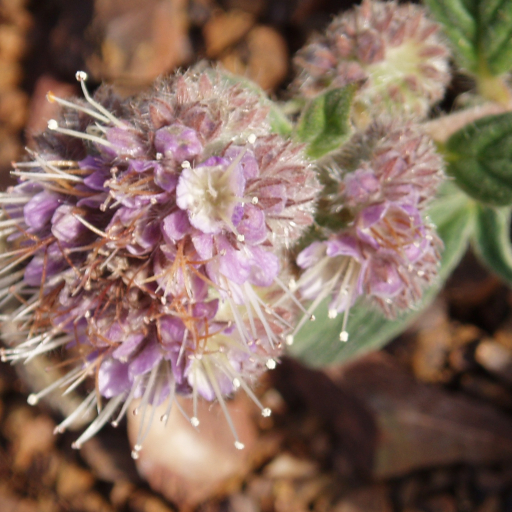
Plant Overview
Often called the "California Scorpion Weed," this rugged native beauty is a staple of the golden state's coastal scrub and chaparral. Its most striking feature is the way its flower spikes unfurl like a scorpion's tail, revealing delicate, bell-shaped blooms that serve as a vital nectar source. It is a resilient survivor, often found clinging to rocky slopes or thriving in the wake of wildfires.
🔍 How to Identify
- 🌸 Coiled Blooms: The flowers are arranged in "cincinni"—tight, one-sided coils that slowly straighten out as the lavender or white blossoms open from the bottom up.
- 🌿 Bristly Texture: The entire plant is covered in stiff, fine hairs (glandular hairs) that can give the foliage a slightly silvery or grayish-green cast.
- 🍃 Deeply Veined Leaves: The leaves are lance-shaped and feature prominent, deep veins, often appearing in a basal rosette (a cluster at the ground level) before the flowering stalks shoot upward.
🏡 In Your Garden
- 🐝 Pollinator Magnet: If you want to support local ecology, this is a top-tier choice; it is famously attractive to honeybees, bumblebees, and various nectar-seeking butterflies.
- ☀️ Xeriscaping Hero: This plant is exceptionally drought-tolerant once established. It prefers "lean" soil with excellent drainage and will actually suffer if pampered with too much fertilizer or heavy summer watering.
⚠️ Safety & Toxicity
- 🧤 Skin Irritant: Use caution when handling! Like many members of the Boraginaceae family, the stiff hairs on the stems and leaves contain oils that can cause contact dermatitis (a red, itchy rash) in sensitive individuals.
- 🐾 Pet Awareness: While not typically considered deadly if ingested, the bristly hairs can cause mechanical irritation to the mouths and paws of curious pets. It is best placed at the back of a flower bed where it won't be brushed against frequently.
✨ Fun Fact
The name Phacelia is derived from the Greek word phakelos, which means "bundle." This refers to the densely crowded clusters of flowers that characterize this genus, making them look like a floral "bundle" waiting to unroll.

Detailed Care Instructions
Here are some steps to help you grow Phacelia Californica plant:
- Choose the right location: Phacelia Californica prefers full sun to partial shade. Find a spot in your garden that receives at least 6-8 hours of direct sunlight a day.
- Prepare the soil: The plant prefers well-draining soil. Add organic matter, such as compost or well-rotted manure, to improve the soil's fertility and drainage. Phacelia Californica can tolerate a variety of soil types but prefers loamy or sandy soil.
- Sow the seeds: You can sow the seeds directly into the ground in early spring or fall. Prepare the soil by removing any weeds, rocks, or debris. Scatter the seeds evenly over the soil according to the packet instructions. Gently rake the soil to lightly cover the seeds.
- Water regularly: Keep the soil consistently moist during the germination period, which usually takes around 7-14 days. After that, water once or twice a week, providing about an inch of water each time. However, be careful not to overwater, as it may lead to root rot.
- Mulch the soil: Apply a layer of mulch around the plants to help conserve moisture and suppress weed growth. Organic mulches like straw, wood chips, or shredded leaves work well.
- Prune if needed: Phacelia Californica generally doesn't require much pruning. However, if the plant becomes leggy or unruly, you can trim it back after it has finished flowering to maintain a compact shape.
- Fertilize sparingly: Phacelia Californica doesn't typically require heavy fertilization. If the soil lacks nutrients, you can apply a balanced, slow-release fertilizer once a year in early spring.
- Watch for pests and diseases: Phacelia Californica is generally resistant to pests and diseases. However, keep an eye out for common garden pests like aphids or caterpillars. Use organic pest control methods if necessary.
- Enjoy the blooms: Phacelia Californica blooms from late spring to early summer, producing beautiful blue or purple flowers. Enjoy the vibrant colors and the pollinators it attracts to your garden.
By following these steps, you can successfully grow Phacelia Californica in your garden and enjoy its lovely blooms.

Place in a bright room that is sun drenched almost all day. Or directly in a south-facing window.

Phacelia Californica is a plant that requires regular watering to ensure its healthy growth and development. When watering this plant, it is essential to keep in mind the moisture level requirements of the soil. The best way to water Phacelia Californica is to make sure that the topsoil is visibly dry before watering. Overwatering the plant can lead to root rot and affect its health.
To water the plant, use a watering can or hose with a gentle spray nozzle to avoid damaging the plant. Water the plant at the base slowly to allow the water to penetrate the soil around the roots. Make sure that the soil has absorbed enough water, but it is not flooded.
If the soil is dry, water the plant every few days, especially during hot summer months. During the winter, reduce watering frequency and monitor the soil moisture level carefully.
It is recommended to water Phacelia Californica in the early morning or late afternoon to avoid excessive evaporation. Avoid watering the foliage to prevent potential fungal diseases.
In summary, water Phacelia Californica plant regularly, keeping in mind the soil moisture level requirements, using a watering can or gentle spray nozzle, and avoid overwatering.
To fertilize this plant, apply a balanced fertilizer with a ratio of 10-10-10 or 12-12-12, following the manufacturer's instructions. Apply the fertilizer in late spring or early summer, just as the plant begins to bloom. Avoid over-fertilizing as it can lead to excessive growth and reduced flowering. Water after fertilizing to help the plant absorb the nutrients.
Phacelia Californica requires a well-draining soil with a neutral to slightly alkaline pH level. It prefers a soil that is rich in organic matter, such as compost or well-rotted manure. The soil should be loose and friable, allowing for good root development and air circulation. It is important to avoid soil that is too compact or clay-like as this can impede water absorption and root growth. A sandy loam or loamy soil is ideal for this plant. Additionally, it is important to ensure that the soil remains consistently moist, but not waterlogged. Adding a layer of mulch to the soil surface can help to retain moisture and regulate the temperature of the soil.
There are a few ways to propagate this plant. One method is through seed propagation. Collect the seeds when the plant is mature, and then sow them in well-drained soil, covering lightly with soil. Keep the soil moist, and germination should occur within a week or two.
Another method is through stem cuttings. Take stem cuttings that are at least 4 inches long and remove the bottom leaves. Dip the cut end into rooting hormone and then plant into well-draining potting soil. Place the cutting in a warm, bright location and keep the soil moist. Roots should form within a few weeks.
Lastly, you can propagate this plant through division. Carefully dig up the plant and separate the root ball into smaller sections, making sure each section has a good amount of roots and foliage. Replant the sections in well-drained soil and keep the soil moist until new growth appears.








