Plant Overview
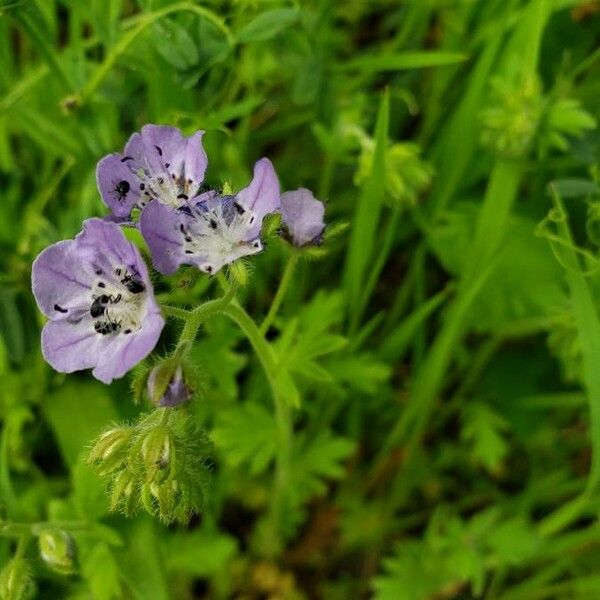
Known affectionately as the Hairy Phacelia or the Fuzzy Waterleaf, this charming wildflower paints the prairies and glades of the South-Central United States in soft shades of lavender every spring. While it may look like a delicate garden escapee, it is a rugged native plant that thrives where others struggle, often forming misty purple carpets across rocky outcrops and woodland edges.
🔍 How to Identify
- 🌿 The "Hirsute" Stem: True to its name, the entire plant is covered in stiff, fine white hairs that catch the morning dew, giving the foliage a silvery or frosted appearance.
- 🌸 Scorpion-Like Blooms: The flower buds are arranged in a unique "scorpioid cyme"—a coil that slowly unfurls like a scorpion’s tail as the bell-shaped lavender blossoms open.
- 🍃 Divided Foliage: The leaves are deeply lobed or "pinnatifid," looking almost fern-like and providing a delicate texture even before the flowers emerge.
🏡 In Your Garden
- 🌱 The Pioneer Spirit: Unlike fussy nursery plants, Hairy Phacelia loves "lean" soil. It excels in rocky, sandy, or disturbed areas where the soil isn't too rich, making it perfect for rock gardens or wildflower meadows.
- 🐝 The Pollinator Magnet: This plant is a superstar for native bees and butterflies. Because it blooms early in the spring, it provides a vital nectar source when other food options are scarce.
- 🍂 Self-Sowing Nature: As an annual, it completes its life cycle in one year. However, it is an excellent self-seeder; if you leave the dried flower heads alone, it will "plant itself" for next year's display.
⚠️ Safety & Toxicity
- 🧤 Skin Sensitivity: While not "poisonous" in the traditional sense, some people experience Phacelia dermatitis. The stiff hairs on the stems can cause a mild, itchy rash similar to poison ivy on sensitive skin.
- 🐾 Pet Safety: There are no documented reports of Phacelia hirsuta being highly toxic to cats or dogs, but the irritating hairs can cause mouth or skin discomfort if your pet decides to take a nibble or roll in a patch.
✨ Fun Fact
The Phacelia genus is often called "Bee's Friend" in Europe. Even though Phacelia hirsuta is a wild North American native, its cousins are grown commercially in gardens across the world specifically to keep honeybee populations healthy and happy!

Detailed Care Instructions
To successfully grow Phacelia hirsuta, also known as hairy phacelia or California bluebell, follow these steps:
- Location: Choose a location with full sun or partial shade. Phacelia hirsuta can tolerate a wide range of soil conditions but prefers well-draining soil.
- Planting Time: In temperate regions, sow the seeds directly into the garden in early spring after the last frost. If you want an early start, you can start the seeds indoors about 4-6 weeks before the last frost.
- Soil Preparation: Prepare the soil by removing any weeds or debris and loosen it to ensure good root penetration. Phacelia hirsuta grows well in average to fertile soils.
- Seed Sowing: Scatter the seeds on the prepared soil surface and gently press them into the soil without covering them completely. Aim for a spacing of about 6-12 inches between plants. Keep in mind that Phacelia hirsuta readily self-seeds, so it may spread or reappear in your garden the following year.
- Watering: Keep the soil consistently moist during germination, which usually takes 7-14 days. Once the plants are established, they are moderately drought-tolerant and can thrive with occasional deep watering.
- Maintenance: Phacelia hirsuta is known for attracting beneficial insects, especially bees. Deadhead the flowers if you do not want them to reseed abundantly. Additionally, it is generally not necessary to fertilize Phacelia hirsuta as it is a self-sufficient plant.
- Pests and Diseases: Phacelia hirsuta is relatively resistant to pests and diseases. However, if necessary, you can use organic insecticides or handpick any pests that are bothering the plants.
- Harvest: You can collect the flowers of Phacelia hirsuta for fresh or dried bouquets. The flowers are usually bluish-purple and have a bell-shaped appearance.
Remember to check your local regulations and make sure Phacelia hirsuta is suitable for your specific region. Enjoy growing this beautiful and beneficial plant in your garden!

Place in a bright room that is sun drenched almost all day. Or directly in a south-facing window.

To properly water this plant, it is important to understand its specific watering needs. First, make sure the soil is moist but not waterlogged. Water deeply and slowly to ensure the water reaches the roots. Avoid watering the foliage as this can lead to disease and mold. Monitor the soil moisture level regularly and adjust watering frequency as necessary based on the plant's growth rate and environmental conditions. Consider using a watering can or hose with a gentle stream to prevent soil erosion or damage to the plant's delicate root system.
To fertilize the Phacelia Hirsuta plant, use a slow-release organic fertilizer in the spring when growth begins. Apply the fertilizer according to the instructions on the package, but generally, use about 2 cups per 100 square feet of planting area. Repeat the application in mid-summer to promote continued growth and flowering. Be careful not to over-fertilize as this can lead to excessive foliage growth and a decrease in flower production.
For optimal growth of the plant species Phacelia Hirsuta, it is recommended to use a well-draining soil that is rich in nutrients. The ideal soil for this species should be slightly acidic with a pH range of 6.0-6.5. It is best to avoid heavy clay soils as they may cause drainage problems and limit root development. Instead, choose a soil that is light, airy, and contains adequate organic matter such as compost, leaf mold, or well-rotted manure. Adding vermiculite or perlite to the soil mixture can also improve drainage and aeration. It is important to maintain moist soil conditions for germination and to water consistently but not excessively throughout the growing season.
To propagate this plant, you can collect the seeds and sow them in a location with well-draining soil and full sun exposure. Before sowing the seeds, prepare the soil by removing any weeds or debris and loosening the soil to a depth of about 1 inch. Scatter the seeds over the surface of the soil, then cover lightly with a thin layer of soil. Water the area gently and regularly until the seeds germinate, which can take anywhere from a few days to a few weeks. Once the seedlings have grown several sets of leaves, they can be transplanted to their permanent location or container. Take care to protect them from strong winds and excessive heat or cold until they are established. Alternatively, you can also propagate this plant through stem cuttings or division, although these methods may not be as reliable as seed propagation.








