Plant Overview
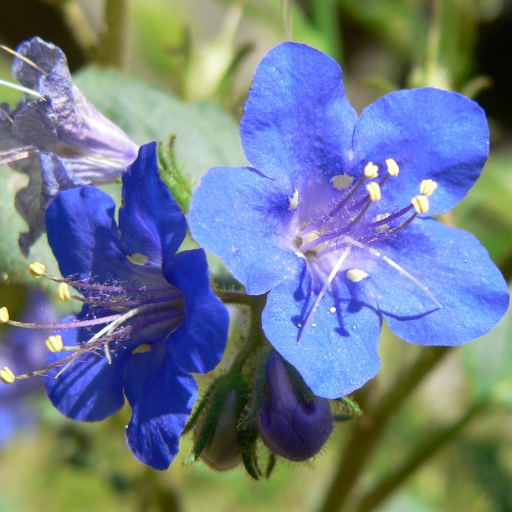
Often called Parry’s Phacelia, this wildflower is a striking highlight of the Southern California and Baja landscape. Known for its deep, royal purple blooms that seem to glow against the dusty chaparral, it is a favorite for "superbloom" hunters and native plant enthusiasts. It belongs to a group of plants colloquially known as "fiddle-necks" because of the way the young flower clusters curl tightly like the head of a violin before unfurling.
🔍 How to Identify
- 💜 Vibrant Blooms: The flowers are open, bell-shaped, and usually a deep shade of royal purple or electric blue. Each flower typically features five petals with a bright white or pale center and prominent yellow-tipped stamens.
- 🍃 Toothed Foliage: The leaves are oval to lance-shaped with irregular, "toothed" edges. They have a rugged, textured appearance and grow alternately along the stem.
- Sticky Glandular Hairs: The entire plant is covered in tiny, stiff hairs. These hairs are "glandular," meaning they are tipped with a sticky resin that can feel tacky to the touch and may leave a brownish stain on skin or clothing.
🏡 In Your Garden
- 🏜️ The Fire Follower: In the wild, this plant is a "fire follower," meaning its seeds often wait for the intense heat or chemical signals of a wildfire to germinate. In a garden setting, it thrives in "lean" or disturbed soil and actually prefers areas that aren't overly pampered with compost.
- 🦋 Pollinator Magnet: This species is an absolute powerhouse for attracting native bees and butterflies. Because it is adapted to arid environments, it is exceptionally drought-tolerant. However, it hates "wet feet"—planting it in heavy clay without drainage will likely cause the roots to rot.
⚠️ Safety & Toxicity
- 🚫 Contact Dermatitis: While beautiful, Phacelia parryi can be a "look but don't touch" plant. The glandular hairs contain compounds that cause a skin rash similar to poison oak in many people. Always wear gloves if you plan to prune or weed around them.
- 🐾 Pet Safety: While not specifically listed as a high-risk poison for ingestion, the irritating hairs can cause significant mouth or throat discomfort for curious dogs or cats who try to a take a bite.
✨ Fun Fact
Named after the prolific botanist Charles Christopher Parry, this plant has a remarkable "memory." Its seeds can remain dormant in the soil for decades, hidden in the dirt through years of drought and heat, only to carpet the desert in purple the moment the perfect conditions—usually a fire followed by a wet winter—finally arrive.

Detailed Care Instructions
To grow Phacelia parryi, also known as Parry's scorpionweed, you can follow these steps:
- Choose the right location: Phacelia parryi prefers full sun to partial shade. Ensure that the location is well-draining and has nutrient-rich soil.
- Prepare the soil: Before planting, make sure the soil is loose and well-draining. Remove any weeds or stones and amend the soil with organic matter if necessary.
- Sow the seeds: Scatter the Phacelia parryi seeds over the prepared soil. Optionally, you can mix the seeds with sand to aid in even distribution. Gently press the seeds into the soil, but do not cover them as they require light for germination.
- Watering: After sowing, lightly water the area to provide moisture. Keep the soil consistently moist but not waterlogged during the germination phase.
- Germination and growth: Phacelia parryi seeds usually germinate within 10-14 days. Once the seedlings have emerged, thin them out to allow enough space for each plant to grow properly. The final spacing should be around 8-12 inches apart.
- Maintenance: Keep the soil slightly moist throughout the growing season. Water deeply but infrequently, allowing the soil to dry out between waterings. Regularly inspect the plants for any signs of pests or diseases and take appropriate measures, if necessary.
- Harvesting seeds: When the plants start to dry out and turn brown, the seeds are likely ready for harvest. Cut the seed heads and place them in a paper bag to complete the drying process. Once dry, you can collect the seeds for future planting.
Phacelia parryi is a self-seeding plant, so after the initial planting, it may re-seed itself each year without much intervention.

Place in a bright room that is sun drenched almost all day. Or directly in a south-facing window.

Phacelia Parryi is a type of plant that requires consistent watering to thrive. To water it properly, first, you should consider the type of soil it is growing in. The soil should be well-draining to prevent waterlogging.
To water the plant, it is recommended to use a watering can or a hose with a gentle spray nozzle. Avoid overwatering the plant, as this can lead to root rot and other fungal diseases.
Check the soil moisture level regularly by sticking your finger about an inch into the soil. If the soil feels dry, water the plant. If the soil feels moist, wait a day or two before watering again.
During hot and dry weather conditions, you may need to water Phacelia Parryi more frequently to prevent drought stress. It is also important to avoid getting water on the leaves or flowers, as this can cause damage or disease. Instead, aim to water the soil around the base of the plant.
To fertilize the Phacelia Parryi plant, use a balanced fertilizer with equal parts nitrogen, phosphorus, and potassium. It is best to apply the fertilizer in the spring before flowering begins. Use a slow-release granular fertilizer, following the manufacturer's instructions for the correct dosage. Avoid over-fertilizing, as this can lead to excessive foliage growth and reduced flower production. Water the plant well after fertilizing.
The best type of soil to use for this particular plant is a well-draining soil that is rich in organic matter. It should have a slightly acidic to neutral pH level, ideally between 5.5 and 7.0. Avoid using heavy clay soils as they can hold too much water and lead to root rot. Instead, opt for a loamy soil that is loose and aerated to allow for proper root growth and oxygenation. Adding compost or other organic matter can improve soil fertility and water retention capabilities, ensuring optimal growth and development of the plant.
To propagate this plant, you will need to collect the seeds from the parent plant. Once the seeds have been collected, they will need to be planted in moist soil. It is important to keep the soil moist until the seeds have germinated. Once the seeds have sprouted, they can be transplanted into individual containers until they are large enough to be planted in the ground. It is also possible to propagate the plant by taking stem cuttings from the parent plant and rooting them in moist soil. The cuttings should be taken from healthy, mature stems and should be cut at a 45-degree angle. Once the cuttings have been planted in soil, they should be kept moist until they have formed roots and started to grow new growth.








