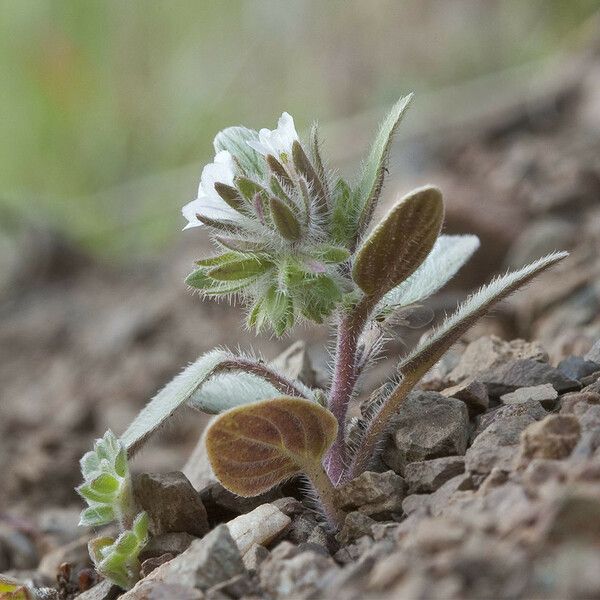
Plant Overview
Commonly known as the Mt. Diablo Phacelia or Foothill Phacelia, this delicate California native is a rare gem of the chaparral. It belongs to a group of plants often nicknamed "Scorpion Weeds" due to the way their flower clusters curl tightly like a scorpion's tail before unfurling. While it might look like a modest wildflower, it is a localized specialist that tells a story of the unique rocky landscapes of the San Francisco Bay Area.
🔍 How to Identify
- 🌀 The Coil: The most striking feature is the "cincinnus"—a flower spike that starts in a tight, fuzzy coil and gradually straightens as the tiny blossoms open.
- 🌸 The Blooms: Small, bell-shaped flowers that range from creamy white to a very pale, ghost-like lavender, often featuring long, protruding stamens that give the cluster a "fuzzy" look.
- 🍃 The Foliage: The leaves are deeply lobed and covered in fine, stiff hairs, giving the plant a soft, dusty-green appearance.
- 📏 Growth Habit: It is a low-growing annual, typically reaching about 10 to 20 inches in height, often leaning against other vegetation or rocks for support.
🏡 In Your Garden
- ⛰️ The Rocky Life: In nature, this plant thrives on dry, rocky slopes and scree. If you are trying to cultivate it, it demands exceptional drainage; it hates "wet feet" and will rot quickly in heavy clay soil.
- 🐝 Pollinator Magnet: It is a high-value plant for native bees and butterflies. Because the flowers open sequentially along the coil, it provides a steady, reliable food source over several weeks.
- 🌱 Wild Origins: Unlike its cousin, the Lacy Phacelia, this species is quite localized. It isn't a "set and forget" garden plant but rather a specialist species for native plant enthusiasts aiming to recreate California oak woodland or chaparral habitats.
⚠️ Safety & Toxicity
- 🚫 Skin Sensitivity: Many species in the Phacelia genus contain glandular hairs that can cause contact dermatitis (a red, itchy rash) similar to poison oak in sensitive individuals.
- 🧤 Handling: It is best to wear gloves when handling this plant or weeding around it to avoid the "itchy" reaction caused by its defensive hairs.
- 🐾 Pets: While not known to be internally poisonous to pets, those same stiff hairs can cause mouth or skin irritation if a dog or cat decided to walk through or chew on a patch.
✨ Fun Fact
The Phacelia genus is famous for "fire-following" behavior, but the Mt. Diablo Phacelia is a bit different—it prefers the stable, rocky nooks of mountainsides that haven't burned recently, making it a "stable" member of its ecosystem rather than a fire-chaser.

Detailed Care Instructions

Place in a bright room that is sun drenched almost all day. Or directly in a south-facing window.

Water-loving plants flourish in wet or sloppy soil and near ponds. The extensive root system enables these plants to absorb plenty of water. The surface of the soil should be kept moist at all times. Place your pot in a container filled with water to guarantee that plants get enough water. If the ground becomes dry, it is recommended that you water it well. Plants in smaller pots will need to be watered more frequently. Water the soil in which the plant is standing thoroughly using a watering can.








