Plant Overview
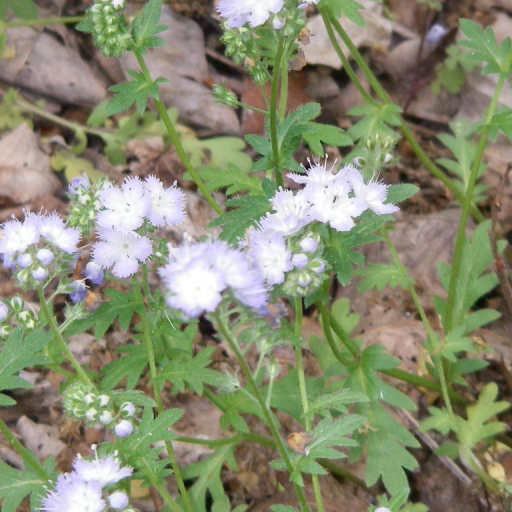
Often called the Miami Mist, this delicate annual wildflower looks like a soft, lavender haze settled over the forest floor. Despite its tropical-sounding nickname, it is a hardy native of North American woodlands and floodplains, cherished by gardeners for its unique "fringed" blossoms that look like delicate Victorian lace.
🔍 How to Identify
- 🌸 The Fringed Petal: Look for five lavender-to-white petals featuring distinct, finely cut "hairs" or fringes along the edges, giving the bloom an ethereal, fuzzy appearance.
- 🌿 Fern-like Foliage: The leaves are light green, hairy, and deeply lobed, often resembling the texture of small ferns or parsley.
- 🌀 Scorpion-like Coil: The flowers are arranged on a "cyme"—a stem that curls at the tip like a scorpion’s tail, slowly unrolling as the individual buds begin to open.
🏡 In Your Garden
- 💧 Moisture Seeker: Unlike its desert-dwelling cousins, Miami Mist thrives in damp, rich soils. It is the perfect choice for those tricky "wet spots" or woodland edges where other flowers might struggle with the moisture.
- 🐝 The Bee’s Breakfast: It is a vital early-season nectar source. It attracts a wide variety of native bees and butterflies, making it a "must-have" for a functional pollinator garden.
- 🌱 Self-Seeding Habit: As an annual, this plant lives fast and dies young. If you want it to return next year, avoid heavy mulching in the fall so the dropped seeds can make contact with the soil and germinate naturally.
⚠️ Safety & Toxicity
- 🧤 Minor Irritant: While not considered "deadly," Phacelia purshii belongs to a family known for causing "Phacelia itch." The stiff hairs on the stems and leaves can cause mild skin irritation or a rash (contact dermatitis) in sensitive individuals.
- 🐾 Pet Safety: It is generally considered non-toxic to cats and dogs, though the hairy texture of the leaves may cause an upset stomach or mouth irritation if your pet decides to have a snack.
✨ Fun Fact
The genus name Phacelia is derived from the Greek word phakelos, which means "bundle." This refers to the way the flower buds are tightly packed together in their signature coiled clusters before they bloom.

Detailed Care Instructions
To grow Phacelia Purshii plants, you can follow these steps:
- Choose the right location: Phacelia Purshii plants prefer full sun but can tolerate partial shade. Ensure the planting area has well-draining soil.
- Prepare the soil: Loosen the soil and remove any weeds or rocks from the area. Add organic matter, such as compost, to improve soil fertility and moisture retention.
- Sow the seeds: Phacelia Purshii plants can be grown from seeds. Sow the seeds directly into the prepared soil after the last frost in your area. Scatter the seeds evenly and lightly press them into the soil, as they require light to germinate.
- Watering: Water the area gently after sowing the seeds to keep the soil moist but not waterlogged. Phacelia Purshii plants require regular watering, especially during dry periods.
- Maintenance: Keep the planting area weed-free, as weeds can compete with the young plants for nutrients and water. Mulching around the plants can help suppress weeds and conserve moisture.
- Pruning: Phacelia Purshii plants do not require extensive pruning. However, you can remove any dead or damaged foliage to maintain their appearance and overall health.
- Fertilization: Phacelia Purshii plants generally do not require heavy fertilization. However, you can apply a balanced slow-release fertilizer once or twice during the growing season if you notice poor plant growth.
- Pest and disease control: Phacelia Purshii plants are relatively resistant to pests and diseases. However, you should regularly inspect for any signs of aphids, slugs, or snails and take appropriate measures if necessary.
- Enjoy the blooms: Phacelia Purshii plants typically flower from late spring to early summer. Once they start blooming, you can enjoy their beautiful purple-blue flowers.
By following these steps, you can successfully grow Phacelia Purshii plants and enjoy their unique visual appeal in your garden or outdoor space.

Place in a bright room that is sun drenched almost all day. Or directly in a south-facing window.

Phacelia Purshii is a plant that requires consistent watering to thrive. The ideal watering schedule for this plant is to water it deeply once a week, allowing the soil to dry slightly between waterings. Overwatering can cause root rot, so it is important not to let the soil become waterlogged.
When watering, it is best to water at the base of the plant, avoiding getting water on the leaves. This helps prevent diseases from forming on the foliage. Using a watering can or a drip irrigation system can help regulate the amount of water the plant receives.
It is also important to note that Phacelia Purshii prefers well-draining soil. If the soil in the pot is too compact, it can cause water to pool and lead to root rot. To improve soil drainage, it is recommended to mix in some sand or perlite when planting.
Overall, regular watering and proper soil drainage are key to keeping Phacelia Purshii healthy and thriving.
For best results, use a balanced, all-purpose fertilizer with equal amounts of nitrogen, phosphorus, and potassium. Apply the fertilizer according to the instructions on the package, making sure not to over-fertilize as this can damage the plant. It is recommended to fertilize once every 4-6 weeks during the growing season (spring and summer), and to water the plant deeply after fertilizing to help the nutrients penetrate the soil. Only fertilize when the soil is moist, not dry.
Phacelia Purshii plant prefers a well-drained soil that is rich in nutrients. The pH of the soil should be slightly acidic to neutral, between 5.5 to 7.0. A loamy soil with good organic matter content is ideal for this plant, as it provides the necessary nutrients and moisture retention capacity. The soil should be loose and friable, allowing for easy root penetration and maximum nutrient uptake. It is also important to ensure that the soil is not compacted, as this can limit root growth and water infiltration. Adequate drainage is essential to prevent root rot and other soil-borne diseases. Therefore, it is advisable to amend the soil with organic matter such as compost or well-rotted manure before planting Phacelia Purshii.
Phacelia Purshii is a plant that can be propagated through different methods. One common way is through seed propagation. To do this, collect mature seeds from the plant and sow them in a well-prepared soil bed. Keep the soil moist but not too wet. It usually takes around 7 to 10 days for the seeds to germinate. Once the seedlings are large enough, transplant them into individual pots or into the ground after the last frost.
Another way to propagate Phacelia Purshii is through division. This method involves splitting the established plant into multiple smaller plants. To do this, carefully dig up the plant and use a sharp knife to divide the root ball into smaller sections. Each section should have some roots and foliage. Replant the sections, making sure to water them well.
Propagation through stem cuttings is also possible with Phacelia Purshii. Cut a healthy stem from the parent plant and remove any flowers or leaves from the bottom half of the cutting. Dip the end of the stem in rooting hormone and plant it in a pot with well-draining soil. Keep the soil moist and place the pot in a warm, brightly lit area. In a few weeks, roots should start to form and the plant can be transplanted into its permanent location.








