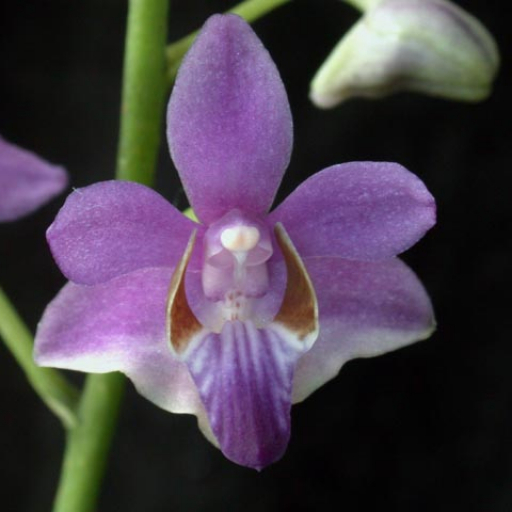
Plant Overview
Often called the "Beautiful Phalaenopsis," this orchid is the rebel of the moth orchid family. While most of its cousins prefer to dangle from tree branches high in the rainforest canopy, this hardy species is frequently found growing on the ground or nestled among rocks in Southeast Asia. It is prized by collectors for its vibrant, upright flower spikes that stand like tiny, colorful sentinels.
🔍 How to Identify
- 🌸 Flower Stalk: Unlike the graceful, arching stems of common grocery store orchids, this species sends up a stiff, strictly vertical spike that can hold up to 20 blossoms.
- 🍃 Leaf Texture: The leaves are notably thick, fleshy, and lance-shaped. They are often a deep, matte green with a subtle purple or reddish tint on the undersides.
- 🎨 Bloom Color: The flowers are typically a vivid neon pink or magenta, featuring a distinctly pointed "lip" that looks like a tiny landing pad for pollinators.
🏡 In Your Garden
- ☀️ Light Lover: Because it grows closer to the ground in more open areas, it craves more light than your average orchid. If the leaves turn a deep reddish-purple, it’s getting the perfect amount of "tan."
- 🪴 Terrestrial Roots: It is technically a lithophyte (rock-dweller) or terrestrial plant. This means it prefers a denser potting mix than the chunky bark used for other orchids; a mix of fine bark, moss, and even a little sand mimics its home perfectly.
- 💧 Thirst Quencher: It doesn't have large pseudobulbs to store water, so it dislikes drying out completely. However, it hates "wet feet," so ensure its pot has excellent drainage to prevent root rot.
⚠️ Safety & Toxicity
- ✅ Pet Friendly: Like most members of the Orchidaceae family, this plant is considered non-toxic to cats, dogs, and horses.
- 👶 Child Safe: It is safe for households with children, though the stiff flower spikes can be a bit pokey if someone bumps into them. Always keep an eye out for any fertilizers or pesticides you may have applied to the leaves.
✨ Fun Fact
For many years, this plant was so physically different from other moth orchids that scientists gave it its own genus called Doritis. It wasn't until modern DNA testing that researchers realized it was actually a Phalaenopsis that simply adapted to life on the ground!

Detailed Care Instructions
To grow Phalaenopsis pulcherrima (also known as butterfly orchid), follow these steps:
- Light and Temperature: Place the plant in a location with bright, indirect light. Avoid exposing it to direct sunlight, as it can burn the leaves. Maintain a temperature range of 65-85°F (18-29°C) during the day and a slightly cooler temperature at night.
- Watering: Phalaenopsis pulcherrima enjoys evenly moist but not soggy soil. Water thoroughly when the top inch of the potting mix feels dry. Pour water until it drains out of the bottom of the pot, but ensure it's not sitting in standing water.
- Humidity: Orchids, including Phalaenopsis pulcherrima, prefer high humidity levels of around 50-70%. You can increase humidity by placing the pot on a tray filled with pebbles and water or using a humidifier near the plant.
- Potting Mix: Use a well-draining orchid potting mix that allows air to circulate around the roots. Commonly, a mix of bark, sphagnum moss, and perlite is suitable.
- Fertilizer: Feed your Phalaenopsis pulcherrima regularly with a balanced orchid fertilizer. Dilute the fertilizer to half strength and apply it every two weeks during the growing season, and reduce it to once a month during the dormant phase.
- Repotting: Once every 1-2 years, repot your Phalaenopsis pulcherrima to refresh the potting mix and give the roots space to grow. Choose a slightly larger pot and ensure you don't bury the leaves too deeply.
- Pruning: Trim off any dead or yellowing leaves or flowers to maintain a neat appearance and prevent the spread of diseases. Use clean and sterilized pruning tools to avoid infection.
- Air Circulation: Provide good air circulation around the plant to prevent the growth of fungi or molds.
- Rest Period: After flowering, Phalaenopsis pulcherrima enters a rest period. Reduce watering and fertilizer applications during this time to allow the plant to replenish its resources. After a few months, new growth should begin, and you can resume regular care.
- Patience: Phalaenopsis pulcherrima might take some time to grow and bloom. Be patient and provide consistent care, and it will reward you with beautiful flowers.
Remember to observe and adjust your care routine based on the specific needs of your Phalaenopsis pulcherrima as conditions may vary slightly depending on your climate.

Place in a window with dappled sun or a spot in the middle of a room. Or directly in a window facing west or east.

1. Determine the moisture level of the soil before watering. Use a moisture meter or insert your finger about an inch deep into the soil to feel for moisture. Only water when the soil is completely dry.
2. Use room temperature water for watering. Avoid using cold water as it can shock the roots of the plant, and avoid using hot water as it may contain minerals that can damage the delicate roots.
3. Pour water slowly and carefully around the base of the plant, avoiding getting water on the leaves or flowers. It is best to water from below the leaves to prevent water from sitting on top of the leaves, which can cause rot.
4. Water until the excess water drains out from the bottom of the pot. Make sure to always empty the saucer after watering to prevent the plant from sitting in standing water.
5. Water about once a week, but adjust frequency based on environmental factors like humidity and temperature. In colder months, water less frequently as the plant will need less water.
6. Watch for signs of over or under watering, such as yellow leaves, droopy leaves, or soggy soil. Adjust watering accordingly based on these signs.
7. Fertilize the plant every two weeks during the growing season with a balanced fertilizer to promote healthy growth and blooming.
To fertilize this orchid plant, use a balanced water-soluble fertilizer with equal amounts of nitrogen, phosphorus, and potassium. Dilute the fertilizer to half strength and apply it to the plant every two weeks during the growing season, which is typically from spring to autumn. During the winter months, reduce fertilization to once every month. Avoid fertilizing a newly repotted plant for the first three months to give its roots time to establish. Always water the plant thoroughly before applying fertilizer, and be careful not to get any fertilizer on the leaves or flowers as it may burn them.
Phalaenopsis Pulcherrima plant prefers a well-draining soil mix that is rich in organic matter. It is important to avoid using heavy, dense soils that can cause water to accumulate around the roots. A recommended soil mix for this plant consists of coarse peat moss, small bark chips, perlite, and charcoal. The peat moss and small bark chips provide organic matter while the perlite and charcoal increase drainage and aeration in the soil. It is important to keep the pH level of the soil between 5.5 and 6.5 as this plant prefers slightly acidic environments. Additionally, it is recommended to fertilize the soil with a balanced fertilizer every two weeks during the growing season to provide the plant with necessary nutrients.
To propagate this plant, you will need to obtain a healthy stem cutting that is at least four inches long. The stem cutting should have at least two “nodes,” which are small bumps on the stem where leaves and roots grow.
Once you have obtained your stem cutting, prepare a rooting medium using a mix of sphagnum moss and perlite. Dip the cut end of the stem into a rooting hormone powder to encourage root growth.
Next, plant the stem cutting into the prepared rooting medium, making sure to bury the nodes below the surface. Place the pot in a warm, humid location with bright, indirect light.
It is important to keep the soil moist but not soaked during the rooting period. The stem cutting should develop roots within a few weeks, at which point you can transfer it to a pot with potting soil specifically formulated for orchids.
Care for your new plant in the same way as you would a mature Phalaenopsis Pulcherrima plant: provide bright, indirect light, keep the soil moist but not soaked, and fertilize occasionally with a balanced orchid fertilizer. With proper care, your propagated plant will grow into a beautiful, healthy adult plant.
Common pests of the alien orchid include Scale insect, mealybugs, spider mites, thrips. Make a habit of checking your alien orchid frequently for pests so that any infestations can be caught and managed early.








