Plant Overview
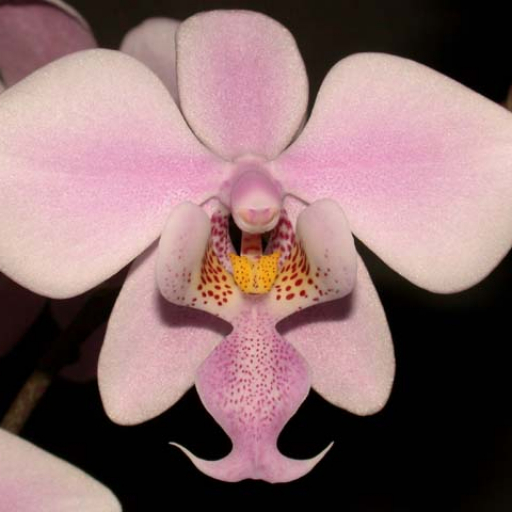
Known as the "Pink Moth Orchid" or "Schiller's Phalaenopsis," this stunning epiphyte is the crown jewel of the Philippine rainforests. Unlike the common, plain-leaved orchids found in most grocery stores, this species is a visual masterpiece even when it isn't blooming, thanks to its striking "tiger-striped" foliage. It has been a legendary favorite among collectors since the 1800s, prized for its massive, fragrant floral displays that look like a cloud of butterflies.
🔍 How to Identify
- 🍃 Mottled Foliage: The most distinct feature is the leaves—long, leathery ovals decorated with a dramatic "marbled" or "tiger-stripe" pattern of silvery-gray over a deep forest green.
- 🌸 Delicate Pink Blooms: The flowers are soft rose-pink, often fading to white at the edges, featuring a complex "lip" (labellum) with tiny anchor-like appendages.
- 🌿 Branching Inflorescence: While many orchids grow a single stalk, a mature Schilleriana can produce a massive, branching flower spike that holds dozens (sometimes hundreds) of blooms at once.
🏡 In Your Garden
- ☁️ Humidity Lover: Hailing from the humid island of Luzon, this plant craves moisture in the air. If your home is dry, placing it on a pebble tray or near a humidifier is essential to prevent "bud blast," where flowers fall off before opening.
- 🌳 Airy Foundations: In the wild, it grows on tree branches, not in soil. To keep it happy, use a chunky orchid bark or sphagnum moss mix; if the roots sit in stagnant water or heavy soil, the plant will quickly suffer from root rot.
- ☀️ Filtered Glow: It prefers "dappled" light, mimicking the sun filtering through a jungle canopy. Too much direct sun will bleach the beautiful silver patterns off the leaves, while too little will prevent it from blooming.
⚠️ Safety & Toxicity
- 🐾 Pet Friendly: This orchid is non-toxic to cats and dogs, making it a perfect choice for pet-heavy households.
- 👶 Gentle Presence: It is safe for children, though the plant itself is quite delicate. The leaves are brittle and can snap if bumped, and the roots are sensitive to the oils on human skin.
✨ Fun Fact
🌸 The Record Breaker: While a standard orchid might produce 10 or 20 flowers, a legendary specimen of Phalaenopsis schilleriana was once recorded in the 19th century with over 170 flowers on a single branching spike!

Detailed Care Instructions
To grow a Phalaenopsis Schilleriana plant, follow these steps:
- Choose the right location: Phalaenopsis Schilleriana prefers bright, indirect light. Place the plant near a window with filtered sunlight or provide artificial light if needed. Avoid direct sunlight, as it can burn the leaves.
- Provide proper temperature and humidity: Phalaenopsis Schilleriana thrives in warmer temperatures of around 70-80°F (21-27°C) during the day and slightly cooler temperatures of 60-65°F (15-18°C) at night. Maintain a humidity level of around 50-70% by using a humidifier or placing the plant on a humidity tray filled with water.
- Watering and moisture: Water the plant when the potting medium feels dry to the touch. Use room temperature water and allow excess water to drain from the bottom of the pot. Avoid overwatering, as it can lead to root rot. Mist the leaves occasionally to increase humidity.
- Potting and potting medium: Use a well-draining potting medium specifically formulated for orchids, such as a mix of bark, sphagnum moss, and perlite. Repot the plant annually or when the potting medium decomposes. Ensure that the pot has drainage holes to prevent waterlogging.
- Fertilizing: Feed the plant with a balanced orchid fertilizer diluted to half-strength every 2-3 weeks during the growing season (spring and summer). Reduce or stop fertilizing during the winter when growth slows down.
- Air circulation: Good air circulation is essential to prevent stagnant air and fungal diseases. Avoid placing the plant in drafty areas but ensure there is enough movement of fresh air around it.
- Pruning and maintenance: Remove spent flowers and trim any discolored or yellowing leaves to maintain the plant's health and appearance. Avoid cutting healthy green roots.
- Reproduction: Phalaenopsis Schilleriana can be propagated through division. When repotting, separate the plant into smaller sections with healthy roots and leaves. Each section can be potted individually to grow into a new plant.
Remember to provide consistent care and patience to allow the Phalaenopsis Schilleriana plant to grow and flourish.

Place in a window with dappled sun or a spot in the middle of a room. Or directly in a window facing west or east.

To water this plant, wait until the soil is nearly dry to the touch before thoroughly saturating the soil with water. Be sure to avoid getting water on the leaves, as this can lead to rot and disease. It is also important to ensure proper drainage, as the plant is sensitive to standing water. If the plant is being kept in a pot, ensure that there are adequate drainage holes at the bottom. Watering frequency may vary depending on factors such as humidity and temperature, so it's important to monitor the plant and adjust watering as needed.
To fertilize this particular orchid plant, you should use a balanced orchid fertilizer containing nitrogen, phosphorus, and potassium. The fertilizer should be diluted according to the instructions provided on the packaging, and applied every two weeks during the growing season. During the dormant season, which typically occurs in the winter, fertilizer should be applied at a reduced rate or not at all. It is important to avoid over-fertilization as this can damage the roots and leaves of the plant.
The ideal soil for Phalaenopsis Schilleriana is well-draining, loose, and airy. A soil mix containing coarse bark, perlite, and sphagnum moss is recommended. It should be slightly acidic with a pH between 5.5 and 6.5. The soil should also be able to retain moisture without becoming waterlogged, as excessively wet soil can lead to root rot. Additionally, the soil mix should be free of any harmful insects or pests that could damage the plant.
To propagate this particular plant, you will need to identify a healthy and mature orchid with several pseudobulbs. Using a clean and sharp blade or scissors, cut a mature stem with at least three pseudobulbs. Dipping the cut end in a rooting hormone is optional, but it may help improve the chances of success.
Next, prepare a small pot with a well-draining soil mix that ideally comprises bark, perlite, and sphagnum moss. Fill the pot to the top, leaving a small indentation in the middle to place the cutting. Place the cutting into the soil mix and press gently to ensure it has good contact.
Mist the cutting generously. Then cover the pot with plastic wrap or a clear plastic bag to help retain moisture and humidity. Make sure the plastic cover sits high enough not to touch the foliage or the cutting.
Place the pot with the cutting in a warm, bright, and humid location, ideally between 68-80°F with plenty of indirect light. Ensure the soil remains moist, but not wet, and avoid exposing it to direct sunlight that can scorch the cutting. After several weeks, check if the cutting has settled into the soil and developed new roots. Once the roots are several inches in length, the new plant may be repotted in a larger pot. With proper care, the new Phalaenopsis Schilleriana will develop into a mature orchid plant.
Common pests of the phalaenopsis schilleriana include Scale insect, mealybugs, spider mites, thrips. Make a habit of checking your phalaenopsis schilleriana frequently for pests so that any infestations can be caught and managed early.








