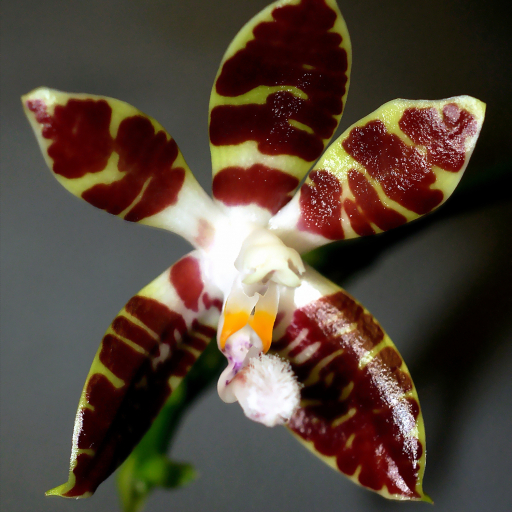
Plant Overview
Known as the Sumatran Phalaenopsis, this orchid is a jewel of the Southeast Asian rainforests. Unlike the mass-produced hybrids found in grocery stores, this species is a "wild" beauty prized by collectors for its waxy, star-shaped flowers and intoxicating fragrance. It evokes the humid, mysterious atmosphere of the Sumatran jungle, where it clings to mossy tree trunks overhanging forest streams.
🔍 How to Identify
- 🌸 The Bloom: Star-shaped flowers with thick, waxy petals. They are typically creamy white or pale yellow, decorated with bold, horizontal reddish-brown "tiger stripes."
- 👅 The Hairy Lip: One of its most unique features is a fleshy, three-lobed "lip" (labellum) that features a distinct tuft of tiny white hairs at the very tip.
- 🍃 The Foliage: Broad, leathery, and shiny green leaves that can grow quite large. They have a pendulous habit, naturally drooping downward to allow rainwater to slide off easily.
🏡 In Your Garden
- ☁️ Humidity Lover: This orchid is a true child of the tropics. It requires much higher humidity than standard orchids to thrive; without a humidifier or a pebble tray, its buds may "blast" (dry up) before they even open.
- 🌳 Epiphytic Roots: In the wild, it grows on trees, not in dirt. It hates "wet feet" and will suffer from root rot if planted in traditional potting soil. Use a loose, airy mix of fir bark or sphagnum moss to keep the roots happy.
- 🌡️ Warmth & Shade: It prefers "low to medium" light—think of the dappled sun reaching the forest floor. It also hates the cold; keep it in a room that stays consistently warm year-round to mimic its equatorial home.
⚠️ Safety & Toxicity
- ✅ Pet Safe: Good news for animal lovers! The Phalaenopsis sumatrana is generally considered non-toxic to both cats and dogs.
- 🧤 Skin Sensitivity: While not poisonous, the sap from broken stems can occasionally cause minor skin irritation for people with highly sensitive skin. It’s always a good habit to wash your hands after pruning.
✨ Fun Fact
Unlike many orchids that bloom all at once and then fade, the Sumatran Phalaenopsis is a sequential bloomer. This means it produces flowers one after another on the same stalk over a long period. Never cut a green flower spike—it might still have more "striped surprises" waiting to emerge!

Detailed Care Instructions
To grow Phalaenopsis Sumatrana, also known as the Sumatran moth orchid, you will need to follow these steps:
- Lighting: Place the plant in a location with bright, indirect light. Avoid direct sunlight, as it can burn the leaves. East or west-facing windows are usually good options.
- Temperature: Phalaenopsis Sumatrana thrives in warm temperatures, ideally between 65-80°F (18-27°C) during the day and 60-65°F (15-18°C) at night. Avoid extreme temperature fluctuations.
- Humidity: These orchids prefer humidity levels between 50-70%. You can increase humidity by using a humidifier, placing a tray with water near the plant, or grouping plants together.
- Watering: Water your Phalaenopsis Sumatrana once a week or when the top inch of the potting mix feels dry. Avoid overwatering. Water thoroughly and allow excess water to drain out of the pot.
- Potting mix: Use a well-draining orchid potting mix, such as a mixture of bark, sphagnum moss, and perlite. Phalaenopsis Sumatrana needs good airflow around the roots.
- Fertilization: Feed your orchid with a balanced orchid fertilizer every 2-3 weeks during the growing season. Dilute the fertilizer to half the recommended strength. Avoid fertilizing during dormancy.
- Dormancy: Phalaenopsis Sumatrana goes through a dormancy period after blooming, during which it may drop its leaves. During this time, reduce watering, provide slightly cooler temperatures, and no fertilizer. It will eventually regrow and flower again.
- Repotting: Repot the plant every 1-2 years or when the potting mix starts to break down. Choose a pot that allows for future growth and use fresh orchid potting mix.
- Pests and diseases: Keep an eye out for common orchid pests like aphids, mealybugs, and scale insects. Treat any infestations promptly. Also, watch for signs of root rot and adjust your watering if needed.
By following these guidelines, you should be able to successfully grow Phalaenopsis Sumatrana. Remember to observe your plant regularly, adjust care as needed, and be patient, as orchids can take time to establish and bloom.
To water this plant, it is important to assess its soil moisture levels first. The soil should be moderately moist but not completely saturated with water. Overwatering can cause root rot and kill the plant.
To water the plant, use room temperature water and pour it slowly and evenly over the soil until it starts flowing out of the drainage holes. It is best to water the plant in the morning or early afternoon to allow the foliage to dry before nightfall.
Make sure to never let the plant sit in standing water as this can cause damage to the roots. If the humidity levels in the air are low, consider placing a tray of water near the plant to increase moisture levels around it.
Additionally, it is important to avoid getting water directly on the foliage of the plant, as this can encourage the growth of pests and diseases. Instead, water the soil directly and allow it to soak up the moisture.
To fertilize this plant, follow these instructions:
- Use a balanced orchid fertilizer with an N-P-K ratio of 20-20-20 or 10-10-10
- Dilute the fertilizer to half strength
- Apply the fertilizer once a month during the growing season (spring through fall)
- Do not fertilize during the dormant season (winter)
- Water the plant thoroughly before and after each fertilizer application
- Avoid getting fertilizer on the leaves or flowers as it may cause damage.
Phalaenopsis Sumatrana plant prefers a well-draining soil that is rich in nutrients and organic matter. A soil mixture with a pH range of 5.5 to 6.5 is ideal for this type of plant. It is important that the soil is free from heavy clay or sand, as this may cause stress to the root system. A soil mix that is composed of bark, perlite, and charcoal is recommended for Phalaenopsis Sumatrana plant. This will provide good aeration, drainage, and help the soil retain moisture and nutrients. However, the amount of each ingredient in the soil mix may vary according to the plant's growth stage and environment. Maintaining the right soil conditions for Phalaenopsis Sumatrana plant is crucial for its healthy growth and development.
Propagation of this plant can be done through division of its root system. Careful separation of the roots and small sections of the stem with leaves can be potted in new containers with suitable potting soil. Ensure that the new plants are kept in a warm and humid environment while their root systems establish themselves.








