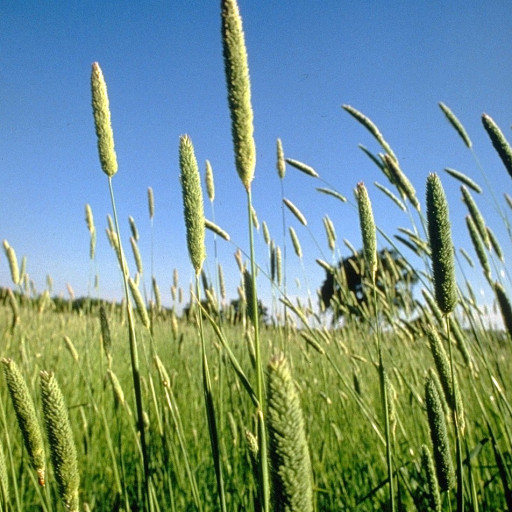
Plant Overview
Often called Harding Grass or Bulbous Canary Grass, this Mediterranean native is a robust traveler that has found its way into pastures and wildlands across the globe. Known for its ability to stay green even when summer heat turns everything else brown, it has a reputation as both a reliable forage crop for farmers and a stubborn, invasive "party crasher" in native ecosystems.
🔍 How to Identify
- 🌾 The "Bulbous" Base: If you dig slightly at the base, you’ll find swollen, bulb-like structures (corms). These storage organs are the secret to its survival during droughts.
- 🍃 Blue-Green Foliage: The leaves are long, hairless, and have a distinct grayish-blue or "glaucous" tint compared to common lawn grasses.
- 🕯️ Cigar-Shaped Seeds: In late spring, it sends up tall stalks topped with dense, cylindrical flower spikes that look like fuzzy green (and later tan) cigars.
🏡 In Your Garden
- 🌱 The Great Survivor: This grass loves heavy clay soils and can handle being "wet-footed" during winter floods better than almost any other pasture plant. If you find it in your yard, it’s likely there because the soil is compacted or holds water.
- 🚜 Management Needs: While it is excellent for preventing erosion on steep banks, it is a "clump-former." It doesn't create a soft carpet like turfgrass; instead, it grows in tough, individual mounds that can become quite large and difficult to mow over time.
⚠️ Safety & Toxicity
- 🐑 Livestock Warning: While it is grown for grazing, it contains alkaloids that can cause "Phalaris Staggers" in sheep and cattle. This neurological condition causes animals to tremble or lose coordination.
- 🐾 Pet Safety: It is generally not considered a high-risk plant for cats or dogs in small amounts, but the sharp awns (seed casings) can sometimes irritate a pet's mouth or get stuck in their fur and ears.
✨ Fun Fact
Despite being a humble pasture grass, Phalaris aquatica is famous in certain botanical circles for containing small amounts of DMT and other alkaloids. However, the plant also produces toxic compounds, making any "herbal" experimentation extremely dangerous for humans.

Detailed Care Instructions
To grow Phalaris Aquatica plant, commonly known as Toowoomba Canary Grass or Buloke Grass, follow these steps:
- Climate and Soil Requirements: Ensure you are in an appropriate climate zone. Phalaris Aquatica thrives in areas with a Mediterranean climate, but it can tolerate a range of climates. The soil should be well-drained and slightly acidic to neutral. It can also adapt to various soil types, including loam, clay, and sandy soils.
- Planting Time: Phalaris Aquatica can be planted either in spring or fall, depending on the climate zone. The spring planting allows the plant to establish before summer, and fall planting benefits from the cooler temperatures and winter rains.
- Propagation: Phalaris Aquatica can be propagated from seeds. Soak the seeds in water for 24 hours before planting to enhance germination. Alternatively, you can also use transplants or divisions from established plants.
- Planting Depth and Spacing: Plant the seeds or transplants around 1/4 inch deep in well-prepared soil. For spaced planting, maintain a distance of approximately 1-2 feet between each plant to allow room for growth.
- Watering: Water the newly planted seeds or transplants thoroughly after planting. Thereafter, water deeply and regularly, ensuring the soil remains consistently moist. However, avoid overwatering, as Phalaris Aquatica can tolerate drought conditions once established.
- Fertilization: Phalaris Aquatica generally doesn't require much fertilization. However, adding compost or organic matter to the soil before planting can enhance growth. If necessary, a balanced fertilizer can be applied sparingly during the growing season.
- Mulching: Apply a layer of mulch around the plants to help retain moisture, suppress weeds, and regulate soil temperature. It also adds organic matter to the soil as it decomposes.
- Maintenance: Regularly monitor the plant for any signs of pests or diseases. Ensure the area around the plant is well-weeded to prevent competition for nutrients and water. If required, trim back any dead or damaged foliage to encourage healthy growth.
- Harvesting: Depending on your purpose, Phalaris Aquatica can be harvested for hay production, forage for animals, or as an ornamental grass. Harvest the plant when it reaches the desired maturity, usually when it reaches 12-18 inches in height.
Remember, Phalaris Aquatica can spread vigorously, so ensure it is grown in an appropriate area where it won't become invasive.

Place in a bright room that is sun drenched almost all day. Or directly in a south-facing window.

To properly water this plant, you should first make sure the soil is dry to the touch before watering. When watering, slowly pour water onto the soil around the base of the plant until the water begins to come out of the drainage holes in the bottom of the container. Allow the water to drain completely before returning the plant to its normal location. It's important not to overwater this plant as it can lead to root rot. Additionally, it's a good idea to use a pot with drainage holes and a well-draining soil mix to ensure proper drainage and prevent water from sitting in the soil for too long.
To fertilize the Phalaris Aquatica plant:
- Use a balanced, slow-release fertilizer that is specifically designed for grass or pasture plants.
- Follow the instructions on the fertilizer packaging for the recommended amount to use based on the size of your planting area.
- Apply the fertilizer evenly over the soil surface surrounding the Phalaris Aquatica plants.
- Avoid directly applying the fertilizer onto the plant's leaves or stems as this may cause damage.
- Gently work the fertilizer into the top layer of soil using a rake or your hands.
- Water the area thoroughly after fertilizing to help dissolve and distribute the nutrients into the soil.
- Repeat the fertilization process according to the recommended frequency on the fertilizer packaging, usually every 6-8 weeks during the growing season.
- Monitor the plant's growth and adjust the fertilization schedule as needed based on its health and response to the fertilizer.
- Remember to always follow safety instructions and guidelines when handling fertilizers to protect yourself and the environment.
Phalaris Aquatica is a plant that prefers a well-draining soil with good water absorption properties. The soil should be a mix of sand, silt, and clay with a neutral to slightly acidic pH level. It should not be too fine, as this can hamper drainage, nor too coarse, as this can cause water runoff.
One should avoid using heavy and compacted soils and soils with high clay content, as these will retain too much water and can lead to root rot. Adding organic matter to the soil can improve its structure and fertility.
It is also important to consider the salinity level of the soil, as Phalaris Aquatica prefers low to moderate salt levels. If the soil is highly saline, it may be necessary to leach it before planting.
When planting Phalaris Aquatica, it is advisable to first loosen the soil to a depth of at least 6 inches and remove any rocks or debris. After planting, the soil should be moist but not waterlogged, and the plant should be watered regularly to maintain even moisture levels.
Overall, the soil selected for Phalaris Aquatica should be well-draining, rich in organic matter, and have a neutral to slightly acidic pH level, with low to moderate salinity levels.
Phalaris aquatica is a perennial grass plant that can be propagated through various methods. Here's a step-by-step guide on propagating Phalaris aquatica without mentioning its common names:
- Select a healthy parent plant: Choose a mature and disease-free Phalaris aquatica plant that is producing viable seeds or has well-established root systems.
- Collect seeds: Wait until the seed heads have dried and turned brown on the parent plant. Gently shake or rub the seed heads to collect the seeds. You can also cut off the seed heads and store them in a paper bag until they are completely dry.
- Prepare the soil: Choose a well-draining area in your garden or a seed tray with suitable potting mix. Ensure the soil is loose, fertile, and free of weeds.
- Sow the seeds: Sow the collected Phalaris aquatica seeds onto the surface of the prepared soil. Ensure that the seeds are evenly spaced and not covered with too much soil. Lightly press the seeds into the soil to ensure good seed-to-soil contact.
- Watering: Gently water the soil after sowing the seeds to keep it moist but not waterlogged. Mist the soil surface with water if growing in a seed tray to prevent water from washing away the seeds.
- Germination: Phalaris aquatica seeds usually germinate within 14-21 days. During this period, ensure the soil remains consistently moist. Monitor the seedlings' growth and transplant them when they have developed a strong root system and a few sets of leaves.
- Transplanting: Transplant the seedlings into individual pots or a prepared garden bed once they reach a suitable size. Ensure they are spaced properly to allow for sufficient growth and development.
- Care: Provide adequate sunlight and water the transplanted seedlings regularly. Keep in mind that Phalaris aquatica prefers moist soil, so ensure the plants receive ample hydration.
- Propagation from divisions: Another method to propagate Phalaris aquatica is by dividing mature clumps. Carefully dig up an established clump, ensuring you preserve the root system. Divide the clump into smaller sections, each containing a healthy portion of the root system, and transplant them into suitable locations.
- Maintenance: Continue to care for the propagated Phalaris aquatica plants by regularly monitoring for pests, diseases, and providing appropriate fertilization, if needed. Trim back any dead or damaged foliage to encourage new growth.
Remember, always check your local regulations and environmental impact before introducing or propagating any plants, including Phalaris aquatica.








