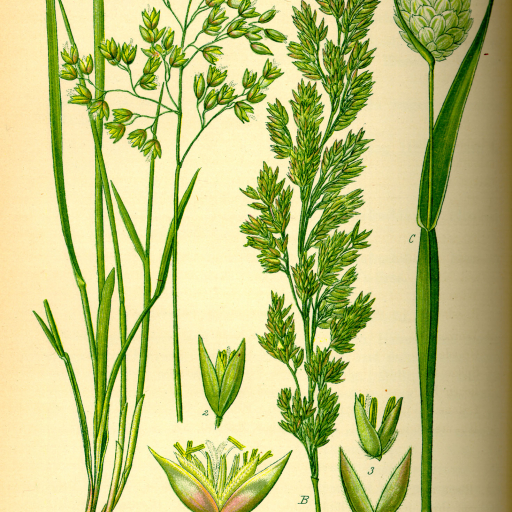
Plant Overview
Known globally as the primary source of commercial birdseed, Phalaris canariensis—better known as Canary Grass—is much more than just a snack for parakeets. Native to the sun-drenched Mediterranean and the Canary Islands, this ornamental annual grass creates a striking, structural silhouette in a meadow garden. Its shimmering seed heads look like tiny, intricately woven eggs nestled among slender, arching blades.
🔍 How to Identify
- 🌾 The Seed Head: Look for dense, egg-shaped clusters (panicles) about 1 to 2 inches long. They feature a distinct variegated pattern of creamy white and pale green stripes.
- 🍃 The Foliage: The leaves are long, flat, and narrow, growing upright in a clump-forming habit that can reach heights of 2 to 4 feet.
- 🏗️ The Stem: It possesses hollow, sturdy stalks that remain remarkably upright, even when the heavy seed heads are fully mature in late summer.
🏡 In Your Garden
- 🐦 A Wildlife Magnet: If you want to attract finches, sparrows, and other songbirds naturally, this is your best friend. They will feast directly from the stalks once the seeds ripen, providing hours of backyard birdwatching.
- 🌱 Easy-Going Nature: This grass is incredibly unfussy about soil quality, though it prefers well-drained spots. Because it is an annual with a shallow root system, it is much easier to manage than its invasive perennial cousins; if it pops up where you don't want it, a simple tug is all it takes.
- 🎨 Floral Accents: The seed heads are a staple in the floral industry. They dry beautifully and retain their structural integrity for years, making them perfect for "everlasting" indoor arrangements.
⚠️ Safety & Toxicity
- 🐾 Pet Friendly: This plant is generally considered non-toxic to cats and dogs. In fact, it is often a primary ingredient in "cat grass" blends sold in pet stores.
- 🌾 Mechanical Irritation: While not chemically toxic, the husks of the seeds have tiny, hair-like structures called spicules. These can cause minor skin irritation or "itchiness" if you are handling large quantities of the dried grass without gloves.
✨ Fun Fact
Charles Darwin and his son Francis used Phalaris canariensis in their groundbreaking 1880 study, The Power of Movement in Plants. By observing how these specific seedlings bent toward the light, they discovered the phenomenon of phototropism, essentially proving how plants "see" the sun!

Detailed Care Instructions
To grow Phalaris Canariensis plant, you can follow these steps:
- Obtaining seeds: Purchase Phalaris Canariensis seeds from a reputable source. You may find these seeds at local nurseries, garden centers, or online seed suppliers.
- Germination: Fill a small pot or seed tray with good-quality seed starting mix. Moisten the soil lightly and sprinkle the seeds evenly on the surface. Cover the seeds with a thin layer of soil or vermiculite. Place the pot or tray in a warm and well-lit area, such as a sunny windowsill or greenhouse.
- Watering: Keep the soil moist but not waterlogged. Water gently using a spray bottle or a misting nozzle to avoid disturbing the seeds. Make sure the soil doesn't dry out completely.
- Temperature and light: Phalaris Canariensis seeds germinate best at temperatures between 68-77°F (20-25°C). Provide ample sunlight or use artificial grow lights for at least 12-16 hours a day. Maintain a consistent temperature and light source during the germination process.
- Transplanting: Once the seedlings develop a few sets of true leaves (typically after 2-3 weeks), they can be transplanted to larger pots or directly into the ground. Choose a location with full to partial sunlight and well-draining soil.
- Care and maintenance: Water the plants regularly, keeping the soil evenly moist but not waterlogged. Fertilize every 4-6 weeks using a balanced, water-soluble fertilizer diluted to half strength. Maintain a consistent watering and fertilizing schedule.
- Pruning: Phalaris Canariensis plants may benefit from pruning to encourage bushier growth and remove any dead or damaged foliage. Trim back the plant by cutting just above a node or leaf junction.
- Pest and disease control: Monitor the plant regularly for pests such as aphids, slugs, or snails. If you notice any issues, treat the infestation with an appropriate organic or chemical pesticide. Keep an eye out for signs of disease, such as wilting or discoloration, and take immediate action if necessary.
- Harvesting: Phalaris Canariensis plants are typically harvested for their seeds. Allow the seed heads to mature and dry on the plant. When the seeds turn brown and become hard, cut the seed heads and hang them upside down in a well-ventilated area to dry further. Once dry, the seeds can be collected and stored in a cool, dry place for future use.
Remember to always research the specific growing requirements of Phalaris Canariensis as environmental conditions may vary depending on your location.

Place in a bright room that is sun drenched almost all day. Or directly in a south-facing window.

To water this plant, ensure that the soil is dry to the touch before watering. Use room temperature water and water around the base of the plant, being cautious not to overwater. Allow excess water to drain out of the pot, and do not let the plant sit in standing water. It is recommended to water once or twice a week, depending on the humidity and temperature of the plant's environment.
To fertilize this plant, it is best to use a balanced fertilizer with equal parts nitrogen, phosphorus, and potassium. Apply the fertilizer in the early spring and again in the summer. Make sure to water the plant thoroughly before and after applying the fertilizer to prevent any damage to the roots. Avoid over-fertilizing as it can lead to salt build-up and harm the plant.
For the optimal growth and health of this particular plant, it is recommended to use a soil that has a neutral to slightly acidic pH level. The soil should be well-draining and rich in nutrients, with a good amount of organic matter such as compost or humus. It's also important to ensure that the soil is not waterlogged, as this can lead to root rot and other issues. Consider adding perlite or sand to the soil to improve drainage. Additionally, this plant prefers full sun to partial shade, so it should be planted in a location that receives a good amount of sunlight throughout the day.
Phalaris Canariensis is a plant species that can be propagated through a variety of methods. One way is by dividing up clumps of the plant into smaller pieces and transplanting them in new locations. Another method is through planting seeds harvested from the mature plants. Additionally, stem cuttings can be taken from the plant and propagated in a rooting medium until roots form. The plant can also be propagated through layering, where a section of the plant stem is buried in soil until roots form at the buried section, making a new plant. Care should be taken when propagating this plant to ensure that the conditions are suitable for the specific method being used, and that the plant is handled gently to avoid damage.








