Plant Overview
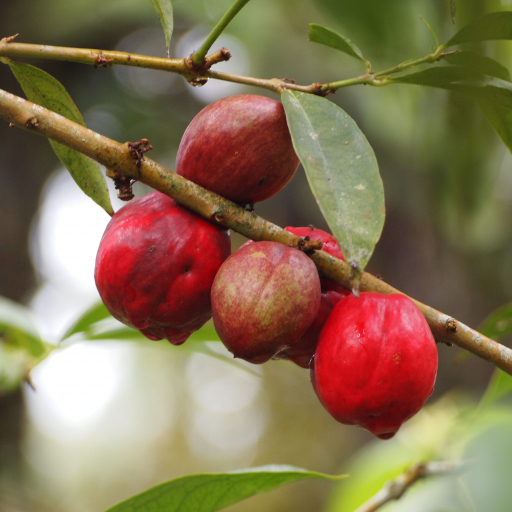
Known as the "God's Crown" (Mahkota Dewa) in its native Indonesia, this tropical evergreen is shrouded in both medicinal legend and high-stakes caution. It is a stunning ornamental tree that produces vibrant, jewel-like red fruits that look almost too good to be true. In traditional folklore, it is often called the "Fruit of the Gods," reflecting its use in ancient herbal remedies.
🔍 How to Identify
- 🍃 The Leaves: Glossy, dark green, and lance-shaped. They have a leathery texture and grow opposite each other, providing a dense, lush canopy.
- 🌸 The Flowers: Small, waxy, and fragrant white flowers. Interestingly, they often bloom in clusters directly from the trunk or main branches (a trait known as cauliflory), rather than just the tips.
- 🍒 The Fruit: The most striking feature. These egg-shaped fruits transition from a bright green to a deep, maroon-red when ripe. Inside, you'll find a white, fibrous flesh and large, brown seeds.
🏡 In Your Garden
- ☀️ Tropical Requirements: This plant is a true child of the tropics. It thrives in high humidity and warm temperatures. If you live in a cooler climate, it must be kept in a greenhouse or moved indoors as soon as temperatures dip, as it has zero frost tolerance.
- 🌱 Soil and Drainage: While it loves moisture, it cannot stand "wet feet." It requires rich, organic soil that drains quickly. It is often grown as a focal point or a "living fence" due to its dense foliage and year-round interest.
⚠️ Safety & Toxicity
- 🚫 Status: HIGHLY TOXIC IF RAW. While famous in traditional medicine, every part of the fruit (especially the seeds) is poisonous if consumed fresh and unprocessed.
- 🐕 Details: Ingesting the raw fruit can cause severe swelling of the tongue, throat irritation, and digestive distress. It is vital to keep this plant out of reach of children and pets who might be tempted by the bright, plum-like appearance of the fruit. Only trained practitioners should handle its medicinal preparation.
✨ Fun Fact
In Sumatra, the plant is known as "Simalakama." This name led to the famous Indonesian proverb "Bagai makan buah simalakama" (Like eating the Simalakama fruit), which describes a classic "Catch-22" or a dilemma where every choice seems to lead to trouble!

Detailed Care Instructions
To grow Phaleria macrocarpa, also known as Mahkota Dewa or God's Crown, follow these steps:
- Obtain the seeds: You can purchase seeds from online seed stores or local nurseries. Make sure to choose fresh and high-quality seeds.
- Prepare the soil: Phaleria macrocarpa prefers well-draining soil rich in organic matter. Mix equal parts of compost, sand, and garden soil to create a well-draining growing medium.
- Soak the seeds: Before sowing the seeds, soak them in warm water for 24 hours. This helps to soften the seed coat and promote germination.
- Sow the seeds: Fill small pots or seed trays with the prepared soil mixture. Place one or two seeds in each pot and cover them with a thin layer of soil.
- Provide the right conditions: Phaleria macrocarpa requires warm temperatures and light to germinate. Keep the pots in a warm, bright, and humid location. You can cover the pots with plastic wrap or a transparent lid to create a mini greenhouse effect.
- Maintain moisture: Keep the soil consistently moist but not waterlogged. Water the pots gently whenever the top inch of soil feels dry.
- Transplanting: Once the seedlings have grown to a suitable size with a few sets of leaves, they can be transplanted to larger pots or directly into the garden. Choose a sunny spot with well-draining soil.
- Care and maintenance: Water the plants regularly, allowing the topsoil to dry out slightly between watering. Fertilize with a balanced, slow-release fertilizer every few months to promote healthy growth. Prune the plant to maintain its shape and encourage bushiness. Protect the plant from strong winds and extreme temperatures.
- Harvesting: Phaleria macrocarpa produces small, round fruits. Once the fruits turn dark purple or black, they are ready to be harvested. The fruits can be consumed fresh or dried for medicinal purposes.
- Pest and disease control: Keep an eye out for common pests like aphids, mealybugs, and mites. Use organic insecticides or insecticidal soaps to control infestations. Proper sanitation and good air circulation can also help prevent disease issues.
By following these steps, you should be able to successfully grow Phaleria macrocarpa and enjoy its beautiful foliage and health benefits.

Place in a window with dappled sun or a spot in the middle of a room. Or directly in a window facing west or east.

Watering Phaleria Macrocarpa plant requires careful attention and consistent watering. It is important to keep the soil moist but not overly saturated, as this can lead to root rot and other problems. Always check the soil moisture level before watering by touching the top layer of soil with your finger or using a soil moisture meter.
The plant prefers well-draining soil, so it is best to water deeply but infrequently rather than frequent shallow watering. During the growing season, watering once or twice a week is usually sufficient. However, during periods of intense heat or dry weather, the plant may require more frequent watering.
When watering, use room temperature water and avoid getting water on the leaves or flowers as this can cause damage or disease. Water at the base of the plant and allow the water to be absorbed fully before watering again.
In the winter months, the plant goes through a period of dormancy and requires less water. Allow the top layer of soil to dry out before watering. Be sure to reduce the frequency and amount of water during this period to prevent overwatering.
Overall, consistent watering with proper soil moisture levels is key to maintaining a healthy Phaleria Macrocarpa plant.
To fertilize this plant, use a balanced fertilizer with equal amounts of nitrogen, phosphorus, and potassium. Apply the fertilizer at a rate of 1/4 to 1/2 teaspoon per gallon of water every two weeks during the growing season. Do not over-fertilize, as this can lead to leaf burn and other plant problems. Water the plant thoroughly after fertilizing to avoid salt buildup in the soil.
The type of soil that is suitable for the Phaleria Macrocarpa plant is a well-draining soil that is rich in nutrients and has a slightly acidic pH. This type of soil should have good water retention capabilities but should also allow for adequate drainage to prevent waterlogging and root rot. Ideally, the soil should be loose, crumbly, and have good aeration properties to facilitate healthy root growth and development. Additionally, the soil should not be compacted, as this can restrict root growth and limit the plant's ability to absorb nutrients and water.
Propagation of this plant can be done through several methods including drooping of seeds, stem cuttings, and air layering.
For drooping of seeds, the matured fruits of the plant should be harvested and opened. The seeds should be removed and then soaked in water for 24 hours. After this, the seeds can be sowed in a potting mix and covered with a plastic wrap to provide humidity. The pot should be placed in a warm and well-lit area until germination occurs.
For stem cuttings, a healthy plant should be selected and a 5-6 inches stem cutting should be cut at a 45-degree angle with a sterilized blade. The bottom leaves of the cutting should be removed and the stem should be dipped in rooting hormone. This stem cutting should then be placed in a potting mix and covered with plastic wrap to provide humidity until root formation occurs.
Air layering is another method of propagation where a branch of the plant is slit at the middle and wrapped in sphagnum moss. The moss should be kept moist and protected with plastic wrap until roots appear which can then be separated from the parent plant and planted in a potting mix.
Overall, propagation of this plant can be easily done by one of these methods and can result in a new plant with the same characteristics as the parent plant.








