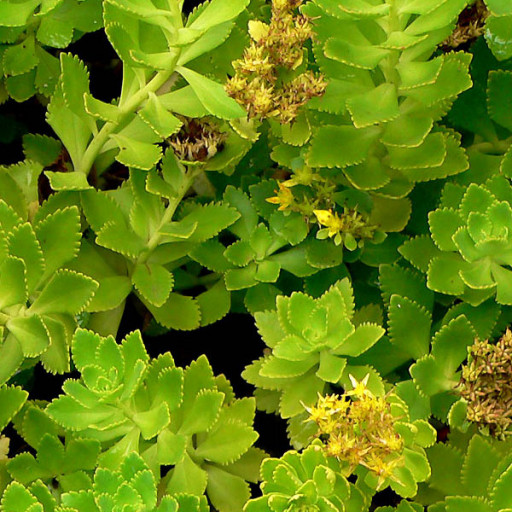
Plant Overview
Commonly known as the Ulleungdo Stonecrop, this resilient succulent is the "Iron Man" of the garden world. Native to the volcanic island of Ulleungdo in South Korea, it has spent centuries adapting to harsh sea breezes and rocky cliffs. It is beloved by gardeners for its ability to form a lush, golden-flowered carpet in places where other plants would simply give up.
🔍 How to Identify
- 🍃 The Leaves: Fleshy, spatula-shaped green leaves that feature distinct "toothed" or serrated edges toward the tips.
- ⭐ The Blooms: During summer, it erupts in dense, flat-topped clusters of bright yellow, star-shaped flowers that attract a parade of pollinators.
- 🏗️ The Structure: It grows in a low, mounding habit, with stems that start soft but become slightly woody at the base as the plant matures.
🏡 In Your Garden
- ⛰️ The Rock Star: Because it originated on volcanic cliffs, it absolutely craves drainage. If its "feet" stay wet in heavy clay soil, it will pout and rot. It is the perfect candidate for rock gardens or crevice planting.
- ❄️ Winter Warrior: Unlike many delicate succulents, Phedimus takesimensis is incredibly cold-hardy. While it may turn a beautiful bronze or reddish hue when the temperature drops, it will bounce back vigorously in the spring.
⚠️ Safety & Toxicity
- 🛡️ Status: Generally considered non-toxic and safe for a "Pet-Friendly" garden.
- 🐱 Details: While not poisonous, the thick, fibrous leaves can cause mild stomach upset if a curious cat or dog decides to eat a large amount. It’s always best to discourage nibbling to keep both the pet and the plant happy.
✨ Fun Fact
This plant is a "living relic" from a tiny volcanic speck in the Sea of Japan. Because it evolved in isolation on Ulleungdo island, it developed a unique genetic profile that makes it sturdier and more disease-resistant than many of its mainland Sedum cousins!

Detailed Care Instructions
Phedimus Takesimensis, also known as Japanese Stonecrop, is a relatively low-maintenance plant that is easy to grow in a variety of conditions. Here are some tips to help you successfully grow and care for Phedimus Takesimensis:
- Light: Phedimus Takesimensis thrives in full sun to partial shade. Make sure it receives at least 6 hours of direct sunlight daily for best growth and flowering.
- Soil: This plant prefers well-draining soil that is slightly sandy or gritty. Avoid heavy, compacted soils that can cause root rot.
- Watering: Water Phedimus Takesimensis regularly, allowing the soil to dry out slightly between waterings. Overwatering can lead to root rot, so it's important to find a balance and not let the plant sit in soggy soil.
- Pruning: To keep your Phedimus Takesimensis plant looking tidy and healthy, you can prune it back in the spring to encourage new growth and prevent legginess.
- Fertilizing: Feed your Phedimus Takesimensis plant with a balanced, slow-release fertilizer in the spring to promote healthy growth and flowering.
- Repotting: If your Phedimus Takesimensis plant outgrows its container, repot it into a slightly larger pot with fresh soil. This is typically needed every 2-3 years.
- Propagation: Phedimus Takesimensis can be propagated easily from stem cuttings or division. Simply cut a stem from the plant, allow it to callus over, and then plant it in well-draining soil to root.
By following these tips and providing the right growing conditions, you can enjoy a healthy and thriving Phedimus Takesimensis plant in your garden or home.

Place in a bright room that is sun drenched almost all day. Or directly in a south-facing window.

Phedimus Takesimensis plant should be watered regularly, but not excessively. It requires moist but well-draining soil that doesn't become waterlogged. The frequency of watering will depend on the environment in which the plant is growing, such as temperature and humidity. It is important to allow the topsoil to dry out slightly before watering again. Overwatering can lead to root rot and other fungal diseases, which can damage or kill the plant. During the winter months, the plant may require less frequent watering due to decreased growth and evaporation rates. It is crucial to monitor the soil moisture level and adjust watering as necessary to maintain the health and vitality of the plant.
To fertilize the Phedimus Takesimensis plant, use a balanced water-soluble fertilizer with an NPK ratio of 10-10-10 or similar. Dilute the fertilizer to half strength and apply every 4-6 weeks during the growing season. Avoid fertilizing in winter when the plant is dormant. Water the plant thoroughly after fertilizing to help distribute the nutrients evenly in the soil.
Phedimus Takesimensis plant requires a well-draining soil that has a neutral to slightly acidic pH level. It prefers soils that are rich in organic matter and have good drainage properties to avoid waterlogging. You can use a mix of garden soil, peat moss, and sand to create a well-draining soil. It is also recommended to add perlite or vermiculite to enhance drainage and aeration. While the plant can tolerate some drought, it needs regular watering to thrive, so avoid using soils that dry out quickly or become too compacted. Additionally, adding slow-release fertilizer to the soil mixture before planting can help provide sufficient nutrients to support the plant's growth.
Phedimus Takesimensis can be propagated through division, stem cuttings, or leaf cuttings.
To propagate through division, simply dig up the plant and carefully separate the roots into smaller sections. Replant each section in well-draining soil and water thoroughly.
For stem cuttings, take a cutting from the plant and trim it to about 4-6 inches in length. Remove the lower leaves and dip the cut end in rooting hormone. Plant the cutting in a pot with well-draining soil and keep it moist until roots begin to form.
To propagate through leaf cuttings, select a healthy leaf from the plant and twist it off at the base. Let the leaf callous over for a day or two before planting it in well-draining soil. Keep the soil moist and in a warm, sunny location until roots begin to form.
Propagation can take some time and patience, but Phedimus Takesimensis is a resilient plant that can easily be propagated through these methods.
Common pests of the kamchatka stonecrop include Aphids. Make a habit of checking your kamchatka stonecrop frequently for pests so that any infestations can be caught and managed early.







