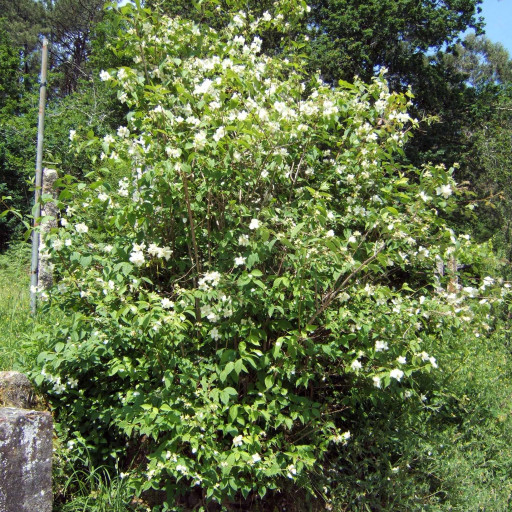
Plant Overview
Known as the "Sweet Mock Orange," this timeless shrub is the ultimate sensory experience for a spring garden. While it doesn't produce fruit, its intoxicating citrus-honey fragrance earned it a spot in the most elegant European estates centuries ago. It’s a resilient, old-fashioned beauty that bridges the gap between the end of spring bulbs and the start of summer perennials.
🔍 How to Identify
- 🌼 The Flowers: Large clusters of four-petaled, creamy white blossoms with a central "burst" of prominent golden-yellow stamens.
- 🍃 The Foliage: Pointed, oval leaves arranged oppositely along the stem, featuring visible veins and tiny, widely spaced teeth along the margins.
- 🎋 The Stems: A fountain-like growth habit with arching branches; older wood often features distinctive "exfoliating" or peeling chestnut-brown bark.
🏡 In Your Garden
- ✂️ The Pruning Trick: To keep the shrub from looking "leggy" or wild, always prune immediately after the flowers fade. Because it blooms on the previous year's wood, pruning in winter or early spring will accidentally cut off all of your upcoming flowers.
- ☀️ Fragrance vs. Shade: While it is a tough plant that can survive in partial shade, it produces the most intense fragrance and the densest floral displays when given a sunny spot with plenty of air circulation.
⚠️ Safety & Toxicity
- ✅ Non-Toxic: Philadelphus coronarius is generally considered non-toxic to humans, dogs, and cats, making it a safe choice for family landscapes.
- 🐝 Allergy Note: While the plant is safe to touch, the heavy scent and abundant pollen can be a trigger for individuals with sensitive respiratory systems or seasonal hay fever during the peak bloom in June.
✨ Fun Fact
The genus name Philadelphus is derived from the Greek for "brotherly love," but historical lore suggests its hollowed-out, pithy stems were once used by ancient civilizations to create flutes and smoking pipe stems!

Detailed Care Instructions
Mock orange can tolerate partial shade but not full shade. The more light it gets, the better its flowering will be.
Is mock orange easy to care for?
Mock orange is a low-maintenance shrub. It typically requires watering during periods of drought and annual feeding and pruning.
How fast does mock orange grow?
Mock orange has a fast growth rate, gaining around 2 feet per year on average.
| Color | White |
| Soil Ph | 6 To 8 |
| Lighting | Full Sun |
| Soil Type | Well-Drained, Loamy Soil |
| Bloom Time | Spring |
| Plant Type | Deciduous Shrub |
| Mature Size | Varies From 6 To 12 Feet High And 6 To 12 Feet Wide |
| Native Area | Southeast Europe And Italy |
| Sun Exposure | Full Sun To Partial Shade |
| Hardiness Zones | 4 Through 8 |
To grow Philadelphus coronarius, also known as the mock orange plant, you can follow these steps:
- Choose the right location: Philadelphus coronarius prefers full sun to part shade, so select a site that receives at least 6 hours of direct sunlight per day. Ensure the soil is well-draining to avoid waterlogged conditions.
- Prepare the soil: Before planting, amend the soil with compost or well-rotted manure to improve its fertility and drainage. Remove any weeds or grass from the planting area.
- Planting: Dig a hole that is slightly larger and deeper than the root ball of your Philadelphus coronarius plant. Place the plant in the hole and backfill it with soil, gently firming it around the roots. Water thoroughly after planting.
- Watering: Keep the soil evenly moist, especially during the first year. Regular watering is beneficial during dry periods. Avoid overwatering, as it can lead to root rot. Reduce watering during the winter months.
- Mulching: Apply a layer of organic mulch, such as wood chips or pine straw, around the base of the plant to conserve moisture, suppress weed growth, and protect the roots from extreme temperatures.
- Pruning: Prune Philadelphus coronarius immediately after flowering. Remove any dead or damaged branches to maintain the plant's shape and encourage new growth. Thin out crowded areas to improve air circulation.
- Fertilizing: Apply a balanced, slow-release fertilizer in early spring when new growth begins. Follow the manufacturer's instructions for application rates.
- Pests and diseases: Philadelphus coronarius is relatively pest and disease-resistant. However, keep an eye out for common issues such as aphids, spider mites, and leaf spots, and promptly address them with organic pest control methods if necessary.
Remember to regularly monitor your plant's health, providing appropriate care and maintenance throughout the growing season.

Place in a window with dappled sun or a spot in the middle of a room. Or directly in a window facing west or east.

Philadelphus Coronarius is a type of flowering shrub that requires regular watering to thrive. When watering this plant, it is important to avoid over-watering, as it can lead to root rot and other issues.
The best way to determine when to water this plant is to check the top inch of soil for dryness. If it feels dry, it is likely time to water. However, if the soil is still moist, it is best to wait a little longer.
When watering, make sure to apply the water directly to the base of the plant, rather than splashing it on the leaves or flowers. A good rule of thumb is to water slowly and deeply, allowing the water to penetrate the soil and reach the roots of the plant.
During the summer months, when the weather is hot and dry, this plant may require more frequent watering. In addition, if the plant is located in a container, it may require more frequent watering than if it were planted in the ground.
Overall, the key to successfully watering Philadelphus Coronarius is to be attentive to its needs and to avoid over-watering. By providing the plant with the right amount of water, you can help it thrive and produce beautiful blooms year after year.
To fertilize this plant, apply a balanced, slow-release fertilizer in the early spring before new growth begins. Use a fertilizer with an equal ratio of nitrogen, phosphorus, and potassium, and apply it according to the package instructions. Water the plant thoroughly after fertilizing. Be careful not to over-fertilize, as this can lead to excessive growth and reduced flowering.
The ideal soil to use with this plant is a well-draining soil that is rich in organic matter. It should have a pH level that is slightly acidic to neutral. The plant prefers soil that is moist but not waterlogged. In order to ensure that the plant stays healthy, it is recommended to add compost or other organic matter to the soil periodically to improve its quality. Additionally, the plant should be fertilized twice a year with a balanced fertilizer to keep it healthy and promote growth.
Philadelphus Coronarius is a plant species that can be easily propagated by using two different methods: stem cuttings and layering.
- Stem Cuttings: Take a 4 to 6 inch stem cutting from the mother plant right below a node. Remove all the leaves from the bottom 2 inches of the stem. Insert the cutting in a pot filled with well-draining soil mix. Ensure to keep the pot moist and in a warm and bright place, away from direct sunlight. The cutting will root in 2 to 3 weeks.
- Layering: In early spring, choose a low hanging branch that you can bend down and bury the tip of the branch in soil. Scrape off some of the bark from the spot where the branch will come into contact with the soil. Bury the spot in soil and hold it in place with a U-shaped wire or a rock. Once roots form, cut the branch from the mother plant and transplant it into its own pot.
Common pests of the sweet mock orange include Aphids, larvae. Make a habit of checking your sweet mock orange frequently for pests so that any infestations can be caught and managed early.








