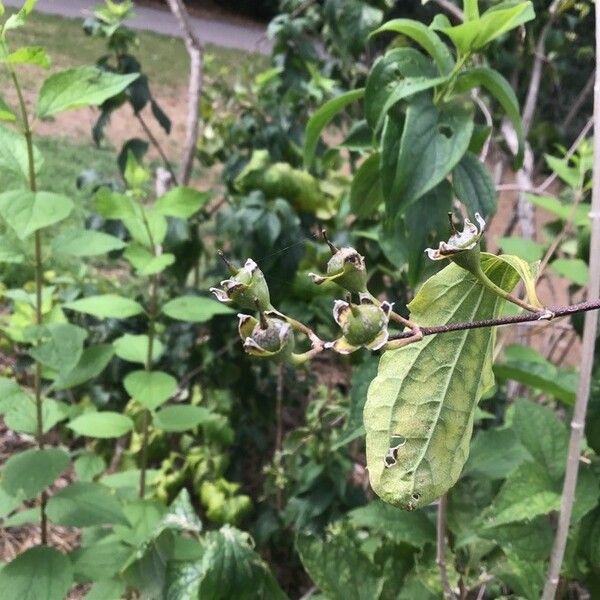
Plant Overview
Known as the Schrenk’s Mock Orange, Philadelphus schrenkii is a resilient beauty that bridges the gap between wild woodlands and manicured gardens. Native to the rugged landscapes of East Asia and Siberia, it is beloved for its "mock" citrus fragrance that perfumes the air in early summer. Unlike the more common garden varieties, this species is a true survivor, enduring colder winters than almost any other Mock Orange in the trade.
🔍 How to Identify
- 🌼 Pure White Blooms: The flowers are creamy white with four distinct petals and a cluster of bright yellow stamens in the center, appearing in clusters of three to seven.
- 🍃 Toothed Foliage: The leaves are oval-shaped, slightly fuzzy (pubescent) on the underside, and feature delicate "teeth" along the edges.
- 🪵 Peeling Bark: As the shrub matures, the bark on the older stems begins to flake and peel in thin, papery strips, providing visual interest even in the winter.
🏡 In Your Garden
- 🌬️ Cold-Hardy Legend: This is one of the toughest Mock Oranges available. It thrives in northern climates where other fragrant shrubs might succumb to frost, making it an excellent choice for windbreaks or hardy hedges.
- ✂️ Pruning Logic: It blooms on "old wood" (the growth from previous years). To ensure a heavy bloom next season, always prune it immediately after the flowers fade; cutting it too late in the year will remove the hidden flower buds.
⚠️ Safety & Toxicity
- 🐾 Pet Friendly: Good news for furry friends! Philadelphus schrenkii is generally considered non-toxic to dogs, cats, and horses.
- 👶 General Caution: While not poisonous, the plant is purely ornamental. Ingesting large amounts of the leaves or flowers may cause minor stomach upset in small children.
✨ Fun Fact
Despite the name "Mock Orange," this plant is actually a distant relative of the Hydrangea! It earned its nickname because its fragrance is almost indistinguishable from real orange blossoms, allowing historical gardeners in cold climates to "mimic" the scent of a Mediterranean citrus grove.

Detailed Care Instructions
To grow Philadelphus Schrenkii, also known as Schrenk's Mock Orange, follow these steps:
- Choose a suitable location: Philadelphus Schrenkii prefers full sun to partial shade. Select a spot in your garden that receives at least six hours of direct sunlight per day.
- Prepare the soil: Ensure that the soil is well-draining and fertile. If your soil is heavy clay or compacted, amend it with organic matter like compost or well-rotted manure to improve drainage and nutrient content.
- Dig a hole: Dig a hole that is twice as wide and just as deep as the root ball. The exact size will depend on the size of the plant you have. Make sure the hole is large enough to accommodate the roots without bending or crowding them.
- Plant the shrub: Gently remove the plant from its container and place it in the hole with the top of the root ball level or slightly higher than the surrounding soil. Backfill the hole with soil, firming it gently around the roots.
- Water thoroughly: After planting, water the shrub deeply to settle the soil and eliminate any air pockets around the roots. Water regularly, especially during the first growing season, to ensure the plant establishes well.
- Apply mulch: Spread a layer of organic mulch, such as wood chips or straw, around the base of the plant. Mulching helps retain soil moisture, suppresses weed growth, and regulates soil temperature.
- Prune as needed: Pruning is usually not essential, but you can trim back any dead, damaged, or overgrown branches in late spring or after flowering.
- Fertilize: Apply a balanced, slow-release fertilizer in early spring to promote healthy growth. Follow the package instructions for the correct application rate.
- Monitor for pests and diseases: Inspect the plant regularly for signs of pests or diseases, such as aphids or powdery mildew. Treat any issues promptly using organic or appropriate chemical controls.
- Enjoy the blooms: Philadelphus Schrenkii produces fragrant, white flowers in late spring or early summer. Admire the beautiful blooms and the pleasant scent they provide to your garden.
Remember to consult local gardening resources or experts for advice specific to your region, as they can provide additional information about the care and specific requirements of Philadelphus Schrenkii.

Place in a bright room that is sun drenched almost all day. Or directly in a south-facing window.

It is recommended to water this plant deeply but infrequently, allowing the soil to dry out slightly between watering sessions. When watering, make sure to thoroughly soak the soil to encourage deep root growth. It is important to avoid overwatering as this can lead to root rot. Additionally, this plant prefers well-draining soil and may benefit from adding compost or other organic matter to improve the soil structure. It is important to monitor soil moisture levels regularly to ensure the plant is receiving adequate water without becoming waterlogged.
- Choose a balanced fertilizer that has equal parts nitrogen, phosphorus, and potassium.
- Apply the fertilizer in early spring, just as new growth begins to emerge.
- Use a slow-release fertilizer that will gradually release nutrients over a period of time.
- Apply the fertilizer evenly around the base of the plant, avoiding the trunk or stem.
- Water the plant deeply after fertilizing to ensure that the nutrients are absorbed by the roots.
- Avoid over-fertilizing, as this can lead to excessive growth and weaken the plant.
- Repeat the fertilizing process once per year, ideally in the spring.
Philadelphus Schrenkii plant grows well in a well-drained soil mixture that is rich in nutrients. It prefers a soil that is slightly acidic to neutral pH level. A good soil mixture for Philadelphus Schrenkii plant should consist of a blend of compost, peat moss, perlite or vermiculite, and garden soil. The amount of compost and peat moss should be equal parts, while perlite or vermiculite should make up one-third of the total potting mix, and the remaining one-third should be garden soil. This soil mixture allows for proper drainage, moisture retention, and nutrient availability to the plant. It is essential to maintain consistent soil moisture levels to keep the plant thriving, and adding a layer of mulch will help retain moisture and keep weed growth at bay.
To propagate this plant, start by collecting cuttings from a healthy and mature specimen during the dormant season, typically in late autumn or early winter. Using a sharp and sterilized knife, cut a stem that is about 6 inches long and contains at least two nodes.
Remove the lower leaves from the stem, leaving only a few leaves at the top. Dip the bottom of the stem in rooting hormone powder and plant it in a container filled with a well-draining soil mix. Make sure to keep the soil moist but not waterlogged.
Place the container in a bright area with indirect light and maintain a consistent temperature of around 68-72°F. After a few weeks, check for rooting by gently tugging on the stem. If it resists, roots have likely formed.
Once the cuttings have rooted, gradually expose them to more light and lower the humidity by opening the container gradually. After a few more weeks, they should be strong enough to transplant into their own pots or directly into the ground. Regularly watering and fertilizing the plants will help them establish and reach maturity.








