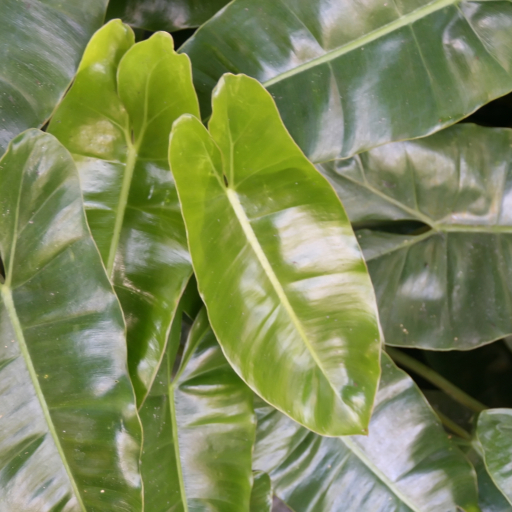
Plant Overview
Named after the legendary Brazilian landscape architect Roberto Burle Marx, this plant is a living tribute to mid-century tropical design. Often called the "Burle Marx Philodendron," it is celebrated for its incredible resilience and its ability to create a dense, lush jungle look in record time. Whether it’s trailing from a shelf or climbing a moss pole, its polished, emerald-green leaves bring an architectural elegance to any room.
🔍 How to Identify
- 🍃 Leaf Shape: Features distinctive elongated heart or paddle-shaped leaves with a deep "V" at the base where the stem attaches.
- ✨ Texture: The foliage has an exceptionally glossy, waxy finish that looks almost artificial or polished to a high shine.
- 🌿 Growth Habit: It is a prolific grower that tends to "clump" and create many side shoots, giving it a much bushier appearance than its "leggy" philodendron cousins.
🏡 In Your Garden
- 🪴 Versatile Architecture: This plant is a "weaver." In its natural habitat, it crawls across the forest floor, but in your home, it can be trained to climb a totem or spill over the sides of a hanging basket.
- 🌤️ Light Adaptation: It is famous for its adaptability; while it loves bright, indirect light to keep its leaves large, it will tolerate lower light levels better than most tropical plants, though its growth will slow down significantly.
⚠️ Safety & Toxicity
- 🐾 Toxic to Pets: Like all members of the Araceae family, it contains insoluble calcium oxalate crystals. If ingested, it can cause intense burning and swelling of the mouth, tongue, and throat in cats and dogs.
- 🚫 Child Safety: Keep this plant on higher shelves. Chewing on the leaves can cause immediate oral pain and potential gastrointestinal upset in small children.
✨ Fun Fact
The man this plant is named after, Roberto Burle Marx, was a pioneer of "Modernist" garden design. He was one of the first people to treat tropical plants as abstract shapes and colors, and he discovered or introduced over 50 species of plants to the world of horticulture!

Detailed Care Instructions
| Humidity | Normal |
| Lighting | Part Sun |
| Difficulty | Medium |
| Temperature | 16°C - 24°C |
| Hardiness Zones | 9B - 11 |
To grow a Philodendron Burle Marx plant, you can follow these steps:
- Choose the right location: Philodendron Burle Marx plants prefer bright, indirect light. Avoid direct sunlight as it can scorch the leaves. Place the plant near a window with filtered light or in a spot where it receives bright but indirect light.
- Select the appropriate container: Use a well-draining potting mix and a container with drainage holes. Philodendron Burle Marx plants prefer to be slightly root-bound, so choose a container that is slightly larger than the root ball.
- Planting and repotting: Carefully remove the plant from its current pot and place it in the new container. Fill in around the roots with fresh potting mix, ensuring that the plant is at the same level as before. Repotting should be done every 1-2 years or when the plant becomes root-bound.
- Watering: Keep the soil evenly moist during the growing season (spring to fall), but do not allow the plant to sit in standing water. Water when the top inch of soil feels dry, and be careful not to overwater, as this can lead to root rot. Reduce watering in winter when the plant is in its dormant phase.
- Humidity: Philodendron Burle Marx plants thrive in high humidity. Mist the leaves with water regularly or place the plant on a tray filled with water and pebbles to increase humidity. Alternatively, you can use a humidifier nearby.
- Fertilization: Feed the plant with a balanced, water-soluble fertilizer diluted to half strength every two weeks during the growing season. Reduce or stop fertilizing in winter when the plant is not actively growing.
- Pruning: Trim any yellowing or dead leaves to maintain the plant's appearance. You can also prune to control the size and shape of the plant. Cut back overgrown stems just above a leaf node to encourage branching.
- Propagation: Philodendron Burle Marx plants can be propagated through stem cuttings. Take a cutting with at least two nodes and place it in water or a soilless potting mix. Keep it in a warm and humid environment until roots develop, then transplant it into a pot.
Remember to keep an eye out for common pests such as spider mites or mealybugs and take appropriate measures to control them if necessary. With proper care and attention, your Philodendron Burle Marx plant will thrive and grow into a beautiful specimen.

Place in a window with dappled sun or a spot in the middle of a room. Or directly in a window facing west or east.

To water this particular plant, you will want to make sure that the soil stays evenly moist without becoming waterlogged. This can be achieved by watering deeply, but infrequently, and ensuring that the drainage is good in the pot or container the plant is in. It is important to allow the soil to dry out slightly between waterings, as overwatering can lead to root rot and other issues. You may want to consider using a moisture meter or keeping an eye on the soil's moisture content by feeling the top inch or so with your finger. Additionally, you can mist the plant occasionally to increase humidity, which can be beneficial for its growth and health.
To fertilize this plant, use a balanced liquid fertilizer once a month during the growing season (spring and summer). Dilute the fertilizer to half strength before applying it to the soil. On non-fertilizer months, water the plant thoroughly to flush out any excess salts or nutrients. Avoid fertilizing during the winter months when the plant is dormant.
It is best to use a well-draining soil mix for this plant. The soil should be composed of a mix of organic materials such as peat moss, perlite, and vermiculite. These materials help create the ideal soil structure for optimal growth. It is important to avoid using heavy or compacted soil as this may cause root rot and limit the plant's ability to absorb water and nutrients. Additionally, choosing a soil mixture that is slightly acidic (pH between 5.5-6.5) will help to mimic the plant's natural growing conditions.
To propagate this plant, you will need to first find a healthy and mature stem from which to take a cutting. Next, follow these steps:
- Using clean, sharp shears, make a cut just below a node on the stem. Nodes are the small bumps on the stem where leaves or roots can grow.
- Remove any leaves from the bottom 2-3 inches of the cutting.
- Dip the cut end in rooting hormone powder, which will encourage root growth.
- Plant the cutting into a pot of well-draining soil and water thoroughly.
- Cover the pot with a clear plastic bag and place it in a warm, bright location, but out of direct sunlight.
- Mist the cutting once or twice a week to keep the humidity high.
- Check the cutting regularly for new growth and root development. Once roots have formed, you can remove the plastic bag.
- After a few weeks, the cutting should begin to produce new leaves and grow into a healthy plant.
Note: Propagating plants can be tricky and success is not guaranteed. Try taking multiple cuttings to increase your chances of success.
Common pests of the philodendron burle marx include Mealybugs, spider mites, thrips. Make a habit of checking your philodendron burle marx frequently for pests so that any infestations can be caught and managed early.







