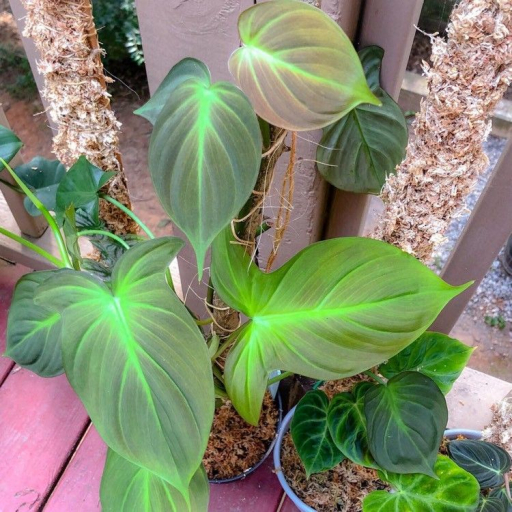
Plant Overview
Often called the "Shape Shifter" of the aroid world, Philodendron camposportoanum is a stunning Brazilian native that keeps indoor gardeners on their toes. It is famous for its dramatic transformation; a single plant can look like three different species as it matures. Whether it’s trailing delicately from a shelf or scaling a moss pole, this plant brings a touch of tropical mystery to any collection.
🔍 How to Identify
- 🍃 Leaf Metamorphosis: This plant exhibits extreme "heterophylly." Juvenile leaves are small, velvety, and heart-shaped, while mature leaves develop three distinct lobes that resemble rabbit ears.
- ✨ Velvet Sheen: The foliage has a soft, matte texture that reflects light with a subtle iridescence, similar to its cousin, the Philodendron micans.
- 🎨 Sunset Tints: New growth often emerges in shades of bronze, copper, or even deep pink before fading into a rich, dark emerald green as the leaf hardens.
🏡 In Your Garden
- 🧗 The Need to Climb: To trigger the plant's mature, lobed form, it must be allowed to climb. Without a moss pole or trellis to attach its aerial roots to, the plant will likely remain in its small, juvenile heart-leaf stage.
- ☁️ Humidity Lover: Because it hails from the humid rainforests of South America, it dislikes dry indoor air. If the humidity is too low, new leaves may struggle to unfurl or may emerge with "crippled" edges.
- 💧 Sensitive Roots: While it loves moisture, it hates "wet feet." Using a chunky, airy potting mix (like an orchid bark and perlite blend) is essential to prevent the delicate root system from suffocating.
⚠️ Safety & Toxicity
- 🐾 Toxic to Pets: Like almost all Philodendrons, this plant contains insoluble calcium oxalate crystals. If ingested by cats or dogs, it can cause intense oral irritation, drooling, and swelling.
- 👶 Human Safety: It is considered toxic to humans if eaten. Keep it out of reach of small children, and wash your hands after pruning to avoid potential skin irritation from the sap.
✨ Fun Fact
The Philodendron camposportoanum is one of the smallest-growing Philodendrons when it is young, making it a popular choice for closed terrariums—at least until it decides to start climbing and outgrows the glass!

Detailed Care Instructions
To grow Philodendron camposportoanum, follow these steps:
- Select a suitable location: Choose a place with bright indirect light for your Philodendron camposportoanum. It thrives in temperatures between 65-85°F (18-29°C). Avoid exposing the plant to direct sunlight as it can lead to leaf burn.
- Choose the right soil: Philodendron camposportoanum prefers well-draining soil. A mixture of peat moss, perlite, and orchid bark or a commercial potting mix for aroids is ideal. The soil should hold moisture but not become waterlogged.
- Potting: Use a pot with drainage holes to avoid overwatering. Select a pot that is one size larger than the current root ball. When repotting, be gentle with the roots as they are delicate.
- Watering: Water your Philodendron camposportoanum when the top inch of soil feels dry. Stick your finger into the soil to check the moisture level. Do not overwater as this can lead to root rot. Ensure the water drains out completely after watering.
- Humidity: Philodendron camposportoanum prefers higher humidity levels. You can increase humidity by misting the leaves with water or placing a tray filled with water near the plant. Alternatively, you can use a humidifier in the room where the plant is located.
- Fertilizer: Feed your Philodendron camposportoanum with a balanced liquid fertilizer once every month during the growing season (spring and summer). Follow the instructions on the fertilizer packaging for the correct dilution ratio.
- Pruning: Prune any yellow or damaged leaves regularly to maintain the appearance of the plant. You can also prune to shape the plant or control its size.
- Propagation: Philodendron camposportoanum can be propagated through stem cuttings. Select a healthy stem with multiple nodes and cut just below a node. Remove the lower leaves and place the cutting in water or a moist potting mix until it develops roots. Once roots have formed, transplant it into a container with well-draining soil.
Remember that growing plants is a process that requires patience and care. Ensure that you provide your Philodendron camposportoanum with the appropriate conditions and monitor its growth regularly.

Place in a window with dappled sun or a spot in the middle of a room. Or directly in a window facing west or east.

1. Before watering, check the soil: It's important to check the soil's moisture level before watering the plant. Insert your finger 1-2 inches into the soil, if it is dry, then it's time to water.
2. Choose the right container: The container you choose for your plant should have drainage holes to allow excess water to drain away. Make sure the container is not too small if the plant is fully grown.
3. Watering frequency: Philodendron Camposportoanum plants thrive in slightly moist soil, but do not like to sit in water. They grow best in well-draining soil that's frequently hydrated. Water the plant once a week during summers and once every two weeks during winters, but don't let the soil dry out completely.
4. Watering method: Water the plant at the base and avoid watering the leaves because this could encourage fungal growth. Water the plant until water runs out of the drainage holes and make sure to remove any standing water in the container's saucer.
5. Humidity: Philodendron Camposportoanum plants thrive in a humid environment. You can increase the humidity by placing a tray of water near the plant or misting the leaves with water.
6. Temperature: These plants prefer temperatures between 60°F and 75°F. Avoid exposing the plant to cold drafts or extreme heat.
7. Soil type: Philodendron Camposportoanum plants thrive in well-draining soil that's rich in organic matter. You can create such soil by adding peat moss, perlite or vermiculite to regular potting soil.
By following these steps, your Philodendron Camposportoanum plant will thrive and grow healthy.
To fertilize your plant, use a balanced liquid fertilizer once a month during growing season (spring and summer). Dilute the fertilizer according to the manufacturer's instructions and apply it to the soil around the roots. To avoid over-fertilizing, fertilize your plant less frequently during the winter months. Make sure to water your plant thoroughly before and after fertilizing.
Philodendron Camposportoanum plant thrives best in well-drained soil that retains some moisture. The ideal soil for this plant should contain a mix of organic matter such as compost, peat moss, or coco coir, as well as perlite or vermiculite to provide adequate drainage. It is essential to avoid heavy and compacted soils, as this can lead to waterlogging and root rot. Additionally, this plant prefers a slightly acidic soil pH ranging from 5.5 to 6.5. When growing this plant in a container, it is essential to choose one with drainage holes to prevent water accumulation at the bottom. It is also crucial to ensure that the soil is kept moist but not waterlogged to support healthy growth. Overall, providing the right soil conditions will ensure that your Philodendron Camposportoanum plant thrives and displays its lush tropical foliage.
To propagate this plant, one should first prepare a clean and sharp cutting tool, such as scissors or a knife. Next, select a mature stem with several healthy leaves and no signs of damage or disease. Make a clean cut just below a node (where a leaf is attached), and remove any lower leaves or foliage from the stem.
Place the stem cutting in a glass of fresh water, making sure that the cut end is submerged, with only the leaves above the water line. Change the water every few days to keep it clear and fresh.
After a few weeks, small roots should start to form from the base of the stem. Once the roots are about an inch long, the cutting can be planted in a pot with well-draining soil. Keep the soil moist but not waterlogged, and place the pot in a bright, indirect light.
With proper care, the new plant should continue to grow and develop into a mature Philodendron Camposportoanum.
Common pests of the philodendron micans include Mealybugs, spider mites, thrips. Make a habit of checking your philodendron micans frequently for pests so that any infestations can be caught and managed early.








