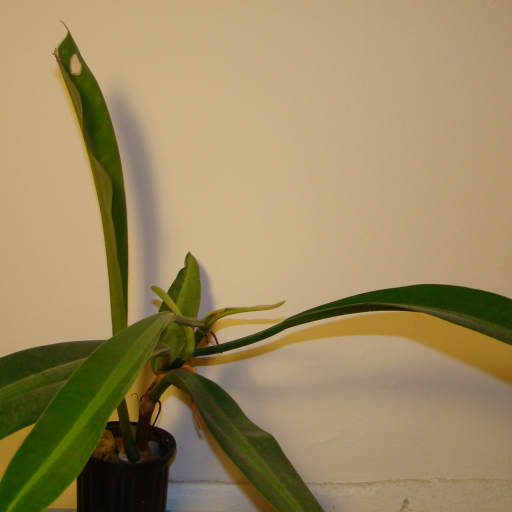
Plant Overview
Known for its dramatic, sword-like foliage, the Philodendron Crassinervium is a striking Brazilian native that brings an architectural edge to any indoor jungle. Often called the "Lance-leaf Philodendron," its long, narrow leaves look like green blades emerging from the soil. In the wild, it is a versatile survivor, starting its life on the forest floor before climbing skyward up the trunks of rainforest giants.
🔍 How to Identify
- 🗡️ Leaf Shape: The leaves are exceptionally long and narrow, resembling a spearhead or a strap, and can grow up to two feet long indoors.
- 🦴 The Midrib: Its most defining feature is the "crassinervium" (thick nerve)—a prominent, swollen central vein that runs down the middle of the leaf, giving it structural rigidity.
- 🍃 Texture: Unlike the soft, velvety leaves of some cousins, these are thick, leathery, and have a glossy finish that helps them retain moisture.
🏡 In Your Garden
- 🧗 The Climbing Habit: While it can trail, this plant is a "hemiepiphyte." It is happiest when given a moss pole or wooden plank to climb, which encourages the leaves to reach their maximum size.
- 🧪 Soil Nuance: Because it naturally grows on trees, it hates "wet feet." Use a chunky, airy potting mix (think orchid bark, perlite, and charcoal) to mimic its airy home in the Brazilian canopy.
- 💧 Drought Tolerance: Thanks to those thick, fleshy midribs, it can store a bit of extra water, making it more forgiving if you forget a watering session compared to thinner-leafed tropicals.
⚠️ Safety & Toxicity
- 🚫 Status: Toxic to humans and pets.
- 🐾 Details: Like all Philodendrons, this plant contains calcium oxalate crystals. If chewed or swallowed, it can cause immediate mouth irritation, swelling of the throat, and digestive upset. Keep it high on a shelf or hanging basket away from curious cats, dogs, and toddlers.
✨ Fun Fact
The specific epithet crassinervium literally translates to "thick-veined." This adaptation isn't just for looks; that massive midrib acts as a biological reservoir, allowing the plant to survive dry spells in the high canopy where soil is non-existent!

Detailed Care Instructions
| Humidity | Normal |
| Lighting | Part Sun |
| Difficulty | Medium |
| Temperature | 21°C - 28°C |

Place in a window with dappled sun or a spot in the middle of a room. Or directly in a window facing west or east.

The presence of a dry surface layer of soil does not indicate that the plant requires water. Instead, stick your finger 1-2" (3-5 cm) deep in the soil to feel dampness or moisture content. If the soil seems dry, it's time to water your greens. If the soil is still moist, however, it is better not to water your plant and instead wait a day or two. Overwatering or waterlogging raises the risk of root rot. So if the soil takes longer than a week to dry, check the light conditions because it's likely that the plant isn't getting enough light. It's fine if the upper layer of soil is dry between waterings, but the deeper soil layer should always have some moisture.
These plant needs regular fertilizing during growing seasons. Fertilizing your plants in dormant state during the winter, might result in scorching or browning of the leaf tips. If mature plants display signs of nutrient insufficiency, fertilizer administration is necessary to restore the plant to its previous state.
You may use All Purpose Plant Food or Green Plant Food for your Philodendron Crassinervium
Common pests of the philodendron crassinervium include Mealybugs, spider mites, thrips. Make a habit of checking your philodendron crassinervium frequently for pests so that any infestations can be caught and managed early.








