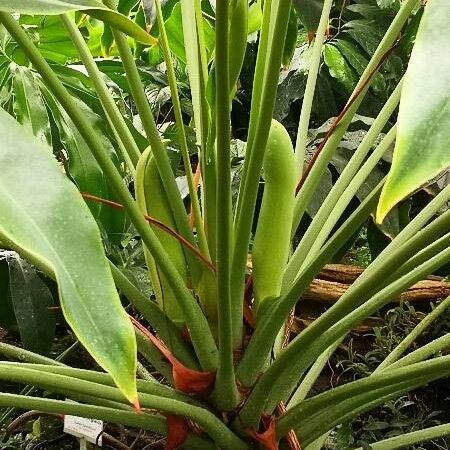
Plant Overview
Often called the "Fun Bun" or the "Finger Leaf," this tropical showstopper is famous for its mesmerizing, spiraling foliage. Native to the damp rainforests of the Amazon, it starts its life looking like a simple vine but matures into a spectacular, tree-like crown that resembles a botanical starburst. While it was recently reclassified by scientists as Thaumatophyllum spruceanum, it remains a beloved "holy grail" for Philodendron collectors worldwide.
🔍 How to Identify
- 🌀 The "Spiral" Growth: Unlike many climbers, its leaves don't just grow out; they grow in a unique circular (pedate) pattern, with individual leaflets radiating from a central stem like the ribs of an umbrella.
- 🌿 Leaf Architecture: The mature leaves are divided into multiple finger-like segments. A single leaf structure can eventually house over 10 separate leaflets arranged in a perfect semi-circle.
- 🪵 The Woody Stem: As the plant ages, it develops a thick, textured trunk marked with "eye" scars where old leaves have fallen, giving it a prehistoric, architectural appearance.
🏡 In Your Garden
- ☁️ Humidity is Non-Negotiable: Because of its rainforest roots, this plant craves moisture in the air. If the air is too dry, the new "fingers" of the leaves may get stuck or tear while unfurling.
- 🏺 Room to Breathe: This isn't a compact shelf plant. Because the leaves spiral outward in a wide radius, it needs a dedicated corner where its "fan" won't be cramped against a wall or furniture.
- 🪴 Aroid Soil Nuance: It hates "wet feet." Use a chunky, airy mix (think orchid bark, perlite, and charcoal) to mimic the debris-filled forest floor where its roots would naturally thrive.
⚠️ Safety & Toxicity
- 🚫 Status: Toxic to humans and pets.
- 🐾 Details: Like most members of the Arum family, it contains insoluble calcium oxalate crystals. If chewed or swallowed, it causes immediate mouth irritation, swelling of the throat, and digestive upset. Keep it out of reach of curious cats and toddlers.
✨ Fun Fact
The Philodendron Goeldii undergoes one of the most dramatic "glow-ups" in the plant kingdom. As a juvenile, its leaves are simple, heart-shaped, and look nothing like the adult version. It is only as the plant matures and gains strength that it begins its signature spiraling transformation!

Detailed Care Instructions
To grow Philodendron Goeldii plant, follow these steps:
- Choose a suitable location: Philodendrons prefer bright, indirect light. Place the plant in a spot that receives bright but filtered sunlight throughout the day. Avoid placing it in direct sunlight as it can scorch the leaves.
- Provide the right temperature and humidity: Philodendron Goeldii thrives in a temperature range of 65-85°F (18-29°C) and prefers moderate to high humidity levels. You can enhance humidity by misting the plant regularly or placing it on a pebble tray filled with water.
- Use well-draining soil: Philodendrons prefer well-draining soil that retains some moisture without becoming waterlogged. Use a mixture of peat moss, perlite, and bark in equal parts to create an appropriate potting mix.
- Water the plant correctly: Water the Philodendron Goeldii deeply and allow the top inch of soil to dry out between waterings. Avoid overwatering, as wet soil can lead to root rot. Adjust your watering schedule according to the moisture needs of the plant.
- Fertilize regularly: Feed the Philodendron Goeldii plant with a balanced, water-soluble fertilizer once a month during the growing season (spring to summer). Dilute the fertilizer according to the package instructions and apply it to moist soil.
- Prune and shape the plant: Regular pruning helps maintain a bushy and compact shape. Trim any yellow or damaged leaves and cut back leggy growth to encourage fuller growth. Use clean, sharp pruning shears for this task.
- Provide support if needed: Philodendron Goeldii can be trained to climb if provided with a suitable support structure. Use trellises or moss poles to train the plant upwards, attaching the stems as they grow.
- Repot when necessary: As the plant grows, it may outgrow its pot. Repot the Philodendron Goeldii into a slightly larger container using fresh potting mix. Repotting is typically done every 1-2 years, preferably in spring.
- Keep an eye out for pests: Philodendrons are generally resistant to pests, but occasionally, they can be attacked by mealybugs, scale insects, or spider mites. Inspect the plant regularly and treat any infestations promptly with insecticidal soap or neem oil.
By following these care instructions and providing the proper conditions, you can successfully grow a Philodendron Goeldii plant.

Place in a window with dappled sun or a spot in the middle of a room. Or directly in a window facing west or east.

When caring for this particular plant, it is important to ensure that the soil remains moist but not waterlogged. The frequency of watering will depend on various factors such as the size of the plant, the pot it is in, and the temperature and humidity levels of the surroundings. A good rule of thumb is to wait until the top layer of soil feels dry before watering. When watering, it is best to do so slowly and thoroughly, allowing the water to soak into the soil and reach the roots. It is also important to avoid getting water on the leaves as this can lead to fungal growth and other health issues. Regularly checking the soil for moisture levels and adjusting watering frequency accordingly will help ensure the health and vitality of this beautiful plant.
To fertilize the plant, use a balanced liquid fertilizer once a month during the growing season, which typically runs from spring to early fall. Dilute the fertilizer to half strength and apply it to the soil. Avoid over-fertilizing, as this can cause damage to the plant. Additionally, be sure to water the plant well before and after fertilizing.
Philodendron Goeldii plant thrives in well-draining soil that is rich in nutrients. The soil should be able to hold moisture without becoming waterlogged. It is recommended to use a soil mixture that is made up of a combination of organic matter such as peat moss, compost, and aged bark. This type of soil provides the plant with the necessary nutrients and aeration for healthy growth. It is also important to make sure that the soil used has a pH level between 5.5 and 7.0, which is slightly acidic. This helps to prevent root rot and allows the plant to absorb nutrients more easily. When growing Philodendron Goeldii plant, it is important to avoid using heavy clay soils or soils that do not drain well as this can lead to root rot and other issues.
To propagate this plant, you will need a healthy mature plant with several runners or stems. Choose a runner or stem with a few leaves and cut it off using a sterilized sharp knife or pruning shears.
Remove the bottom leaves of the stem, leaving only a few at the top. Dip the cut end of the stem into a rooting hormone powder and plant it in a well-draining soil mix.
Make sure to keep the soil evenly moist and place the cutting in a warm, bright, and humid area. You can cover the plant with a clear plastic bag or a plastic container to create a mini greenhouse and increase humidity.
After a few weeks, the cutting should begin to root and new growth should appear. Once the new plant has grown a few inches, you can transplant it into a larger pot or outside in a suitable spot.
Remember to keep the new plant well watered and do not expose it to direct sunlight as it may cause damage or burning of the leaves. With care, the new plant should grow into a healthy mature Philodendron Goeldii.
Common pests of the crown of nero include Scale insect, mealybugs, spider mites, fungus gnats, thrips. Make a habit of checking your crown of nero frequently for pests so that any infestations can be caught and managed early.








