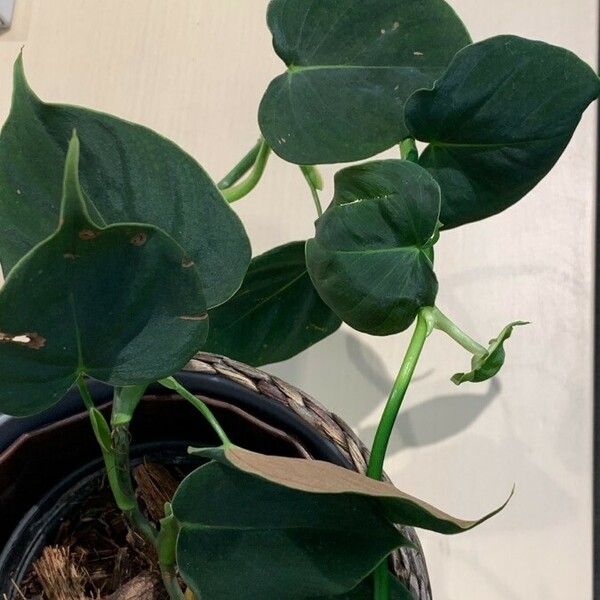
Plant Overview
Often called the "Wolf Philodendron," the Philodendron lupinum is a true shapeshifter of the Brazilian Amazon. In its juvenile stage, it stays small and humble with velvety, heart-shaped leaves, but once it finds a vertical surface to scale, it undergoes a dramatic metamorphosis. This plant is a favorite among collectors for its iridescent foliage and its fascinating ability to change its entire look as it grows.
🔍 How to Identify
- 🌿 The Velvet Sheen: The juvenile leaves possess a deep forest-green color with a luxurious, shimmering velvet texture that feels soft to the touch.
- 🩸 Maroon Undersides: Turn a young leaf over to find a striking burgundy or deep red underside, a trait used by rainforest plants to capture sunlight bouncing off the forest floor.
- 🐺 Leaf Metamorphosis: As the plant matures and climbs, the leaves lose their heart shape and become large, leathery, and multi-lobed, eventually resembling the head of a wolf.
🏡 In Your Garden
- 🧗 The Need to Climb: This species is a hemi-epiphyte, meaning it is genetically programmed to seek out trees. To see the plant reach its "Wolf" form, you must provide a moss pole or cedar plank; without support, it will stay small and trailing.
- ☁️ Humidity is Key: Because of its thin, velvety leaves, it is more sensitive to dry air than the common Heartleaf Philodendron. It thrives in high-humidity environments (60%+) and dislikes being placed near drafty vents or heaters.
⚠️ Safety & Toxicity
- 🚫 Status: Toxic: Philodendron lupinum is not safe for consumption.
- 🐾 Details: The plant contains calcium oxalate crystals. If chewed or swallowed by pets or curious children, it will cause immediate stinging of the mouth, swelling of the throat, and localized irritation. Always place this "wolf" out of reach of furry friends.
✨ Fun Fact
- ✨ A Botanical Secret: For years, this plant was often confused with other species like P. micans because they look so similar when young. It wasn't until botanists watched them grow into their massive adult forms that they realized the Lupinum was a distinct and much more dramatic species!

Detailed Care Instructions
To grow a Philodendron Lupinum plant, you can follow these steps:
- Choose a suitable location: Philodendron Lupinum prefers bright, indirect sunlight. Select a spot in your home or garden that receives filtered sunlight or place the plant a few feet away from a west or east-facing window.
- Select the right pot: Use a well-draining potting mix that retains some moisture but doesn't become waterlogged. Choose a pot with drainage holes to prevent overwatering.
- Propagate the plant: Philodendron Lupinum can be propagated through stem cuttings. Take a cutting from a mature, healthy plant just below a node. Ensure the cutting has a few leaves and is around 4-6 inches long. Dip the cut end in rooting hormone powder to enhance rooting and plant it in a small pot filled with a moist growing medium.
- Provide the right conditions: Maintain a temperature between 65-75°F (18-24°C) for optimal growth. The plant prefers high humidity, so misting the leaves daily or using a humidifier nearby can be beneficial. Avoid placing it near cold drafts or air conditioning vents.
- Watering: Water the plant moderately, keeping the soil moist but not waterlogged. Allow the top inch of soil to dry out before watering again. Overwatering can lead to root rot, so ensure proper drainage.
- Fertilize: Feed the plant with a balanced liquid fertilizer diluted to half-strength every 2-4 weeks during the growing season (spring and summer). Reduce fertilizing frequency to once a month during the dormant season (fall and winter).
- Pruning: Regularly trim away any dead, damaged, or yellowing leaves to encourage new growth and maintain the plant's appearance.
- Repotting: As the plant grows, it may outgrow its current pot. Repotting can be done every 1-2 years, preferably in spring. Choose a slightly larger pot and fresh potting mix suitable for Philodendrons.
- Troubleshooting: Watch for common issues such as yellowing leaves (overwatering or nutrient deficiency), brown, crisp leaves (underwatering or excessive direct sunlight), or signs of pests like spider mites or mealybugs. Take appropriate action if any issues arise.
By following these steps and providing the right care, your Philodendron Lupinum plant should thrive and grow successfully.

Place in a window with dappled sun or a spot in the middle of a room. Or directly in a window facing west or east.

Philodendron Lupinum plant is a tropical plant that requires consistent watering to thrive. To water this plant, you should first assess the moisture level of the soil by touching the top inch of soil with your finger. If it feels dry, it is time to water the plant.
When watering, use room temperature water and pour it into the soil around the base of the plant. Water until it starts to drain out of the drainage holes at the bottom of the pot. Avoid getting water on the leaves as this can cause fungal growth and other issues.
It is important not to let the soil dry out completely between watering, but also be cautious not to overwater and leave the plant in standing water. The frequency of watering will depend on factors such as humidity, temperature, and light conditions. In general, this plant needs to be watered about once a week, but you should always check the soil moisture before watering.
In addition to regular watering, it is advisable to mist the plant to increase humidity levels. Philodendron Lupinum plant prefers humid environments, and misting will help keep the leaves healthy and prevent leaf-tip browning.
Overall, consistent watering and appropriate humidity levels are essential for the health and vitality of Philodendron Lupinum plant.
To provide nutrients to the Philodendron Lupinum plant, begin by selecting a balanced, water-soluble fertilizer with equal amounts of nitrogen, phosphorus, and potassium. Dilute the fertilizer to half strength and apply it to the soil every four to six weeks during the growing season. Avoid over-fertilizing, which can lead to root burn or other problems. Additionally, be sure to follow care instructions related to watering, sunlight, and humidity to ensure the plant grows healthy and strong.
The ideal soil for this plant is a well-draining mixture that provides both moisture retention and aeration. It should be rich in organic matter and nutrient-dense, promoting healthy growth and foliage. A mixture of peat moss, perlite, and vermiculite can be used, along with a small amount of sand to aid in drainage. It is important to avoid using soil that is too heavy or compacted and may lead to root rot. It is also recommended to add a slow-release fertilizer to the soil to provide ongoing nutrition for the plant.
To propagate this plant, you will need to take a stem cutting. Look for a healthy stem with at least two leaves and some aerial roots. Use a clean, sharp knife to cut the stem just below a node (where a leaf meets the stem). Trim off any lower leaves and aerial roots.
Next, prepare a pot of well-draining soil, such as a mix of perlite and peat moss. Make a small hole in the soil and insert the cutting, burying the bottom node. Pack the soil around the stem firmly but not too tightly.
Water the cutting thoroughly and keep the soil moist but not waterlogged. Place the pot in a warm, bright spot with indirect sunlight. A humidity dome or plastic bag can be used to create a humid environment around the cutting.
After a few weeks, check for roots by gently tugging on the stem. If you feel resistance, the roots have started to grow. Remove the humidity dome or bag and gradually move the plant to a brighter location.
When the new plant has grown a few new leaves, it can be transplanted into a larger pot with fresh soil. With proper care, your new Philodendron Lupinum will thrive and grow into a beautiful mature plant.
Common pests of the philodendron lupinum include Mealybugs, spider mites, thrips. Make a habit of checking your philodendron lupinum frequently for pests so that any infestations can be caught and managed early.








