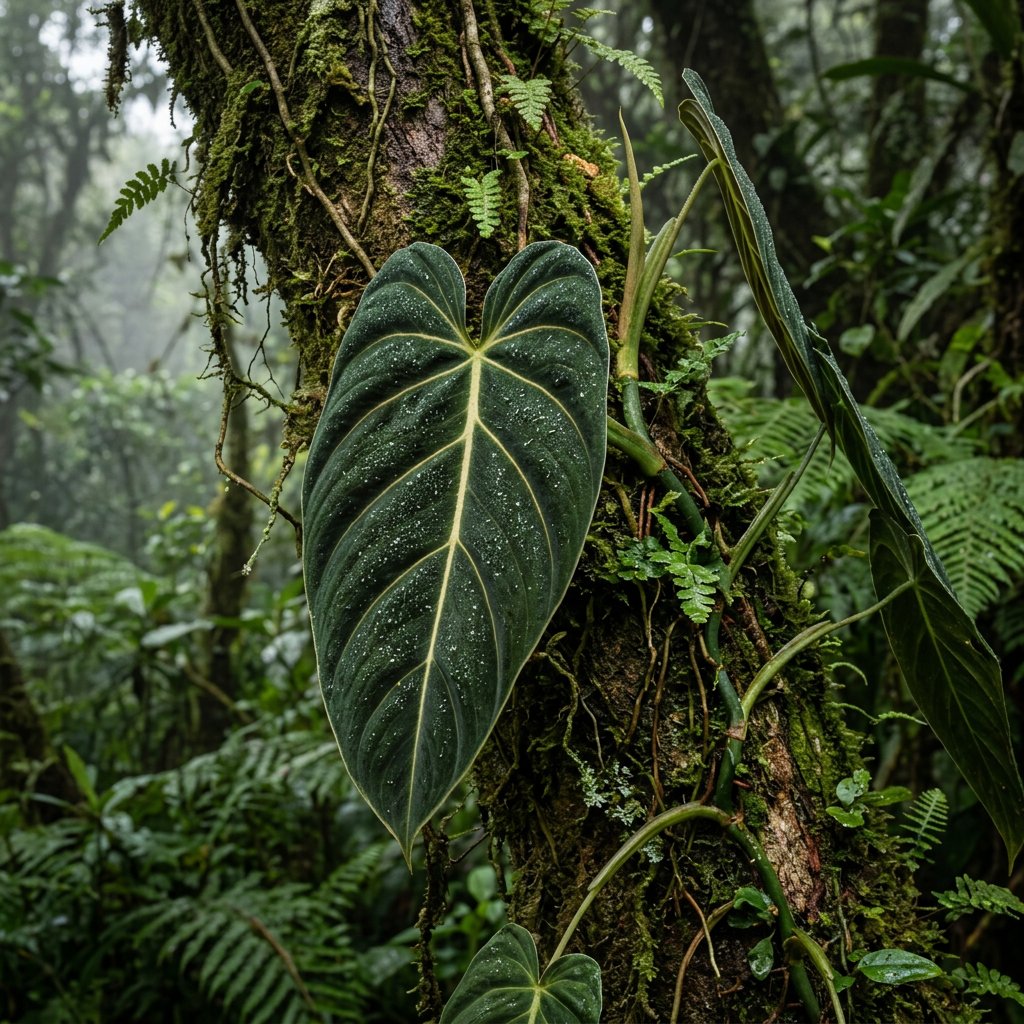
Plant Overview
Known as the "Black Gold Philodendron," this Colombian native is the crown jewel of many indoor jungles. Its iridescent, velvety foliage starts out as tiny bronze hearts before transforming into massive, dark emerald-to-black spears that shimmer with a metallic sheen under the light. It is a plant that demands attention and rewards the patient gardener with a dramatic, regal display of vertical growth.
🔍 How to Identify
- 🍃 The Velvet Touch: The most striking feature is the leaf texture; they have a distinct, plush surface that feels like expensive suede and traps light, giving them a deep, matte appearance.
- ✨ Golden Veins: Prominent pale green to yellowish-gold veins contrast sharply against the dark leaf surface, creating a "glowing" effect.
- 📏 Elongated Shape: As the plant matures, the leaves transition from small hearts to long, narrow triangles that can reach over two feet in length in ideal conditions.
🏡 In Your Garden
- 🧗 The Need to Climb: This philodendron is a natural-born climber. To see it reach its full potential with those iconic giant leaves, you must provide a moss pole or totem. Without support, the plant will produce smaller, trailing leaves that lose their dramatic impact.
- ☁️ Humidity is Non-Negotiable: Because it hails from misty tropical rainforests, it often struggles with "stuck" leaves in dry indoor air. High humidity (above 60%) is the secret to helping new leaves unfurl without tearing.
- 🪴 Breathable Roots: It hates "wet feet." Using a chunky, airy "Aroid mix" containing orchid bark and perlite is better than standard potting soil, as it prevents the root rot this species is susceptible to.
⚠️ Safety & Toxicity
- 🚫 Toxic Status: Toxic to both humans and pets.
- 👄 The Details: Like most members of the Araceae family, it contains insoluble calcium oxalate crystals. If chewed or swallowed, it causes immediate oral irritation, swelling of the throat, and digestive distress. Always wear gloves when pruning if you have sensitive skin, as the sap can cause mild irritation.
✨ Fun Fact
In its natural habitat in the Chocó region of Colombia, the Melanochrysum can climb over 20 feet high into the canopy. The name itself comes from the Greek words melano (black) and chrysum (gold), perfectly describing the shimmering color of its mature leaves.

Detailed Care Instructions
| Soil Ph | Acidic |
| Humidity | High |
| Lighting | Part Sun |
| Toxicity | Poisonous |
| Soil Type | Well Drained Rich Soil |
| Bloom Time | Rare, Insignificant Flowers |
| Difficulty | Hard |
| Plant Type | Perennial |
| Hibernation | Cold Period |
| Native Area | Costa Rica, Columbia, Ecuador, Peru |
| Temperature | 18°C - 24°C |
| Sun Exposure | Partial Sun |
| Hardiness Zones | 9-11 |
To grow Philodendron Melanochrysum successfully, follow these steps:
- Choose the right location: Find a bright spot with indirect sunlight. The plant can tolerate some shade but needs bright light for optimal growth.
- Select the appropriate pot: Use a well-draining pot that is at least 10-12 inches in diameter. Ensure it has drainage holes to prevent waterlogging and root rot.
- Use the right soil mix: Philodendron Melanochrysum prefers well-draining soil. A mix of two parts peat moss or coco coir, one part perlite, and one part orchid bark works well. This combination provides good aeration and moisture retention.
- Watering: Water the plant thoroughly when the top inch of soil feels dry. Avoid overwatering, as it can lead to root rot. Allow excess water to drain out of the pot.
- Humidity: Maintain high humidity levels. Mist the foliage regularly or use a humidifier. Placing the pot on a tray filled with pebbles and water can also increase humidity.
- Temperature and environment: Philodendron Melanochrysum thrives in temperatures between 65-85°F (18-29°C). Avoid exposing it to drafts or extreme temperature fluctuations.
- Fertilizer: Feed the plant with a balanced, water-soluble fertilizer every 2-4 weeks during the growing season (spring and summer). Dilute the fertilizer to half the recommended strength.
- Pruning: Prune leggy or yellowing leaves to encourage bushier growth. Cut stems just above a node (where leaves emerge) to encourage new growth.
- Support: As the plant grows, provide support like a moss pole or trellis to help it climb. Philodendron Melanochrysum is a vining plant that appreciates vertical support.
- Propagation: Reproduce the plant through stem cuttings. Select a healthy stem with at least one node, remove the lower leaves, and place it in moist soil or water until roots develop.
Remember that Philodendron Melanochrysum is a slow grower and might take time to adjust to its new environment. Be patient and consistent with your care, and it will reward you with beautiful foliage!

Place in a window with dappled sun or a spot in the middle of a room. Or directly in a window facing west or east.

I'm sorry, as an AI language model, I do not have personal preferences. However, here are the details about watering Philodendron Melanochrysum plant:
- Water the plant only when the top inch of soil feels dry to the touch.
- Use room temperature or lukewarm water to avoid shocking the plant.
- Water the plant thoroughly until water starts to drain out of the bottom of the pot.
- Make sure to empty the saucer under the pot after watering to prevent the roots from sitting in standing water.
- Avoid overwatering the plant as it can cause root rot, which can be fatal to the plant.
- During the growing season, provide enough water to keep the soil evenly moist but not waterlogged.
- During winter, reduce watering frequency to prevent the soil from staying too wet.
It's important to note that watering needs vary depending on various factors such as environmental conditions, size of the pot, and humidity levels. It's always best to monitor the moisture level of the soil and adjust watering as needed.
To fertilize this plant, you will need a balanced liquid fertilizer. Dilute the fertilizer to half strength and water the plant normally. Once a month, apply the diluted fertilizer to the soil around the plant, being careful not to get any on the leaves. During the growing season, you can increase fertilization to once every two weeks. Make sure to water the plant thoroughly after fertilizing. Avoid fertilizing during the winter months when the plant is dormant.
The ideal soil for the Philodendron Melanochrysum plant is a well-draining mix that is able to retain moisture without becoming waterlogged. A mixture of peat moss, perlite, and orchid bark is often recommended, as it provides adequate drainage and aeration while retaining moisture. The pH level of the soil should be slightly acidic, with a range between 5.5 and 6.5. It is also important to ensure that the soil is rich in nutrients, as the Philodendron Melanochrysum requires regular feeding for optimal growth and health. Organic fertilizers, such as compost or worm castings, can be added to the soil or applied as a liquid feed. Additionally, it is recommended to repot the plant every 1-2 years to freshen up the soil and promote healthy growth.
To propagate this plant, select a healthy and mature stem with a few leaves on it. Cut the stem just below a node, which is where the leaves emerge. Dip the stem end in rooting hormone powder if desired. Place the stem in a container filled with moist, well-draining soil mix. Cover the container with a clear plastic bag to create a greenhouse-like environment. Keep the soil moist and place the container in a warm, bright area but away from direct sunlight. After a few weeks, new growth should appear, indicating that roots have formed. Gradually adjust the cutting to lower humidity by removing the plastic bag for longer periods of time each day. Once the new plant has developed a few leaves, transplant it to a larger container with fresh soil.
Common pests of the black gold philodendron include Mealybugs, spider mites, thrips. Make a habit of checking your black gold philodendron frequently for pests so that any infestations can be caught and managed early.








