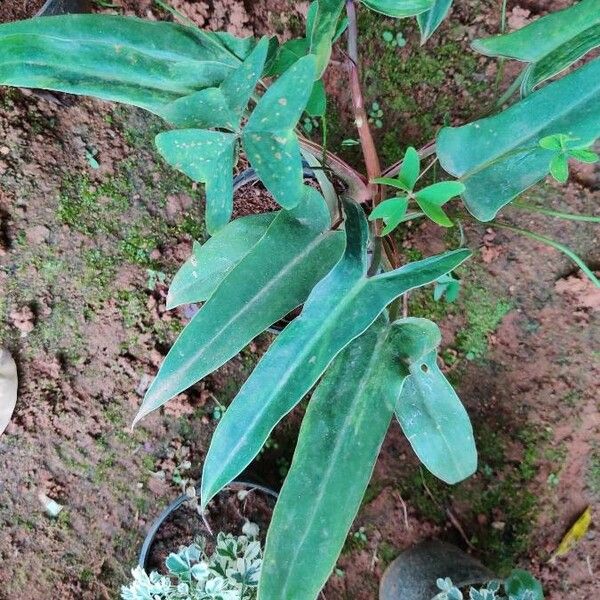
Plant Overview
The Philodendron mexicanum is a true shapeshifter of the tropical world. Native to the lush forests of Mexico down through Central America, it is often celebrated by collectors for its dramatic, "bat-winged" silhouette. This plant is a fast-growing climber that brings an immediate jungle aesthetic to any indoor space, transitioning from a humble juvenile to a massive, tri-lobed wonder as it matures.
🔍 How to Identify
- 🍃 Leaf Shape: Juvenile leaves start as simple narrow hearts, but mature leaves develop two distinct "ears" or lobes at the top, creating a dramatic triangular or three-pointed shape.
- 🎨 Burgundy Undersides: One of its most striking features is the color contrast; while the tops are a glossy forest green, the undersides of mature leaves often display a rich, maroon or leathery reddish tint.
- 🪜 Elongated Petioles: The stems (petioles) that hold the leaves are notably long and sturdy, allowing the plant to reach outward and upward as it searches for light.
🏡 In Your Garden
- 🧗 The Climbing Instinct: As a hemiepiphyte, this plant is born to climb. If you want to see those iconic large leaves, you must provide a moss pole or trellis. Without a vertical surface to latch onto with its aerial roots, the plant will "trail" and the leaves will remain small and juvenile.
- 💧 Humidity & Airflow: While it is hardier than many rare Philodendrons, it thrives in higher humidity. However, because its leaves are large and glossy, good air circulation is key to preventing fungal spots on those beautiful burgundy undersides.
⚠️ Safety & Toxicity
- 🚫 Toxic Status: Highly toxic to pets and humans if ingested.
- 🐱 The Details: The plant contains insoluble calcium oxalate crystals. If chewed or swallowed, it causes immediate oral irritation, swelling of the tongue and throat, and digestive distress. It is best kept on high shelving or in hanging baskets away from curious cats, dogs, or small children.
✨ Fun Fact
The Philodendron mexicanum is a master of "heteroblasty"—a scientific term for a plant that changes its leaf shape significantly as it ages. This adaptation allows the plant to navigate different light levels as it climbs from the dark forest floor up toward the bright jungle canopy!

Detailed Care Instructions
To grow a Philodendron Mexicanum plant, follow these steps:
- Choose a pot: Select a pot that is at least 6 inches (15 cm) in diameter and has drainage holes at the bottom to prevent waterlogging.
- Soil: Use well-draining soil that is rich in organic matter. A mixture of peat moss, perlite, and potting soil works well.
- Planting: Fill the pot with the soil mixture and make a small hole in the center. Place the Philodendron Mexicanum plant in the hole and cover its roots with soil. Gently press the soil around the plant to secure it.
- Light: Philodendron Mexicanum plants thrive in bright, indirect light. Avoid exposing them to direct sunlight as it can scorch the leaves.
- Watering: Water the plant thoroughly when the top inch of soil feels dry. Ensure that excess water drains out of the pot to prevent root rot. Philodendron Mexicanum plants prefer evenly moist soil, but avoid overwatering.
- Humidity: These plants enjoy high humidity. You can increase humidity by misting the leaves regularly or placing the pot on a tray filled with water and pebbles.
- Temperature: Philodendron Mexicanum plants prefer temperatures between 65-80°F (18-27°C). Avoid exposing them to extreme cold or heat.
- Fertilizer: Feed the plant with a balanced, water-soluble fertilizer once a month during the growing season (spring and summer). Follow the instructions on the fertilizer packaging for proper dosage.
- Pruning: Prune the plant as needed to maintain its shape and remove any yellow or dead leaves. Philodendron Mexicanum plants naturally grow long, trailing vines, but you can train them to climb by using stakes or a moss pole.
- Repotting: As the plant grows, you may need to repot it every 2-3 years into a slightly larger pot. This will provide more space for the roots to grow.
By following these guidelines, you can successfully grow a healthy Philodendron Mexicanum plant.
To water this particular plant, you should first check the soil regularly and ensure that it is slightly moist but not waterlogged. Overwatering can lead to root rot and cause damage to the plant. When watering, use room temperature water and avoid getting water on the leaves as this can lead to fungal diseases. Allow the water to drain out of the pot before placing it back on a saucer to catch any excess water. It is best to water this plant less in the winter months when growth is slower.
To fertilize a certain plant, use a balanced water-soluble fertilizer with equal amounts of nitrogen, phosphorous, and potassium. Dilute the fertilizer to half strength and apply it to the soil every two weeks during the growing season, which is usually from spring to early fall. Reduce fertilization to once a month during the winter season. Remember not to apply fertilizer when the soil is dry, and ensure to water the plant thoroughly after fertilizing.
For optimal growth and health, the Philodendron Mexicanum plant should be planted in a well-draining soil that is rich in organic matter. It is recommended to use a mixture of peat moss, perlite, and vermiculite in equal parts to create this type of soil. The soil pH should be slightly acidic, around 5.5-6.5, to ensure proper nutrient uptake. It is important to avoid compacting the soil around the roots to prevent damage or root rot. Regular fertilization with a balanced fertilizer during the growing season can also promote healthy growth.
To propagate this particular plant, it is important to first gather sterile pruning shears, rooting hormone, and a clean, well-draining potting medium. Cut a healthy stem from the parent plant, being sure to make a clean cut below a node (where the leaves attach to the stem). Remove any bottom leaves from the stem, leaving only a few at the top. Dip the cut end of the stem in rooting hormone and plant it in the potting medium, making sure to bury the node beneath the soil. Keep the medium moist and in a warm, humid environment (such as under a plastic bag or in a greenhouse) for several weeks until roots begin to form. Once the new plant has established roots, it can be gradually acclimated to brighter light and drier conditions.








