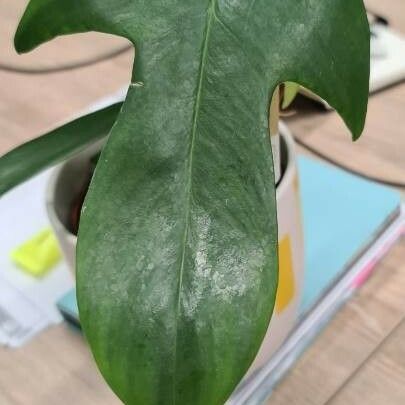
Plant Overview
The Philodendron Panduriforme, often affectionately called the "Fiddle-leaf Philodendron" or "Horse-head Philodendron," is a tropical climber that brings a touch of the Amazonian rainforest into the modern home. Known for its distinct, violin-shaped foliage, it has long been a favorite for those who want a dramatic, architectural plant without the finicky nature of a true Fiddle-leaf Fig. In the wild, it is a master of the vertical world, gracefully scaling ancient trees to reach the dappled sunlight of the canopy.
🔍 How to Identify
- 🎻 Lobed Foliage: The most striking feature is the "pandurate" (fiddle-shaped) leaves. Mature leaves have deep indentations near the stem, creating a silhouette that looks remarkably like a violin or a horse's head.
- 🍃 Leathery Texture: Unlike some thinner-leaved Philodendrons, the Panduriforme has thick, waxy, and leathery leaves that are a deep, lustrous emerald green.
- 🧗 Vining Stems: This is a climbing species. It produces sturdy, thick stems that develop aerial roots, which it uses to anchor itself to any available surface as it reaches upward.
🏡 In Your Garden
- 🗼 The Support System: Because it is a natural climber, this plant truly thrives when given a moss pole or cedar plank. Without support, the leaves may stay smaller and the plant will eventually trail over the side of the pot in a disorganized fashion.
- 🌤️ Light and Humidity: It hails from the humid understory of the rainforest. While it is adaptable, it prefers bright, filtered light—direct afternoon sun can scorch those beautiful "fiddles." It also appreciates a boost in humidity, so a pebble tray or a nearby humidifier will keep its leaf tips from browning.
⚠️ Safety & Toxicity
- 🚫 Status: Toxic to humans and pets.
- 🐾 Details: Like most aroids, it contains insoluble calcium oxalate crystals. If chewed or swallowed, it can cause immediate mouth irritation, swelling of the throat, and digestive upset. Keep this one on a high shelf or a sturdy stand away from curious cats, dogs, or toddlers.
✨ Fun Fact
The name "Panduriforme" actually comes from the Latin word pandura, which refers to a prehistoric lute-like stringed instrument. Botanists used this term because the leaf shape so perfectly mimics the curves of ancient musical instruments!

Detailed Care Instructions
Growing a Philodendron Panduriforme plant can be done by following these steps:
- Light: Place the plant in a bright spot with indirect sunlight. Avoid direct sunlight, as it can scorch the leaves.
- Temperature: These plants prefer temperatures between 60-80°F (15-27°C). Protect them from cold drafts or extreme temperature fluctuations.
- Watering: Provide regular and consistent watering. Keep the soil moist, but not waterlogged. It is better to water the plant when the top inch of soil feels dry. Ensure good drainage to prevent root rot.
- Humidity: Philodendron Panduriforme plants thrive in high humidity. Increase humidity by misting the leaves regularly or using a humidifier. Placing the plant on a tray filled with water and pebbles can also help.
- Soil: Use a well-draining soil mixture that retains moisture but doesn't become waterlogged. A combination of peat moss, perlite, and a small amount of sand works well.
- Fertilizer: Feed the plant with a balanced liquid fertilizer once a month during the growing season (spring and summer). Follow the package instructions for the appropriate dosage.
- Pruning: Trim any yellow, brown, or damaged leaves regularly to maintain the plant's appearance. You can also prune to control its size and shape.
- Support: As Philodendron Panduriforme is a climbing plant, provide a support structure such as a moss pole or trellis for it to grow against. This will help the plant climb and prevent it from trailing.
Remember that Philodendron Panduriforme plants are toxic to pets and children if ingested, so keep them out of reach.

Place in a window with dappled sun or a spot in the middle of a room. Or directly in a window facing west or east.

To properly water this plant, it is important to first check the moisture level of the soil. Stick your finger about an inch into the soil, and if it feels dry, it is time to water. Use room temperature water and pour it slowly onto the soil around the base of the plant. Avoid getting water on the leaves or stems. Make sure the soil is moist but not waterlogged, and allow excess water to drain away. This plant prefers evenly moist soil, so check the soil moisture regularly and adjust watering frequency as needed.
To fertilize this plant, use a balanced fertilizer with equal parts nitrogen, phosphorus, and potassium. Apply the fertilizer once a month during the growing season, which typically lasts from spring to fall. Dilute the fertilizer to half strength and water the soil thoroughly before applying the solution. Avoid over-fertilizing, which can cause salt buildup in the soil and damage the plant.
The Philodendron Panduriforme plant requires soil that is well-draining yet retains some moisture, as it prefers a slightly damp environment. A good soil mix for this plant would consist of equal parts peat moss, perlite, and vermiculite, which will promote adequate drainage while providing necessary nutrients and moisture. Alternatively, a mix of high-quality potting soil and sand or perlite can also work well. It is important to ensure that the soil is free of any pests or pathogens, and to provide regular fertilization as needed. The pH level of the soil should be maintained within a range of 6.0 to 7.0, as this plant prefers slightly acidic to neutral soil conditions.
To propagate this plant, you will need to first select a healthy stem from the mother plant. Look for a stem that is at least 4-6 inches long and has a few leaves attached to it.
Next, prepare a pot of well-draining soil. You can use a mixture of peat moss, perlite, and sand to create a loose, aerated soil that will allow the new plant to root easily.
Take a sharp, clean knife and make a diagonal cut about 1 inch below a node on the stem. Make sure the cut is clean and smooth, without any jagged edges.
Remove any leaves that are close to the cut, leaving only a few small leaves attached to the stem. This will help reduce stress on the plant and allow it to focus its energy on rooting.
Dip the cut end of the stem into rooting hormone powder, which will promote the growth of new roots. Tap off any excess powder.
Make a small hole in the soil and carefully place the stem into the hole. Gently press the soil around the stem to help it stay in place.
Water the soil lightly to settle it around the stem, being careful not to overwater. Keep the soil moist but not saturated, and avoid getting water on the leaves.
Place the pot in a warm, bright location, but out of direct sunlight. You can cover the pot with a clear plastic bag to create a humid environment that will help the plant to root.
Check the plant regularly for signs of growth. After a few weeks, you should see new leaves emerging from the stem, indicating that the plant has successfully rooted. At this point, you can remove the plastic bag and treat the new plant as you would any other philodendron.








