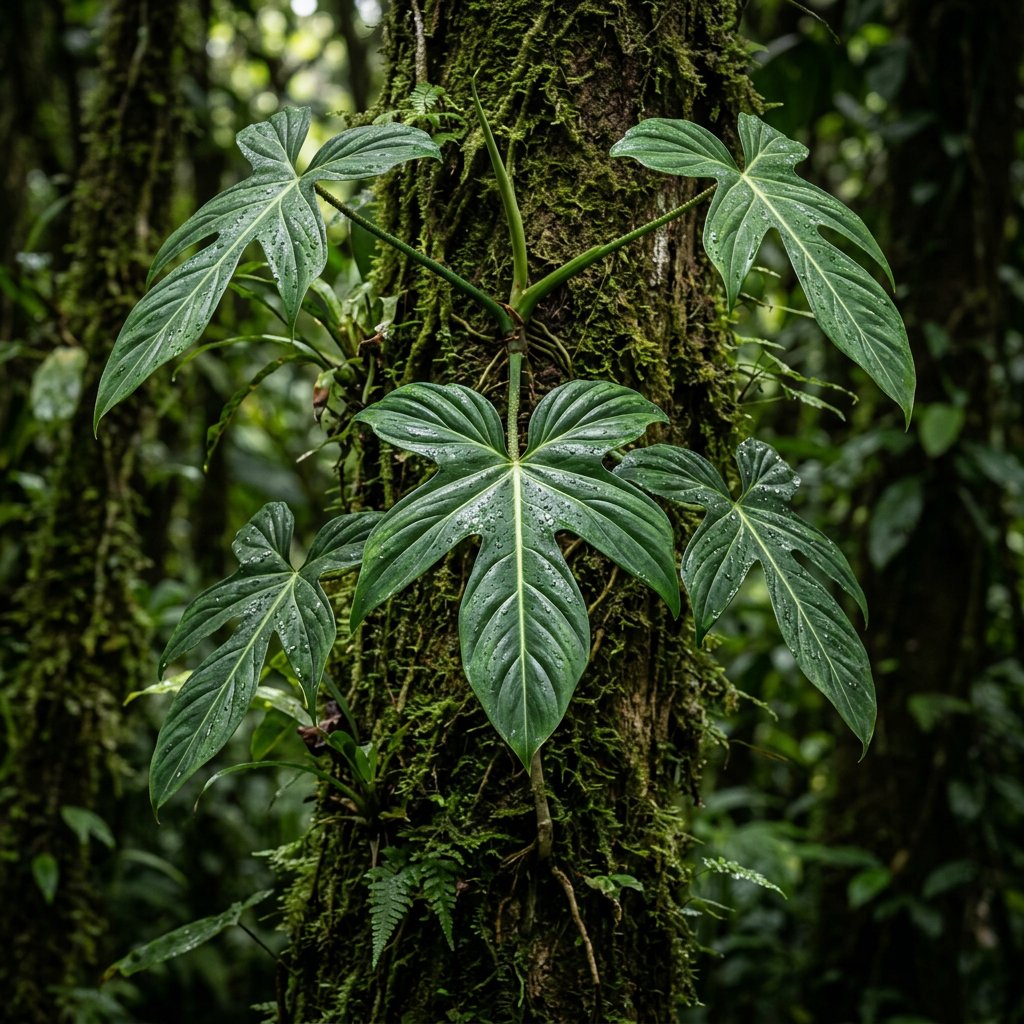
Plant Overview
Known as the "Tri-leaf Philodendron," Philodendron tripartitum is a tropical masterpiece that brings an architectural flair to any indoor jungle. Native to the humid rainforests of Central and South America, this climbing viner is a master of transformation. While it may look humble in its youth, it eventually develops signature three-lobed leaves that resemble a sleek green bird in flight or a stylized arrowhead.
🔍 How to Identify
- 🍃 Leaf Shape: The defining feature is the "tripartite" leaf, which is deeply divided into three distinct, elongated lobes.
- ✨ Lustrous Texture: The foliage is exceptionally glossy and a rich, deep emerald green, catching the light beautifully in dim corners.
- 🌿 Climbing Stems: It produces long, flexible stems with aerial roots that seek out surfaces to grip, showing its true nature as a forest dweller.
🏡 In Your Garden
- 🧗 The Need to Climb: Because this plant is a hemiepiphyte (a plant that spends part of its life growing on another), it thrives best when given a moss pole or trellis. Providing a vertical surface encourages the leaves to grow much larger and more dramatic.
- 💧 Soil & Drainage Nuance: It is highly sensitive to "wet feet." Instead of standard potting soil, it appreciates a "chunky" aroid mix containing orchid bark and perlite to ensure oxygen reaches the roots, preventing rot.
- 🌤️ Light Logic: In the wild, it lives under the canopy. In your home, it prefers bright, filtered light. Direct afternoon sun can scorch the glossy finish of the leaves, leaving permanent brown marks.
⚠️ Safety & Toxicity
- 🚫 Toxic Status: Like most members of the Araceae family, this plant is toxic if ingested.
- 🐾 Pets & Kids: It contains calcium oxalate crystals. If chewed, it can cause immediate mouth irritation, swelling of the throat, and digestive upset in cats, dogs, and curious toddlers. It is best kept on high shelves or hanging baskets.
✨ Fun Fact
The Philodendron tripartitum is a "shape-shifter." In its juvenile stage, the leaves are simple and heart-shaped, looking nothing like the adult version. It is only as the plant matures and begins to climb that it magically splits into the iconic three-lobed form!

Detailed Care Instructions
To grow a Philodendron Tripartitum plant, you can follow these steps:
- Choose the right location: Philodendron Tripartitum prefers bright, indirect sunlight but can tolerate some shade. Place it near a window with filtered light or a well-lit spot in your home. Avoid exposing it to direct sunlight as it can scorch the leaves.
- Provide the right temperature and humidity: This plant thrives in temperatures between 65-85°F (18-29°C). Maintain a warm and consistent temperature for optimal growth. It also enjoys high humidity, so you may need to use a humidifier or place the plant on a humidity tray to increase moisture in the air.
- Select the right soil and pot: Plant your Philodendron Tripartitum in well-draining soil that retains some moisture, such as a mixture of peat moss, perlite, and a little bit of sand. Choose a pot with good drainage holes to prevent waterlogging.
- Watering: Water the plant thoroughly when the top inch of soil becomes dry. Use room temperature water and ensure that the excess water drains away. Philodendron Tripartitum likes to be kept slightly moist but not soggy, as overwatering can cause root rot.
- Fertilize: Feed your Philodendron Tripartitum with a balanced liquid fertilizer every 2-4 weeks during the growing season (spring to summer). Follow the instructions on the fertilizer packaging for proper dosage.
- Provide support: Philodendron Tripartitum is a climbing plant that can grow long vines. You can provide a trellis, moss pole, or other support for the plant to climb and spread its leaves.
- Pruning: Regularly prune your Philodendron Tripartitum to control its growth and shape. Trim any leggy or damaged stems and encourage bushy growth by pinching off the tips of the vines.
- Propagation: Philodendron Tripartitum can be propagated through stem cuttings. Cut a healthy stem just below a node and place it in water or a well-draining potting mix until roots develop. Once the roots are established, you can transplant it into a separate pot.
Remember to monitor your plant closely for any signs of pests or diseases, such as spider mites or fungal infections, and take appropriate measures to treat them if necessary.

Place in a window with dappled sun or a spot in the middle of a room. Or directly in a window facing west or east.

To water this particular plant, you should first check the soil moisture by inserting your finger about an inch into the soil. If the soil feels dry, it's time to water the plant. When watering, be sure to pour water directly onto the soil around the base of the plant rather than on the leaves or stem. Allow the water to drain out of the bottom of the pot and discard any excess water. You should avoid overwatering the plant as it can lead to root rot and other issues. It's recommended to let the soil dry slightly between watering. Additionally, the plant prefers moderate to high humidity levels and may benefit from occasional misting.
- Choose a balanced fertilizer with equal amounts of nitrogen, phosphorus, and potassium.
- Dilute the fertilizer according to the package instructions.
- Apply the diluted fertilizer to the soil around the base of the plant, making sure to avoid the leaves.
- Water the plant thoroughly after fertilizing to help distribute the nutrients evenly.
- Repeat every 4-6 weeks during the growing season, which typically runs from spring to fall.
- Avoid fertilizing during the winter months when the plant is in its dormant phase.
The ideal soil for the plant in question should have good drainage properties and be well-aerated to prevent waterlogging. It should be rich in organic matter and have a slightly acidic to neutral pH (between 6 and 7). A mixture of peat moss, perlite, and coarse sand or vermiculite is a good choice for growing this plant. The soil should be kept moist but not overly wet, as excessive moisture can lead to root rot. Fertilization should be done sparingly, with a balanced, slow-release fertilizer applied every 6-8 weeks during the growing season. Regular pruning is recommended to promote healthy growth and prevent legginess.
To propagate this plant, you will need to prepare a few supplies. These include a sharp pair of scissors or pruning shears, a clean and well-draining potting mix, and a small container or pot for the new plant.
First, select a healthy and mature stem from the parent plant. Look for a stem that has at least one or two leaves and is at least 6 inches long. Using the sharp scissors or pruning shears, make a clean cut just below a node or leaf joint.
Remove any lower leaves from the stem, leaving only a few leaves at the top. This will help the plant focus its energy on producing new roots instead of supporting excess foliage.
Dip the cut end of the stem into rooting hormone powder, if desired. This will help encourage the growth of new roots.
Prepare a potting mix by combining equal parts of peat moss, perlite, and coarse sand. Fill a small container or pot with the potting mix, leaving about an inch of space at the top.
Using your finger or a pencil, create a small hole in the center of the potting mix. Insert the cut end of the stem into the hole, making sure it is buried about an inch deep in the soil.
Water the plant thoroughly, but allow excess water to drain away. Place the container in a warm and bright spot, but out of direct sunlight.
Keep the potting mix evenly moist, but not soaking wet. After a few weeks, you should start to see new growth and the development of new roots. Once the new plant is well-established, you can transplant it into a larger container or into your garden.
Common pests of the philodendron tripartitum include Mealybugs, spider mites, thrips. Make a habit of checking your philodendron tripartitum frequently for pests so that any infestations can be caught and managed early.








