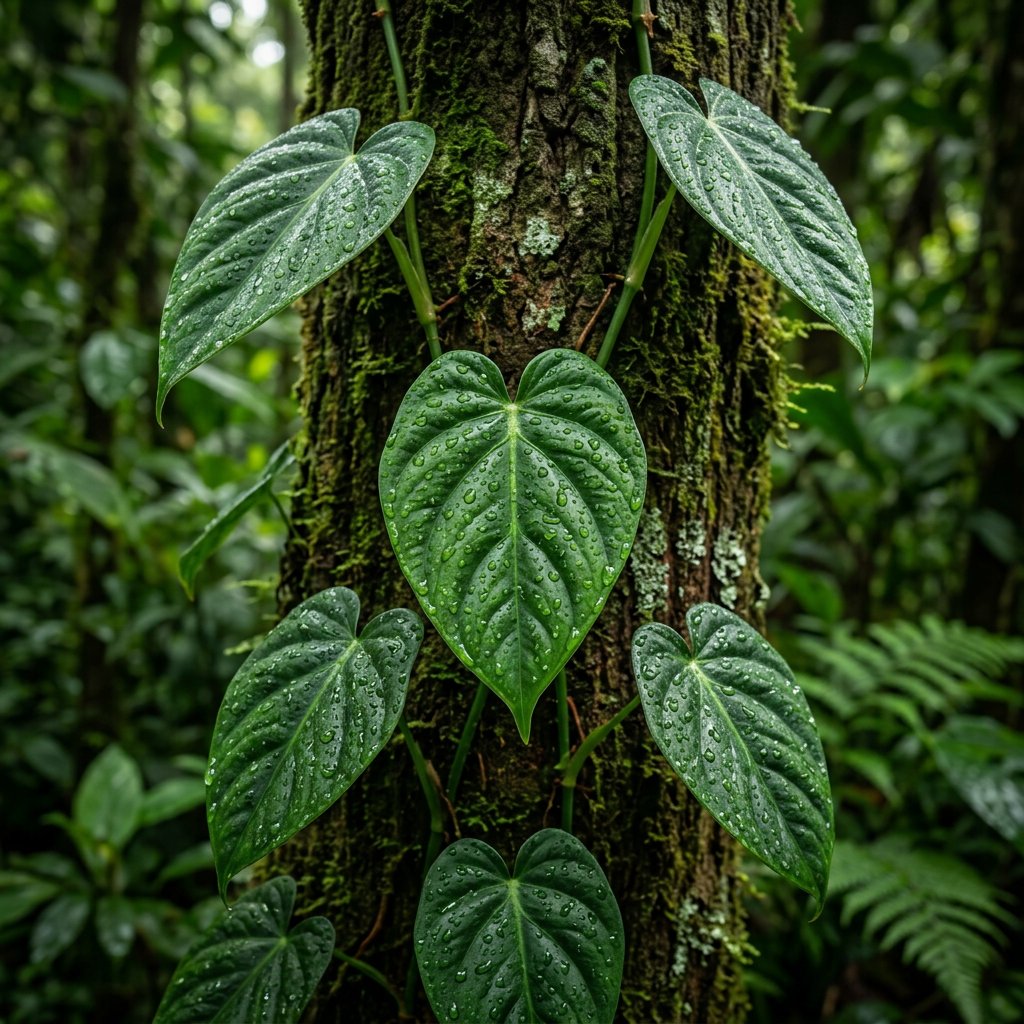
Plant Overview
Known as the "Tree Lover," the Philodendron is a diverse genus of over 400 species that has reigned supreme in indoor gardens for decades. Whether they are trailing gracefully from a shelf or standing tall in a corner, these tropical beauties are the ultimate symbols of resilience. Their name literally translates from Greek as "love tree," reflecting their natural habit of climbing up forest giants to reach the sunlight.
🔍 How to Identify
- 🍃 Leaf Morphology: Most common varieties feature iconic heart-shaped leaves, though more exotic types sport dramatic lobes, deep splits, or elongated "sword" shapes.
- 🪜 Growth Habits: They generally fall into two camps: "Vining" types that use aerial roots to climb or trail, and "Self-heading" types that grow upright on thick, sturdy stems.
- ✨ Glossy Finish: Most leaves have a distinctive waxy sheen or a velvety texture that helps them shed excess water in their native rainy habitats.
🏡 In Your Garden & Home
- 🧗 Aerial Ambition: If your Philodendron starts growing "alien-looking" brown roots from the stem, don't panic! These are aerial roots meant for grabbing onto moss poles or trees; providing a support structure will often result in much larger leaves.
- 🌥️ Canopy Dwellers: Because they evolved under the dense shade of tropical rainforests, they are experts at photosynthesizing in low-light corners. This makes them one of the few plants that truly thrive in modern apartment settings.
- 🚿 Oxygenated Roots: They prefer their soil to dry out significantly between waterings. Constant moisture prevents the roots from "breathing," which is the most common cause of yellowing leaves.
⚠️ Safety & Toxicity
- 🚫 Toxic Status: All parts of the Philodendron are considered toxic to humans and animals if ingested.
- 🐾 The Irritant: They contain calcium oxalate crystals, which act like tiny needles. If chewed, they cause immediate swelling of the mouth, drooling, and gastrointestinal distress in cats, dogs, and curious toddlers.
✨ Fun Fact
Philodendrons are biological "heaters." During their reproductive phase, the flowers of some species can undergo thermogenesis, raising their internal temperature to nearly 114°F (45°C) to better broadcast their scent and attract pollinating beetles!

Detailed Care Instructions
The golden goddess philodendron is among some of the more uncommon varieties of philodendron available, however, it usually isn’t too hard to find at garden centers and nurseries. If all else fails, online plant retailers normally sell it.
How big does the golden goddess philodendron get?
When grown indoors, the golden goddess philodendron normally tops out at around six feet tall. However, this can only be accomplished when the plant is provided with a support to grow up such as a moss pole or trellis.
Is the golden goddess philodendron the same as the lemon-lime philodendron?
Golden goddess philodendron and lemon-lime philodendron are two names for the same plant, which is also sometimes referred to as Malay gold.
| Color | None |
| Soil Ph | 4.5-6 |
| Humidity | High |
| Lighting | Part Sun |
| Toxicity | Poisonous |
| Soil Type | Equal Parts Loam, Sand, And Peat |
| Bloom Time | None |
| Difficulty | Medium |
| Plant Type | Houseplant, Perennial |
| Hibernation | Cold Period |
| Mature Size | 8 Feet |
| Native Area | Rainforests Of Tropical Central And South America |
| Temperature | 15°C - 22°C |
| Sun Exposure | Part Sun |
| Hardiness Zones | 9, 10, 11 |
To grow a Philodendron plant, here are some tips:
- Choosing the right Philodendron variety: There are many different Philodendron varieties, and each has slightly different growing requirements. Select the variety that suits your preferences and the conditions in your home.
- Provide the ideal lighting: Philodendrons thrive in bright, indirect light. Place your plant near a window with filtered sunlight, but avoid direct sunlight as it can burn the leaves.
- Temperature and humidity: Philodendrons prefer warm temperatures between 65-85°F (18-29°C). They also appreciate high humidity levels. You can increase humidity by misting the plant regularly or placing a humidifier nearby.
- Watering: Water your Philodendron when the top inch of soil feels dry. Avoid over-watering as it can lead to root rot. Allow excess water to drain out of the bottom of the pot to prevent standing water.
- Fertilizing: Use a balanced, water-soluble houseplant fertilizer during the growing season (spring and summer) every 4-6 weeks. Follow the product instructions for proper dilution and application.
- Potting and repotting: Philodendrons require well-draining soil. When repotting, choose a pot slightly larger than the current one, with good drainage holes. Regularly repotting every 1-2 years will help prevent root bound plants.
- Pruning and grooming: Prune any yellow or damaged leaves to maintain the overall health and appearance of the plant. Trimming back long vines can also encourage bushier growth.
- Propagation: Philodendrons are relatively easy to propagate. You can propagate through stem cuttings in water or directly in the soil. Cut a healthy stem just below a node, remove the lower leaves, and place the cutting in water or soil until roots develop.
Remember, each plant is unique, so observe your Philodendron for signs of any specific care it may need and adjust accordingly.

Place in a dark room with little light, like a dark bedroom or a spot far away from a window or directly in a north-facing window.

The Philodendron plant prefers to be evenly moist, but not waterlogged. Before watering, check the soil's moisture level by sticking your finger about an inch deep into the soil. If it feels dry, it's time to water. Use room temperature water, and water thoroughly until water drains from the bottom of the pot. Avoid letting the plant sit in standing water as this can cause root rot. Water less frequently during the winter months when growth slows down and the plant requires less moisture.
To fertilize this plant, use a water-soluble fertilizer and mix it into the watering can once a month during the growing season. Be sure to follow the instructions on the fertilizer packaging for proper dilution and application. For best results, fertilize after watering to avoid stressing the plant. If the plant is showing signs of over-fertilization, flush the soil with water to remove any excess nutrients.
For the Philodendron plant, it is recommended to use a well-draining soil mix that is slightly acidic in nature. A mix of peat moss, perlite, and vermiculite is suitable for creating a soil mix that allows for good water drainage and aeration while also retaining moisture and nutrients. It is important to avoid using heavy or compact soil that can lead to waterlogged roots and cause root rot. Additionally, adding organic matter to the soil can help to increase soil fertility and support the growth of the Philodendron plant.
There are several ways to propagate this plant. One common method is by stem cuttings. To do this, select a healthy stem with several leaves and nodes. Cut the stem just below a node and remove the lower leaves, leaving only a few at the top. Dip the cut end in rooting hormone and plant it in a pot with moist soil. Keep the cutting in a warm, humid location and water it regularly until new growth appears.
Another method is by air layering. With this technique, select a healthy branch that is growing well. Make a small cut on the branch just below a node and wrap the area with moist sphagnum moss. Cover the moss with plastic wrap and secure it with tape. Keep the moss moist and after a few weeks, roots should start to grow into the moss. Cut the branch just below the new roots and plant it in a pot with moist soil.
Finally, you can also propagate this plant by dividing it. This method is ideal for mature plants that have multiple stems or plants that have outgrown their current pot. Gently remove the plant from its current pot and separate the roots. Plant each section in its own pot with moist soil and water regularly until new growth appears.







