Plant Overview
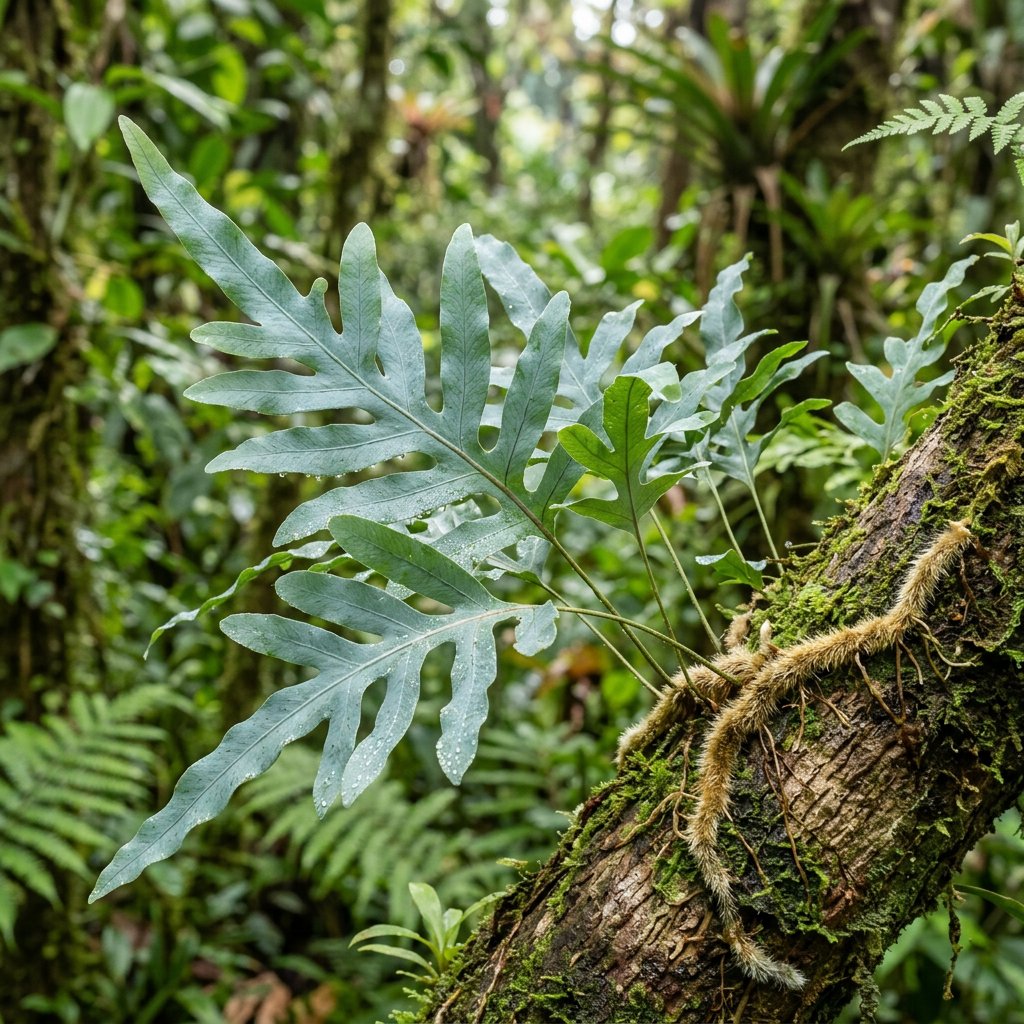
Meet the Blue Star Fern, a celestial-looking beauty that swaps the traditional forest green for a dusty, sea-foam blue. Often called the "Golden Polypody" because of its creeping orange "feet," this fern is a prehistoric survivor found clinging to the trunks of tropical trees from Florida to South America. It is the perfect choice for those who want the lushness of a fern without the constant leaf-shedding drama.
🔍 How to Identify
- 🌿 The Foliage: Elongated, wavy fronds that branch out like fingers, covered in a waxy "bloom" that gives them a distinct matte, silvery-blue sheen.
- 👣 The "Golden Feet": Look at the base of the plant for thick, creeping rhizomes covered in soft, golden-brown fur—these are the plant’s anchors that allow it to climb trees in the wild.
- 🟠 The Sori: On the undersides of mature leaves, you’ll often find neat rows of bright orange or gold dots (spores) that look like tiny, decorative buttons.
🏡 In Your Garden
- ☁️ Humidity over Wetness: While most ferns demand a swamp-like environment, the Blue Star is an epiphyte. It prefers its soil to dry out slightly between waterings but thrives in the steamy environment of a bathroom or kitchen.
- 💨 Airflow is Key: Because it naturally grows on tree branches rather than in the ground, it loves "breathable" potting media like an orchid bark mix. Never bury those fuzzy golden rhizomes deep in the dirt; they need to sit on the surface to stay healthy.
⚠️ Safety & Toxicity
- 🐾 Pet-Friendly: Great news for animal lovers! Phlebodium aureum is considered non-toxic to both cats and dogs, making it a "worry-free" addition to your indoor jungle.
- 👶 Safe for Kids: It is generally safe for curious toddlers, though its delicate blue leaves are easily bruised by rough handling, so it is best kept on a high shelf.
✨ Fun Fact
In the wild, the Blue Star Fern is a master of survival; its thick, furry rhizomes act like a sponge, allowing the plant to store water and survive short periods of drought that would shrivel and kill most other common ferns.

Detailed Care Instructions
| Humidity | High |
| Lighting | Part Sun |
| Toxicity | Non-Toxic |
| Soil Type | Heavy, Acidic, Moist, Well-Drained, And Sandy |
| Bloom Time | Non-Flowering |
| Difficulty | Medium |
| Plant Type | Evergreen |
| Mature Size | Up To 3 Ft Tall And 1.5 Ft Wide |
| Native Area | South And North America And The Caribbean |
| Temperature | 15°C - 23°C |
| Sun Exposure | Full Sun, Dappled Shade, Partial Shade, And Full Shade |
| Hardiness Zones | 9B - 11B |
To grow a Phlebodium Aureum plant, also known as a Blue Star Fern, you can follow these steps:
- Purchasing a healthy plant: Look for a healthy Phlebodium Aureum plant at your local nursery or garden center. Make sure it has vibrant green fronds and no signs of pests or diseases.
- Choosing the right pot: Select a pot with good drainage holes and a size that allows the plant to grow comfortably. Blue Star Ferns prefer being slightly root-bound, so avoid pots that are too large.
- Potting mix: Use a well-draining potting mix that retains moisture but doesn't become waterlogged. A mixture of peat moss, perlite, and orchid bark is a suitable choice.
- Planting: Gently remove the Phlebodium Aureum from its nursery pot and loosen the roots slightly. Place the plant in the new pot and backfill with potting mix, making sure not to bury it too deeply. Firmly press the soil around the plant.
- Light requirements: Blue Star Ferns prefer bright, indirect light. They can tolerate some direct morning or evening sun, but avoid intense midday sunlight as it can scorch the fronds. Place the plant near a north or east-facing window, or use sheer curtains to filter harsh sunlight.
- Temperature and humidity: Phlebodium Aureum thrives in temperatures between 60-75°F (15-24°C). Maintain a humidity level of at least 50%, which can be achieved by placing a tray filled with water near the plant or using a humidifier.
- Watering: Keep the soil evenly moist but not waterlogged. Water the plant when the top inch of soil feels dry to the touch. Blue Star Ferns appreciate regular misting to increase humidity.
- Fertilization: Feed the plant with a balanced houseplant fertilizer diluted to half the recommended strength every two to three months during the growing season (spring and summer). Reduce or cease fertilization during fall and winter.
- Pruning: Trim off any yellowing or dead fronds regularly using clean and sharp pruning shears. This will stimulate new growth and maintain the plant's appearance.
- Repotting: Every two years or when the plant becomes severely root-bound, repot it into a slightly larger pot using fresh potting mix.
Remember, Phlebodium Aureum plants are relatively low-maintenance, but they still require consistent care and attention to thrive.

Place in a window with dappled sun or a spot in the middle of a room. Or directly in a window facing west or east.

Phlebodium Aureum plant should be watered adequately and regularly to keep its soil moist. The plant should not be over-watered as it can cause root rot. It is important to allow the top layer of soil to dry out before watering again. The plant should be watered at the base and not on the foliage to prevent fungal diseases. The best time to water is early in the morning or late in the evening to allow the plant to absorb the water before it evaporates due to the sun's heat. Watering frequency may depend on the humidity and temperature of the plant’s environment as well as the type of soil it is potted in. A soil moisture meter can be used to monitor the moisture level in the soil and determine when the plant should be watered.
- Obtain a complete general-purpose fertilizer containing N-P-K in balanced proportions.
- Dilute the fertilizer to half strength as recommended on the product label.
- Apply the diluted fertilizer once a month during the growing season (spring and summer).
- Water the plant before and after fertilizing to avoid root burn.
- Avoid fertilizing during the dormant season (fall and winter).
Phlebodium Aureum plant prefers a well-drained soil that is rich in nutrients. The soil should also have a pH level that is slightly acidic, ranging from 5.5-6.5. It is best to use a soil mix that is specifically formulated for ferns, as it will have the proper drainage and nutrient levels needed for this plant. The soil mix should contain a combination of peat moss, perlite, and vermiculite. Adding some organic matter like compost or leaf mold can also help improve the soil quality and provide additional nutrients for the plant.
To propagate this plant, you will need to obtain a healthy and mature specimen that has well-established roots. Once you have this, carefully remove the plant from its pot or previous growing location, being careful not to damage the roots.
Next, divide the plant into smaller sections, making sure that each section has a healthy root system and several fronds. Use a sharp and sterile tool for this process to avoid introducing any pathogens or damaging the plant.
Prepare individual pots or containers with a well-draining potting mix that is rich in organic matter. Plant each section in its own container, ensuring that the roots are fully covered with soil and the crown of the plant is level with the surface of the soil.
Water the newly planted specimens thoroughly, making sure that the soil is moist but not waterlogged. Place the containers in a warm and bright location with indirect sunlight and maintain moist soil conditions.
Over time, the new plants will begin to grow and develop their own root systems. Once they have become established and are growing well, you can begin to gradually acclimate them to brighter light and less frequent watering. With proper care and attention, your propagated Phlebodium Aureum specimens will grow into healthy and attractive plants.
Common pests of the rabbit-foot fern include Scale insect, mealybugs, spider mites. Make a habit of checking your rabbit-foot fern frequently for pests so that any infestations can be caught and managed early.








