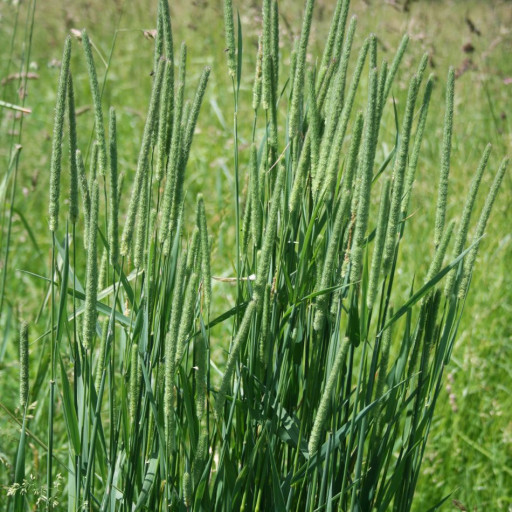
Plant Overview
Known as the "Meadow Cat’s-tail," Timothy-grass is the ultimate workhorse of the pastoral landscape. Its iconic, soft flower heads have bobbed in the summer breeze of hayfields for centuries. Interestingly, it owes its name to an American farmer named Timothy Hanson, who transformed this humble European wild grass into one of the most important forage crops in agricultural history during the 1720s.
🔍 How to Identify
- 🌾 The "Cat's Tail": The most distinct feature is the dense, cylindrical flower spike. It is stiff, bristly, and can grow up to 6 inches long, resembling a fuzzy green caterpillar standing upright.
- 🧅 The Swollen Base: If you look closely at the very bottom of the stem near the soil, you’ll notice a small, onion-like bulb or "corm." This is a key identifier that separates it from similar-looking meadow grasses.
- 🍃 Blue-Green Foliage: The leaves are flat, hairless, and have a distinct greyish-green or bluish-green tint. They are relatively wide and feel slightly rough if you rub your fingers along the edges.
🏡 In Your Garden & Landscape
- 🚜 Agricultural Royalty: In a garden context, you likely won't plant this in a flower bed, but it is the "gold standard" for meadow restoration or as high-quality hay for horses and livestock.
- 🌦️ Cool-Season Specialist: Timothy-grass loves a "goldilocks" climate—it thrives in cool, moist areas and struggles in extreme heat or drought. It prefers heavy soils like clay or silt where moisture lingers.
⚠️ Safety & Toxicity
- ✅ Pet & Livestock Safe: This plant is completely non-toxic. It is a primary food source for horses, cattle, and even small domestic pets like rabbits.
- 🤧 Allergy Warning: While safe to touch, Timothy-grass is a major producer of airborne pollen. If you suffer from seasonal "Hay Fever," this plant is often one of the main culprits during its blooming peak in early to mid-summer.
✨ Fun Fact
Timothy-grass is the "superfood" of the rodent world! If you have ever owned a guinea pig, rabbit, or chinchilla, the "Timothy Hay" you buy at the pet store is exactly this plant. It is essential for their health because the silica in the grass helps grind down their ever-growing teeth.

Detailed Care Instructions
To grow Phleum pratense (also known as timothy grass), follow these steps:
- Climate: Check if your climate is suitable for growing timothy grass. It typically thrives in cool-season regions with moderate temperatures.
- Soil preparation: Prepare the soil by removing any debris, weeds, or stones. Ensure it is well-draining and slightly acidic (pH 5.5-7.5).
- Sowing seeds: You can sow the seeds directly into the soil in early spring or late summer. Spread the seeds evenly over the soil and lightly rake them in, ensuring good seed-to-soil contact.
- Watering: After sowing, water the area thoroughly, and keep the soil consistently moist until the seeds germinate (typically within 7-10 days). After germination, reduce watering frequency but do not let the soil dry out completely.
- Fertilization: Apply a balanced fertilizer, such as a 10-10-10, to provide necessary nutrients during the growing season. Follow the instructions on the fertilizer package for application rates.
- Mowing: Once the grass has reached a height of around 4-6 inches, you can start mowing it to encourage denser growth and prevent it from becoming too tall and leggy.
- Maintenance: Regularly weed the area to prevent competition with the timothy grass. Additionally, ensure the grass receives adequate sunlight (at least 4-6 hours per day) for healthy growth.
- Harvesting: If you are growing timothy grass for forage purposes, harvest it when it reaches the desired height of 12-18 inches. Cut the grass with a scythe, sickle, or lawn mower, leaving about 3 inches of stubble for regrowth.
Remember to consult local gardening resources or experts for specific recommendations based on your geographic location and conditions.

Place in a bright room that is sun drenched almost all day. Or directly in a south-facing window.

To water this plant, ensure that the soil is dry before giving it a generous amount of water in the early morning or late afternoon. Avoid watering the foliage, only water the soil from the base of the plant. Allow any excess water to drain out of its container or the surrounding soil, as this plant prefers a well-draining soil. It is essential to avoid overwatering, as a waterlogged root system can lead to the plant's death. Finally, monitor the soil's moisture level to ensure it remains evenly moist but not soggy.
To properly fertilize this plant, ensure that the soil is well-draining and fertile. You can apply a balanced, slow-release fertilizer in the spring before new growth appears. Additionally, a nitrogen-rich fertilizer can be applied in the early fall to encourage healthy growth. Be sure to follow the manufacturer's instructions for application rates and avoid over-fertilizing as it can lead to excessive growth or damaging the roots.
Phleum Pratense is a type of plant that requires a specific type of soil in order to thrive. This type of soil should have a balanced pH level and should be well-draining, as the plant does not tolerate waterlogged soil. It should also be rich in nutrients, with a good balance of nitrogen, phosphorus, and potassium. This soil should be loose and not overly compacted, as this can make it difficult for the plant's roots to grow. Additionally, this type of soil should be free of any toxins or pollutants that could harm the plant. When selecting soil for Phleum Pratense, it is important to choose a high-quality, nutrient-rich soil that will provide the plant with the ideal growing conditions for optimal growth and development.
To propagate this plant, you can take stem cuttings from a healthy mature plant. Cut a stem with a sharp, sterile blade, making sure it is around 6-8 inches long. Remove the lower leaves from the stem, leaving only a few at the top. Dip the cut end of the stem in rooting hormone and plant it in a pot filled with well-draining soil. Water the soil and keep it moist but not waterlogged. Place the pot in a bright, warm spot but out of direct sunlight. Within a few weeks, the stem should develop roots and start growing. Transfer the new plant to a larger pot or into the garden, ensuring it gets the proper care to continue to grow and develop.








