Plant Overview
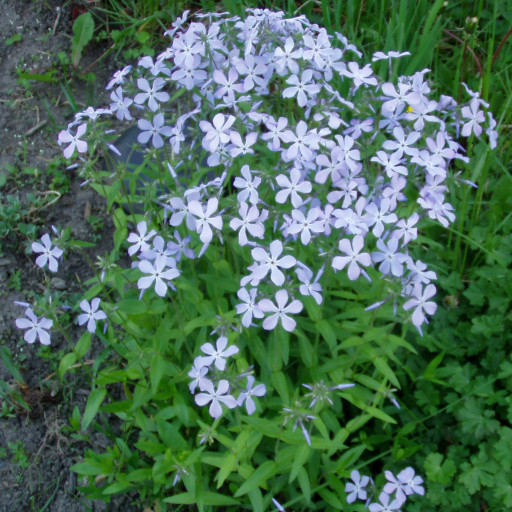
Often called the "Woodland Phlox," this delicate North American native creates a dreamy, periwinkle carpet across forest floors just as the winter chill fades. While many garden Phlox varieties stand tall and rigid, Phlox divaricata is a more relaxed, sprawling beauty that signals the true arrival of spring. It is a favorite for "moon gardens" because its pale, star-shaped blossoms seem to glow softly in the twilight.
🔍 How to Identify
- 🌸 The Blooms: Clusters of five-petaled flowers that range from lavender-blue to pale violet, though rare white forms exist.
- ✨ Notched Petals: Each petal often features a tiny notch or "cleft" at the center of the outer edge, giving the flower a delicate, fringed appearance.
- 🍃 Hairy Stems: The stems and opposite-facing leaves are covered in fine, slightly sticky hairs (pubescence) that help protect the plant from tiny crawling pests.
🏡 In Your Garden
- 🌳 Dappled Shade: Unlike its sun-loving cousins, this Phlox thrives in the soft light found under deciduous trees. It loves the rich, organic "leaf mold" soil typically found in forest settings.
- 🌱 The Gentle Creep: It spreads via "stolons" (runners) that root at the nodes as they touch the ground. It isn't aggressive, making it a perfect, polite groundcover for filling gaps between larger perennials.
- ✂️ Post-Bloom Nap: After the flowers fade in late spring, the plant may look a bit "tired." Trimming back the spent flower stalks encourages the plant to focus energy on its evergreen foliage.
⚠️ Safety & Toxicity
- 🐾 Safe & Sound: Phlox divaricata is widely considered non-toxic to humans, dogs, and cats.
- 🧒 Garden Friendly: It is a safe choice for family landscapes. However, always be cautious in the wild; Woodland Phlox is occasionally confused with "Dame's Rocket," which is an invasive species, or other wild flora that may not be as friendly.
✨ Fun Fact
🦋 The Butterfly's Straw: The nectar in these flowers is hidden deep within a narrow tube. This means only "long-tongued" pollinators—like the Tiger Swallowtail butterfly or the hovering Clearwing Sphinx moth—can reach the sweet treat inside!

Detailed Care Instructions
| Color | Light Purple, Violet, Violet-Blue, Light Blue, Rosy Lavender |
| Soil Ph | Neutral |
| Lighting | Part Sun |
| Soil Type | Moderately Moist, Well-Drained, And Fertile |
| Bloom Time | April Or May |
| Plant Type | Herbaceous Perennial |
| Mature Size | 1 Foot Or Slightly Taller, With A Similar Width |
| Native Area | Eastern North America |
| Sun Exposure | Dappled Shade |
| Hardiness Zones | 3-8 |
To grow Phlox Divaricata, follow these steps:
- Determine the optimal planting time: Phlox Divaricata should be planted in the early spring or fall. Choose a time when the soil is well-drained and not too cold or too hot.
- Select a suitable location: Find a spot in your garden that receives partial shade to full sun. Phlox Divaricata prefers moist, well-draining soil.
- Prepare the soil: Clear the area of weeds, rocks, and debris. Loosen the soil with a garden fork or tiller, ensuring it is crumbly and well-aerated. If needed, add compost or well-rotted manure to improve the soil quality.
- Plant the seedlings or seeds: If you have seedlings, dig holes that are slightly larger than the rootball and place the plants in the holes. Fill the holes with soil and gently press down to secure the plants. If using seeds, lightly sprinkle them on the soil surface, following the package instructions for spacing.
- Water thoroughly: After planting, water the Phlox Divaricata plants deeply to settle the soil and ensure proper hydration. Maintain a regular watering schedule, keeping the soil evenly moist but not waterlogged.
- Mulch the plant: Apply a layer of organic mulch, such as straw or wood chips, around the base of the plants. Mulch helps to retain moisture, regulate soil temperature, and suppress weed growth.
- Provide support if needed: Phlox Divaricata typically doesn't require additional support, but if the plants become floppy, you can use plant stakes or a trellis to keep them upright.
- Fertilize as needed: Phlox Divaricata generally doesn't require much fertilization, but you can apply a balanced, slow-release fertilizer in the spring to encourage healthy growth. Follow the instructions on the fertilizer packaging for appropriate dosage.
- Prune and deadhead: Trim back any dead or damaged foliage to promote new growth. Deadhead spent flowers regularly to encourage continuous blooming and prevent the plant from going to seed.
- Watch for pests and diseases: Keep an eye out for common garden pests, such as aphids or powdery mildew. Treat infestations promptly using organic insecticides or fungicides if necessary.
By following these steps, you should be able to successfully grow Phlox Divaricata in your garden. Enjoy its beautiful flowers and delicate fragrance!

Place in a window with dappled sun or a spot in the middle of a room. Or directly in a window facing west or east.

To water this plant, it is important to consider the soil moisture level and weather conditions. It is recommended to water deeply and thoroughly once a week, providing enough water to saturate the soil around the roots. Ensure that the soil is not waterlogged or too dry as both conditions can harm the plant's health. When watering, avoid getting the leaves wet, as this can promote fungal diseases. During dry weather conditions, water the plant more frequently to prevent drought stress. It is important to avoid overwatering, as this can lead to root rot and other issues.
Apply a balanced fertilizer in early spring before new growth emerges. Use a fertilizer with an N-P-K ratio of 10-10-10 or 20-20-20. Spread the fertilizer evenly around the base of the plant, avoiding the foliage. Water thoroughly after fertilizing. Repeat the process in mid-summer if desired. Avoid over-fertilizing, as this can lead to excessive growth and weaker plants.
When planting this particular plant, it is recommended to use a moist, well-draining soil that is high in organic matter. The ideal pH range for this plant is slightly acidic, between 5.5 and 6.5. It is also important to avoid using soil that is compacted or heavy, as this can hinder root growth and drainage. A soil that is rich in nutrients, such as nitrogen, phosphorus, and potassium, can help promote healthy growth and flowering. Additionally, the soil should be kept evenly moist, but not excessively wet, as this can lead to root rot and other issues.
To propagate this plant, you will need to take stem cuttings from a mature and healthy plant. Identify a stem section that is around 6 inches long and has healthy leaves. Ensure that the stem cutting is free of any diseases or pests.
Use a clean and sharp pair of pruning shears to make a clean cut just below a leaf node. Remove any leaves from the bottom half of the stem cutting.
Dip the cut end of the stem into rooting hormone powder, shake off any excess, and plant it in well-draining potting soil. Water the soil until it is moist, but not saturated.
Cover the pot with a plastic bag to create a humid environment and place it in a warm and bright location, but not in direct sunlight. Keep the soil moist by misting it with water or using a gentle watering can.
After a few weeks, new roots should start to grow from the cut end of the stem. Once the roots are about an inch long, you can transplant the new plant into a larger pot or directly into the garden.
Be sure to continue to water the new plant regularly and monitor it for any signs of pests or diseases. With time and care, your newly propagated Phlox Divaricata plant will grow and thrive.
Common pests of the forest phlox include Spider mites, aphids, larvae. Make a habit of checking your forest phlox frequently for pests so that any infestations can be caught and managed early.








