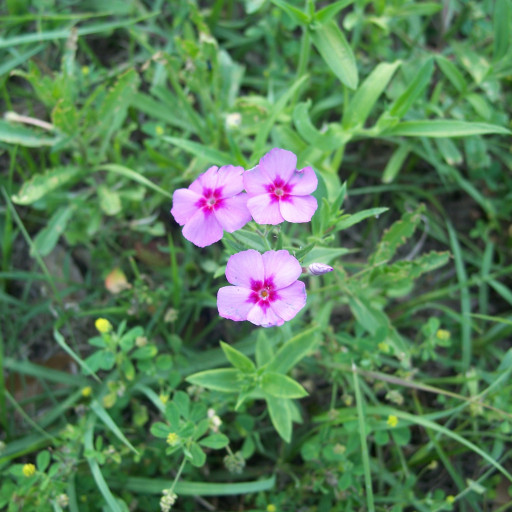
Plant Overview
Known affectionately as "Texas Pride" or "Annual Phlox," this vibrant wildflower captures the untamed beauty of the Southern prairies. Originally discovered by Scottish botanist Thomas Drummond in the 1830s, it quickly became a global sensation for its ability to transform garden borders into a solid carpet of color. Whether it’s painting a roadside or spilling over a terracotta pot, this plant is a master of the "cottage garden" aesthetic.
🔍 How to Identify
- 🌸 The Blooms: Five-petaled, star-shaped flowers that often feature a contrasting "eye" or star pattern in the center. They come in a kaleidoscope of shades, including electric pink, deep crimson, violet, and creamy white.
- 🍃 The Foliage: The leaves are soft, lance-shaped, and covered in fine, sticky hairs. They grow in an opposite pattern along the lower stem and alternate near the top.
- 📏 Growth Habit: Unlike its tall perennial cousins, this Phlox stays low to the ground, typically forming a bushy mound between 6 to 12 inches tall.
🏡 In Your Garden
- ☀️ Sun-Lovers with a Catch: While they crave full sun to produce those iconic blooms, they appreciate a little afternoon shade in scorching climates to prevent the colors from bleaching.
- 🌬️ The Mildew Factor: Because the leaves are slightly hairy and grow densely, they can be prone to powdery mildew. To keep them healthy, always water at the base of the plant rather than splashing the leaves, and give them plenty of "elbow room" for air to circulate.
- ✂️ Deadheading for Rounds Two: If you shear the plant back slightly after the first flush of flowers fades, it will often reward you with a second wave of blooms later in the season.
⚠️ Safety & Toxicity
- ✅ Safe for All: Phlox drummondii is widely considered non-toxic to humans, dogs, and cats.
- 🌸 Edible Note: While not a culinary staple, the flowers are technically edible and are sometimes used as a colorful garnish for salads or desserts, though they have a very mild, slightly peppery taste.
✨ Fun Fact
Thomas Drummond, the plant's namesake, sent the first seeds from Texas to the Glasgow Botanical Gardens in 1835. He tragically died shortly after in Cuba, never knowing that his "Texas Pride" would become one of the most popular bedding plants in the history of gardening.

Detailed Care Instructions
| Color | Red, Pink, Purple, White |
| Soil Ph | Acidic To Neutral |
| Lighting | Full Sun |
| Toxicity | Non-Toxic |
| Soil Type | Loose, Well-Draining |
| Bloom Time | Spring, Summer |
| Plant Type | Annual |
| Mature Size | 6 To 20 Inches Tall |
| Native Area | Texas |
| Sun Exposure | Full To Part Sun |
| Hardiness Zones | 2-11 |
To grow Phlox Drummondii plants, which are also known as annual phlox or Texas phlox, follow these steps:
- Select a suitable location: Phlox Drummondii prefers full sun to partial shade. Choose a well-drained area with fertile soil.
- Prepare the soil: Loosen the soil using a garden fork or tiller. Remove any weeds or rocks from the area. Incorporate organic matter, like compost or aged manure, into the soil to improve its fertility and drainage.
- Sowing seeds: Phlox Drummondii can be grown from seeds. Sow the seeds directly into the prepared garden bed in early spring or late fall. Press the seeds lightly into the soil, ensuring they are not buried too deep. Space them about 6-12 inches apart.
- Watering: Water the newly sown seeds gently, ensuring the soil remains moist but not waterlogged. Avoid overwatering, as it can rot the seeds or cause fungal diseases.
- Germination and thinning: Phlox Drummondii seeds usually germinate within 7-21 days. Once the seedlings emerge, thin them to maintain proper spacing and airflow. Remove the weaker seedlings, allowing the stronger ones to grow stronger.
- Mulching: Apply a layer of organic mulch, like straw or wood chips, around the seedlings to conserve moisture, suppress weeds, and maintain a more consistent soil temperature.
- Care and maintenance: Regularly water the phlox plants, especially during dry spells or hot weather. However, do not overwater, as it can lead to root rot. Water at the base of the plants to avoid moisture on the foliage, which can increase disease risk.
- Fertilization: Phlox Drummondii generally does not require heavy feeding. However, you can apply a balanced, slow-release fertilizer in early spring or use a liquid fertilizer every few weeks during the growing season.
- Pruning: Deadhead faded flowers to encourage continuous blooming. Additionally, if the plants become leggy or overgrown, you can trim them back by about one-third to promote bushier growth.
- Pests and diseases: Monitor your plants for common pests like aphids or spider mites. Treat any infestations promptly with organic pest control methods. Phlox Drummondii can also be prone to powdery mildew, so ensure good airflow around the plants and avoid overhead watering.
By following these steps, you should be able to successfully grow Phlox Drummondii plants and enjoy their colorful blooms throughout the growing season.

Place in a bright room that is sun drenched almost all day. Or directly in a south-facing window.

Phlox Drummondii is a plant that requires regular watering to thrive. When watering this plant, it is important to avoid getting water on the leaves, as this can lead to the development of fungal diseases. Instead, it is best to water at the base of the plant, using a watering can or a drip irrigation system. It is important to water deeply and evenly, making sure that the soil is thoroughly saturated. However, care should be taken not to overwater, as this can lead to root rot and other problems. The best time to water Phlox Drummondii is in the morning or early evening, when the sun is low and temperatures are cooler. During periods of hot, dry weather, it may be necessary to water more frequently. It is also important to mulch around the base of the plant to help retain moisture and keep the soil cool.
To properly fertilize this plant, apply a balanced fertilizer with equal amounts of nitrogen, phosphorus, and potassium. Choose a water-soluble fertilizer, and combine it with water according to the package instructions. Apply the fertilizer to the soil around the plant, being careful to avoid getting it on the leaves or flowers. Use a watering can or hose to apply the fertilizer, and water until the soil is moist but not saturated. Repeat the application every 4-6 weeks during the growing season.
The best soil to use for this plant is one that is well-drained and has a slightly acidic pH level. It should be rich in organic matter, such as compost or peat moss, to provide the necessary nutrients for healthy growth. This type of soil will also help to promote good air circulation around the roots and prevent the development of root rot or other diseases. It is important to avoid using soil that is heavy or dense, as this can cause drainage issues and lead to waterlogged roots. A soil mix specifically formulated for annual flowers may also be a good option for this plant.
Phlox Drummondii can be propagated through either seed or cuttings. To propagate via seed, seeds should be collected from mature plants and sown into well-draining soil in the early spring. The soil should be kept moist but not wet, and the seeds should be kept in a warm, sunny location. Germination can take up to two weeks.
To propagate via cuttings, take cuttings in the late summer or early fall from mature, healthy plants. The cuttings should be about 6 inches long and include a few leaves. Dip the cut end of the cutting in rooting hormone and plant it in well-draining soil. Keep the soil moist but not wet and place the cutting in a warm, sunny location. The cutting should root in several weeks and can be transplanted into a larger container or directly into the ground.
Common pests of the drummond's phlox include Spider mites, aphids, larvae. Make a habit of checking your drummond's phlox frequently for pests so that any infestations can be caught and managed early.








