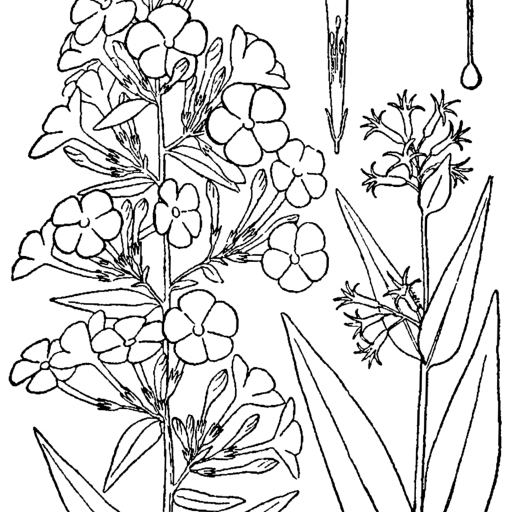
Plant Overview
Often called the Wild Sweet William or Spotted Phlox, this North American native is a hallmark of the classic cottage garden. It is beloved for its tall, cylindrical towers of fragrant flowers that seem to glow in the twilight. While it looks delicate, it is a sturdy perennial that has been a favorite of pollinators and gardeners alike for centuries.
🔍 How to Identify
- 💜 The Stem: Look closely at the stalk; it is uniquely dappled with tiny purple spots or streaks, which gives the plant its botanical name, maculata (meaning "spotted").
- 🌸 The Blooms: It produces dense, cone-shaped clusters of flowers in shades of pink, lavender, or white. Unlike the rounded clusters of other Phlox, these spikes are distinctly elongated and cylindrical.
- 🍃 The Foliage: The leaves are long, narrow, and lance-shaped. They grow in opposite pairs along the stem and have a smooth, almost waxy texture that helps the plant shrug off certain fungal issues.
🏡 In Your Garden
- 💧 Moisture Lover: This plant is a "thirstier" cousin to the common Garden Phlox. It naturally thrives in damp meadows and along stream banks, making it an excellent choice for low-lying spots in your yard or near a pond.
- 🦋 Pollinator Magnet: Its deep, tubular flowers are perfectly designed for the long tongues of butterflies and hummingbirds. Planting these is like rolling out a red carpet for local wildlife.
- ☀️ Sun & Air: While it loves the sun, it despises "wet feet" in stagnant soil. Ensure your soil drains well and provide plenty of space between plants to encourage airflow, which keeps the leaves crisp and green.
⚠️ Safety & Toxicity
- ✅ Safe for All: Phlox maculata is generally considered non-toxic to humans, dogs, and cats.
- 🍽️ Deer Resistance: While not completely "deer-proof," it is often less palatable to deer than many other garden perennials, though hungry visitors might still take a nibble of the tender flower buds.
✨ Fun Fact
The "spotted" stem of this plant isn't just a random pattern—it's the primary way botanists tell it apart from its very similar relative, Phlox paniculata. If the stem is solid green, it’s a Garden Phlox; if it has "freckles," you’ve found a Wild Sweet William!

Detailed Care Instructions
To grow Phlox maculata (also known as meadow phlox or wild sweet William), follow these steps:
- Choose the right location: Phlox maculata thrives in full sunlight to partial shade. Select a spot with well-draining soil that is rich in organic matter.
- Prepare the soil: Loosen the soil to a depth of 6-8 inches and remove any weeds or rocks. Incorporate compost or well-rotted manure to improve the soil's fertility and drainage.
- Planting: Dig a hole slightly larger than the root ball of the plant. Place the Phlox maculata in the hole, ensuring the crown (where the stems meet the roots) is at or slightly above the soil surface. Backfill the hole with soil and gently firm it around the roots.
- Watering: Water the plant thoroughly after planting and continue to water regularly, especially during dry spells. Avoid overwatering, as phlox prefers slightly moist soil rather than constantly wet conditions.
- Mulching: Apply a layer of mulch around the plant to help retain moisture, suppress weeds, and regulate soil temperature. Use organic materials like wood chips or straw, and make sure to keep the mulch a few inches away from the plant's stem to prevent rot.
- Pruning: In late fall or early spring, cut back any remaining growth from the previous growing season to promote new growth. Removing spent flowers during the blooming period can also encourage prolonged blooming.
- Fertilizing: Phlox maculata generally doesn't require heavy fertilization, especially if organic matter is added during soil preparation. However, if growth seems weak or stunted, a light application of balanced fertilizer in early spring can be beneficial.
- Disease and pest control: Phlox maculata is susceptible to powdery mildew, especially in humid conditions. Planting in a location with good air circulation and avoiding overhead watering can help prevent this fungal disease. If mildew does occur, removing affected foliage and treating with a fungicide may be necessary.
- Propagation: Phlox maculata can be propagated by division in early spring or fall. Dig up the mature plant, separate the clumps with a sharp knife, and replant them in prepared soil.
By following these steps, you can successfully grow and enjoy the beautiful blooms of Phlox maculata in your garden.

Place in a bright room that is sun drenched almost all day. Or directly in a south-facing window.

To water this plant, it's best to use a watering can or hose with a gentle spray attachment. You should avoid letting the water hit the leaves directly as this can cause damage. Instead, water the soil around the base of the plant, making sure to saturate the soil down to the root system. This plant likes consistently moist soil, so you should water it regularly to keep the soil from drying out. However, be sure not to overwater it, as this can cause root rot. Check the soil moisture by touching it with your fingers and watering as needed. It's also beneficial to add a layer of mulch around the base of the plant to help retain moisture.
To fertilize this plant, you should first choose a fertilizer with a balanced ratio of nitrogen, phosphorus, and potassium. Apply the fertilizer in the spring, just as new growth is starting to emerge. Use a spreader to evenly distribute the fertilizer over the entire planting area. Be sure to follow the manufacturer's instructions for the recommended application rate. Water the plant thoroughly after fertilizing to help ensure the nutrients are absorbed by the roots. Repeat the fertilization process every 4 to 6 weeks throughout the growing season to promote healthy growth and vibrant blooms.
Phlox Maculata plants prefer acidic soil that is rich in organic matter and well-draining. The soil should have a pH between 5.5 and 6.5. It is important to avoid planting in soil that is too heavy or poorly drained, as this can lead to root rot. A good mix for growing Phlox Maculata would be a combination of peat moss, compost, and sand or perlite to improve drainage. When planting, make sure to add a slow-release fertilizer to help the plant establish itself and encourage healthy growth.
To propagate this plant, you will need to take cuttings from the parent plant during the active growing season. Select a healthy stem with several nodes, and make a clean cut just below a node using a sharp and clean pair of pruning shears. Remove any lower leaves from the cutting, leaving only a few at the top.
Dip the cut end of the stem into rooting hormone powder to promote the growth of roots and then plant it in a container filled with a well-draining soil mix. Water the cutting thoroughly and place it in a bright, humid location where it can receive filtered light.
Keep the soil consistently moist but not waterlogged, and monitor the cutting closely for any signs of stress or wilting. It may take several weeks for roots to form, at which point the cutting can be transplanted into a larger container or directly into the garden.
For best results, propagate multiple cuttings to increase your chances of success, and be patient as this process can take several months to produce a mature plant.








